
























Close
MCE 2026
Wednesday, January 21, 2026
JEC WORLD 2026

Prague will convert waste into raw construction material

Note* - All images used are for editorial and illustrative purposes only and may not originate from the original news provider or associated company.

Subscribe

- Never miss a story with notifications

- Gain full access to our premium content

- Browse free from any location or device.

Media Packs

Expand Your Reach With Our Customized Solutions Empowering Your Campaigns To Maximize Your Reach & Drive Real Results!

– Access the Media Pack Now

– Book a Conference Call

Leave Message for Us to Get Back

Related stories

FP McCann Easy-Trim Acquisition Expands Roofing Products

FP McCann has completed the Easy-Trim acquisition, adding roofing...

Titan America Keystone Acquisition Spans Mid-Atlantic Reach

Titan America has signed an agreement to complete the...

Sustainable Construction Machinery for Low Emission Sites

Reducing the carbon footprint of the building sector requires a total reimagining of engine technology and energy consumption, leading to the rise of specialized machinery that balances power with environmental stewardship. By prioritizing low emission operation and energy-efficient designs, contractors are meeting the dual challenge of fulfilling ambitious infrastructure goals while adhering to increasingly stringent global climate regulations.
- Advertisement -
Advancing Prefabrication 2026

Earlier this year, the City of Prague approved the 2030 Climate Plan submitted by Deputy Mayor for the Environment Petr Hlubu?ek. This plan outlines the capital’s goals to achieve a 45% reduction in CO2 emissions by 2030. Moreover, it stresses the significance of sustainability and circular economies, among others.

With these objectives in mind, Prague recently launched various initiatives to become a cleaner, greener, and more sustainable city. Taking a case in point, it established various reuse centres where individuals can deposit unwanted items rather than discarding them.

In addition, it reused last year’s Christmas tree, transforming it into furniture for an elderly home. Now, it has taken one more step towards achieving the goals of the 2030 Climate Plan.
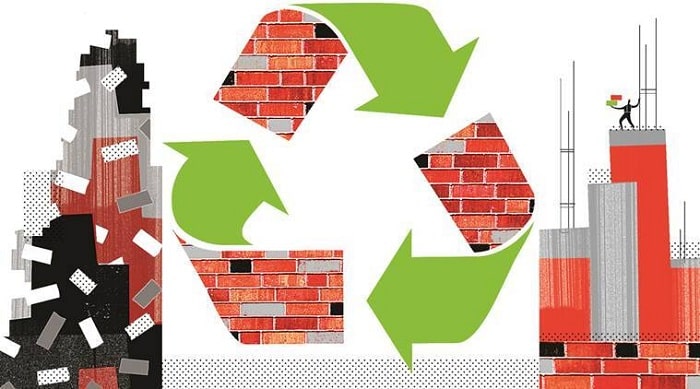
Converting slag into construction materials

On 11 August, the City of Prague reported that it is preparing to convert slag produced from the incineration of waste into building materials. According to Hlubu?ek, the incinerator produces 65 to 70 thousand tons of slag annually. What is more, the city pays approximately CZK 40 million (EUR 1.5 million) a year for landfilling.

Thanks to research and technological innovations, this waste can now be converted into raw materials and used in the construction industry. More specifically, clean slag reportedly has various useful properties which would allow it to be utilised as a base layer in the construction of roads.

Hlubu?ek discussed the advantages of transforming slag into raw materials, stressing that it would result in great financial savings and a reduction of CO2 emissions. In turn, it would help bring the capital closer to achieving its climate goals.

Nevertheless, it must be noted that the use of slag as building material is currently prohibited and prevented by legislation. For this reason, the City of Prague must first change the legislative classification of slag from waste to raw material. When this change is approved, its use will be possible.

Achema Middleeast

Latest stories

Related stories

FP McCann Easy-Trim Acquisition Expands Roofing Products

FP McCann has completed the Easy-Trim acquisition, adding roofing...

Titan America Keystone Acquisition Spans Mid-Atlantic Reach

Titan America has signed an agreement to complete the...

Sustainable Construction Machinery for Low Emission Sites

Reducing the carbon footprint of the building sector requires a total reimagining of engine technology and energy consumption, leading to the rise of specialized machinery that balances power with environmental stewardship. By prioritizing low emission operation and energy-efficient designs, contractors are meeting the dual challenge of fulfilling ambitious infrastructure goals while adhering to increasingly stringent global climate regulations.

Digital Construction Sites Powered by Connected Equipment

The concept of a connected jobsite revolves around a unified digital ecosystem where every asset contributes real-time data to a centralized management hub, ensuring seamless coordination across large-scale projects. By integrating sophisticated data analytics and satellite-driven monitoring, the industry is moving toward a more transparent and highly optimized way of delivering complex infrastructure.

Subscribe

- Never miss a story with notifications

- Gain full access to our premium content

- Browse free from any location or device.

Media Packs

Expand Your Reach With Our Customized Solutions Empowering Your Campaigns To Maximize Your Reach & Drive Real Results!

– Access the Media Pack Now

– Book a Conference Call

Leave Message for Us to Get Back

Translate »