

























Close
MCE 2026
Tuesday, January 20, 2026
JEC WORLD 2026

RSF Association board approves regulation on wood as building material

Note* - All images used are for editorial and illustrative purposes only and may not originate from the original news provider or associated company.

Subscribe

- Never miss a story with notifications

- Gain full access to our premium content

- Browse free from any location or device.

Media Packs

Expand Your Reach With Our Customized Solutions Empowering Your Campaigns To Maximize Your Reach & Drive Real Results!

– Access the Media Pack Now

– Book a Conference Call

Leave Message for Us to Get Back

Related stories

Sustainable Construction Machinery for Low Emission Sites

Reducing the carbon footprint of the building sector requires a total reimagining of engine technology and energy consumption, leading to the rise of specialized machinery that balances power with environmental stewardship. By prioritizing low emission operation and energy-efficient designs, contractors are meeting the dual challenge of fulfilling ambitious infrastructure goals while adhering to increasingly stringent global climate regulations.

Digital Construction Sites Powered by Connected Equipment

The concept of a connected jobsite revolves around a unified digital ecosystem where every asset contributes real-time data to a centralized management hub, ensuring seamless coordination across large-scale projects. By integrating sophisticated data analytics and satellite-driven monitoring, the industry is moving toward a more transparent and highly optimized way of delivering complex infrastructure.

Automation Redefining Heavy Construction Equipment Operations

Removing the physical limitations of manual operation through sophisticated control logic allows heavy machinery to achieve tolerances and safety standards that were previously impossible, defining the new era of autonomous building. By transitioning toward self-correcting systems and remote-controlled assets, the sector is ensuring that complex infrastructure can be delivered with surgical precision and minimal human risk.
- Advertisement -
Advancing Prefabrication 2026

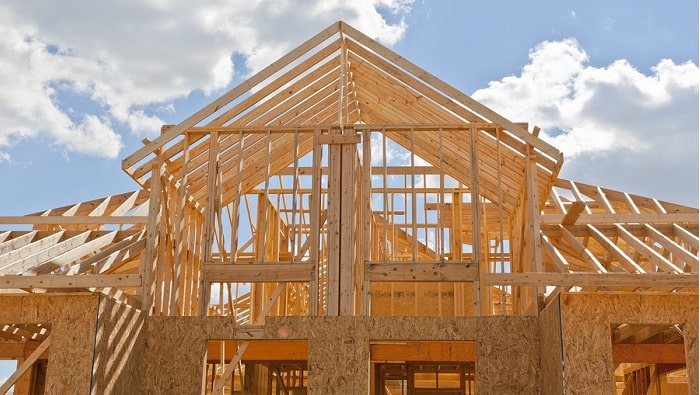
The Rancho Santa Fe Association board approved a new regulatory code Aug. 6 regarding the use of wood in new home builds and remodels: wood is allowed but is restricted in its use. The vote was 5-1-1 with Director Bill Strong abstaining.

The new regulation was posted in June and Association Building Commissioner Maryam Babaki said they received only two comments. No one was in attendance at the Aug. 6 virtual meeting to provide public comment.

“I’m shocked to be honest that a larger percentage of our residents didn’t weigh in on this,” said Vice President Mike Gallagher.

In a 4-3 vote in March 2019, the Association board passed a resolution allowing California ranch architecture in the Covenant which also stated that the use of wood, while not preferred, is consistent with the Covenant if the material is consistent with the allowed styles.

As Babaki has said, the Protective Covenant points to the importance of exterior materials in preserving the character of the community and enhancing its Latin-inspired architecture. The new regulation seeks to further clarify the use of wood as an exterior cladding as there have been many different interpretations of the resolution since it passed last March.

Paragraph 159 of the Protective Covenant states that “plaster, adobe and stucco, concrete, stone are preferred” — wood is not listed as a preferred material but it is not prohibited. The new Chapter 49 of the regulatory code states that wood (board and batten or shiplap) will be allowed in the case of new construction up to a maximum of 25% of the main residence and/or structure’s exterior wall surface.

Wood will also be allowed in the remodel of an existing main residence as long as wood was used as the primary exterior wall surface in the existing main residence and it is limited to no more than 25% of the original residence’s square footage. Additionally, the remodel, addition or additional structure shall include at least 50% of a preferred material.

Gallagher, who did not support the resolution in 2019, seconded Director Sharon Ruhnau’s motion to approve the new regulation as long as it was reviewed within one year to gauge the impact and determine if it needs to be adjusted. He said while perhaps not perfect, the new regulation is clear and consistent and unlike last year’s resolution, was developed in a less heavy-handed approach.

“We’ve been criticized as a board for getting involved with this process of giving guidance to the Art Jury,” Gallagher said. “And there have been criticisms of the Art Jury over many decades that there has been inconsistency in the application of the rules. This board has an obligation to provide clarity as much as possible and to give guidance to the Art Jury. We don’t want to be doing this, we have an obligation to be doing this.”

Director Laurel Lemarie was the sole no vote against the resolution. As former Art Juries have approved a lot of wood Ranch homes, including her own, she said it was “ridiculous” that if she wanted to add on to her house she could only add on 25%.

Strong’s abstention was due to his desire for the board to revisit the use of non-preferred materials sooner rather than later as Rancho Santa Fe is approaching the limits of their proliferation in use. He said while the clarified resolution establishes “reasonable” limits for the use of the non-preferred material of wood, glass is another material that is increasingly being used in new construction.

“Recent, modern-ish approvals have now been constructed and we can see the light and style impacts of these,” Strong said of new homes with glass walls. “I think we need we need to come back to glass as a non-preferred exterior surface in the next month or two, not 12 months.”

The Association and the building commissioner are continuing work on the large undertaking of updating the regulatory code and the residential design guidelines, which in some cases are 30 to 40 years old. In September, the board will consider the Covenant interpretation regarding California Ranch architecture as well as the outdoor lighting regulation, which has been posted for comments.

Babaki said public input as the draft updates are posted is very important as it can help shape the regulations and address all concerns.

There is still an opening on the Art Jury following a member resignation and applications are due by Sept. 15. Two terms will also be opening up this December.

Achema Middleeast

Latest stories

Related stories

Sustainable Construction Machinery for Low Emission Sites

Reducing the carbon footprint of the building sector requires a total reimagining of engine technology and energy consumption, leading to the rise of specialized machinery that balances power with environmental stewardship. By prioritizing low emission operation and energy-efficient designs, contractors are meeting the dual challenge of fulfilling ambitious infrastructure goals while adhering to increasingly stringent global climate regulations.

Digital Construction Sites Powered by Connected Equipment

The concept of a connected jobsite revolves around a unified digital ecosystem where every asset contributes real-time data to a centralized management hub, ensuring seamless coordination across large-scale projects. By integrating sophisticated data analytics and satellite-driven monitoring, the industry is moving toward a more transparent and highly optimized way of delivering complex infrastructure.

Automation Redefining Heavy Construction Equipment Operations

Removing the physical limitations of manual operation through sophisticated control logic allows heavy machinery to achieve tolerances and safety standards that were previously impossible, defining the new era of autonomous building. By transitioning toward self-correcting systems and remote-controlled assets, the sector is ensuring that complex infrastructure can be delivered with surgical precision and minimal human risk.

Electrification Trends Shaping Construction Equipment Fleets

Transitioning from internal combustion to battery-powered systems involves more than just swapping engines; it requires a comprehensive overhaul of fleet logistics, charging infrastructure, and energy management. As the industry moves toward a net-zero future, the adoption of specialized battery-powered machinery is proving to be a catalyst for cleaner, quieter, and more efficient urban construction.

Subscribe

- Never miss a story with notifications

- Gain full access to our premium content

- Browse free from any location or device.

Media Packs

Expand Your Reach With Our Customized Solutions Empowering Your Campaigns To Maximize Your Reach & Drive Real Results!

– Access the Media Pack Now

– Book a Conference Call

Leave Message for Us to Get Back

Translate »