





















The traditional approach to urban infrastructure has largely been one of surface-level convenience, with utilities buried just below the pavement and transport networks vying for space on the streets. However, as the world’s population continues to concentrate in high-density urban centers, the surface of our cities has reached its capacity. The emergence of resilient underground infrastructure represents a fundamental shift in how we conceive and manage the urban fabric. By moving critical utilities, transport systems, and even waste management into deep, resilient subterranean networks, cities can free up surface space for people and nature while simultaneously protecting essential services from the increasing threats of extreme weather and civil disruption. This “depth-first” strategy is the defining characteristic of the most advanced smart city visions currently under development across the globe.
The Shift from Fragmented Burial to Integrated Utility Tunnels
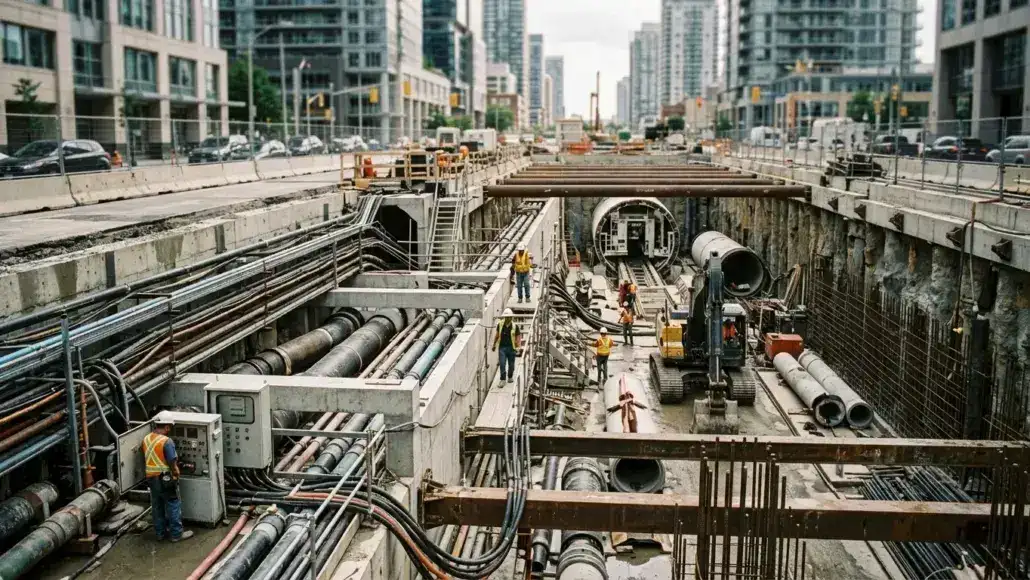
For over a century, the standard practice for urban utilities has been to bury them in isolated trenches, which are then repeatedly dug up for maintenance, leading to constant traffic disruption and service instability. Resilient underground infrastructure moves away from this “dig-and-fill” cycle toward the use of integrated utility tunnels, often referred to as common utilidors. These large-bore subterranean chambers house all essential services power, water, gas, data, and even district cooling in a single, accessible environment. This integrated approach allows for continuous maintenance without surface disruption and provides a much higher level of protection for the utilities. In the event of a flood or earthquake, these reinforced tunnels act as a structural shield, ensuring that the city’s lifeblood remains protected and functional even when the surface is compromised.
Subterranean Resilience and Climate Adaptation
One of the most compelling drivers for resilient underground infrastructure is climate adaptation. Surface-level utilities are increasingly vulnerable to the intensifying frequency of heatwaves, which can degrade electrical insulation, and extreme storms, which can lead to flooding and physical damage. Moving these systems underground into thermally stable and waterproofed environments provides a massive leap in resilience. Furthermore, the use of deep-bore drainage tunnels some large enough to act as temporary reservoirs during extreme rain events provides a vital defense against urban flooding. These “underground rivers” can funnel vast amounts of stormwater away from the streets and into treatment facilities or natural water bodies, protecting property and lives. This subterranean defense is the invisible backbone of the climate-resilient city.
Smart Integration and Real-Time Subsurface Monitoring
The “smart” component of resilient underground infrastructure is provided by an extensive network of IoT sensors and fiber-optic monitoring. Because these systems are housed in accessible tunnels rather than buried in dirt, they can be easily equipped with sensors that monitor for leaks, gas buildup, temperature fluctuations, and structural strain. This real-time visibility allows for a shift toward “predictive maintenance.” Instead of waiting for a pipe to burst or a cable to fail, the city’s digital twin can identify the subtle patterns of degradation and alert maintenance crews before a crisis occurs. This data-driven approach ensures a much higher level of utility reliability and reduces the long-term cost of asset management, making the city both safer and more financially sustainable.
Geotechnical Engineering and the Challenges of the Deep
Building resilient underground infrastructure requires a deep understanding of the local geology and the complex interplay of subsurface forces. Advanced geotechnical engineering is the foundation of these projects, utilizing sophisticated modeling software to predict how the soil and rock will react to the creation of large-bore tunnels. Modern Tunnel Boring Machines (TBMs) are increasingly autonomous, using AI to adjust their cutting speed and pressure in response to real-time geotechnical data. This allows for the safe creation of tunnels in even the most challenging urban environments, where the machine must navigate around existing building foundations and subway lines. The precision of modern geotechnical modeling is what allows for the safe and efficient “stacking” of infrastructure at multiple depths beneath the city.
Space Optimization and the “People-First” Surface
The move toward resilient underground infrastructure is not just a technical necessity but a powerful tool for urban design. By moving “grey” infrastructure such as power substations, waste treatment plants, and logistics hubs underground, planners can reclaim vast amounts of surface space. This space can then be transformed into parks, pedestrian zones, and affordable housing, creating a more livable and socially equitable urban environment. The city of the future is one where the “mechanics” of urban life are hidden beneath the ground, allowing the surface to be dedicated to culture, community, and nature. This “multi-layered” urbanism is essential for managing the high density of future smart cities without sacrificing the quality of the environment.
The Role of Decentralized Waste and Logistics Tunnels
Beyond utilities, resilient underground infrastructure is beginning to address the massive logistical challenge of urban waste and delivery. Automated Vacuum Collection (AVAC) systems use underground pneumatic tubes to transport waste from individual buildings to centralized collection points, eliminating the need for garbage trucks and the associated noise, odor, and traffic. Similarly, “logistics tunnels” are being designed to handle the “last mile” of e-commerce delivery using autonomous pods. By removing heavy delivery vehicles from the streets, cities can drastically reduce congestion and improve air quality. These subterranean logistics networks are a vital component of the efficient, low-carbon city of the future, providing a seamless and invisible support system for urban commerce.
Energy Resilience and Subterranean District Cooling
Dense urban centers often suffer from the “urban heat island” effect, where concentrated human activity and dark surfaces raise temperatures significantly. Resilient underground infrastructure can mitigate this through the implementation of district cooling networks. These systems use centralized, underground plants to chill water, which is then distributed through the utility tunnels to provide cooling for entire neighborhoods. This is far more efficient than individual air conditioning units, which simply dump heat back into the urban air. Furthermore, the stable temperature of the deep earth can be utilized for geothermal energy storage, providing a resilient and carbon-neutral source of heating and cooling for the city above. Subterranean energy management is the key to urban thermal resilience.
Overcoming the “Out of Sight, Out of Mind” Mentality
One of the primary challenges for resilient underground infrastructure is the cultural and political bias toward visible “prestige” projects. Because these subterranean systems are invisible to the public, they are often the most difficult to fund and the easiest to overlook. However, the move toward “lifecycle accounting” and a greater awareness of climate risk is changing this dynamic. Modern project appraisals are increasingly accounting for the “avoided costs” of surface disruption and disaster recovery, which overwhelmingly favor underground solutions. Educating the public and policymakers on the vital role of the “hidden city” is a critical part of the transition toward a more resilient and sustainable urban world. Subsurface excellence must become a point of urban pride.
Standardizing Subsurface Data and Digital Mapping
A major hurdle to the expansion of resilient underground infrastructure is the lack of accurate records for existing buried assets. For decades, utilities were buried with little documentation, creating a “digital dark age” beneath our streets. To solve this, cities are now creating comprehensive 3D “subsurface maps” using ground-penetrating radar and historical records. This data-rich environment is essential for the safe planning of new tunnels and ensures that different utility providers can share space without conflict. Standardizing these datasets through a unified “Subsurface BIM” standard is a top priority for smart city governance, ensuring that the “digital twin” of the city extends as deep into the ground as its tallest skyscraper.
The Economics of the Deep: Funding the Subterranean City
While the initial cost of building resilient underground infrastructure is high, the long-term financial benefits are profound. The integration of utilities into tunnels can reduce maintenance costs by up to forty percent over the lifecycle of the assets. Furthermore, the land value created at the surface by moving infrastructure underground can be a significant source of revenue through “value capture” financing. National infrastructure banks and private institutional investors are increasingly looking for long-term, resilient assets, making these subterranean projects an attractive target for large-scale investment. By viewing the underground as a valuable real estate resource, cities can find innovative ways to fund the transition to a more durable and efficient urban future.
Conclusion: The Foundation of the Smart Urban Future
The resilience of our future cities will be determined by what happens beneath our feet. The implementation of resilient underground infrastructure is not merely a solution to urban congestion, but a fundamental requirement for survival in a century of environmental and social change. By embracing the depth of our urban environments, we can build cities that are more durable, efficient, and profoundly more livable. This subterranean revolution is the final piece of the smart city puzzle, providing the invisible but indestructible foundation upon which the thriving, sustainable metropolises of tomorrow will be built. The future of the city is deep, and it is in this depth that we will find the security and space needed to prosper in a changing world.