
























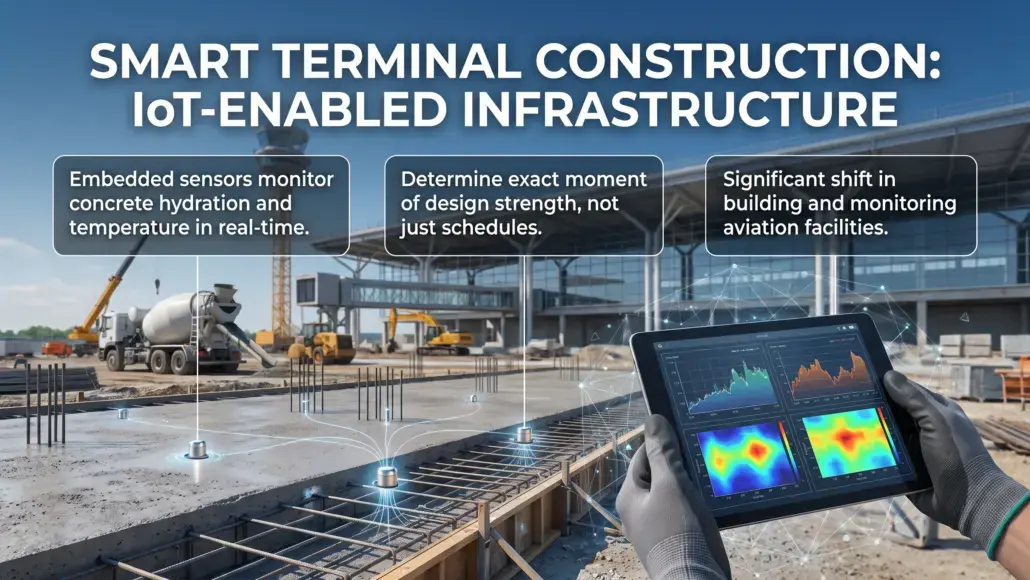


The integration of sensory technology directly into the building materials marks a significant shift in how aviation facilities are built and monitored. IoT-enabled infrastructure advancing smart terminal construction begins with the deployment of embedded sensors within concrete pours to monitor hydration and temperature in real time. This capability allows engineers to determine the exact moment a slab reaches its design strength, rather than relying on standard curing schedules or manual cylinder testing. By optimizing the timing of formwork removal and the commencement of subsequent trades, project managers can shave days off the critical path of a terminal project. This data-driven approach to material science ensures higher quality control and reduces the risk of structural defects that could delay terminal delivery.
Beyond the curing process, these embedded sensors provide a lifetime of data regarding the structural health of the terminal. In the high-vibration environment of an airport, where heavy aircraft and constant passenger traffic put immense stress on the facility, having a continuous stream of structural data is invaluable. Engineers can monitor for seismic activity, settling, or stress fractures without invasive inspections. This proactive monitoring capability ensures the long-term safety of the terminal while reducing the operational costs associated with routine maintenance. The transition to a smart structural framework represents the first step in creating a truly responsive airport environment that can adapt to changing conditions and usage patterns. The ability to track the performance of the building over decades provides the airport authority with a comprehensive understanding of the asset’s lifecycle.
Enhancing Site Connectivity and Communication Networks
A successful construction project relies on the fluid exchange of information, and the establishment of a site-wide wireless mesh network is essential for IoT-enabled infrastructure advancing smart terminal construction. These networks provide the backbone for thousands of connected devices, ranging from handheld tablets to automated machinery. In the massive expanse of an airport terminal site, where traditional cellular signals may be obstructed by reinforced concrete and steel, a dedicated IoT network ensures that data is always accessible. This connectivity allows site supervisors to receive instant updates on progress, safety alerts, and equipment status, facilitating more informed decision-making at every level of the organization.
The use of low-power wide-area networks specifically designed for IoT applications allows for the deployment of battery-operated sensors that can last for years. These sensors are used to monitor environmental conditions such as humidity, air quality, and noise levels, which are critical factors during the construction of sensitive airport areas like data centers or high-tech security hubs. By maintaining strict control over the construction environment, contractors can prevent damage to delicate electronic equipment and ensure a healthier work environment for the site crew. The data collected by these environmental sensors can also be used to demonstrate compliance with local regulations and sustainability certifications, adding another layer of accountability to the project. This durable network infrastructure ensures that the job site is always connected, even in the most challenging subterranean or secure areas of the terminal.
Real-Time Asset Tracking and Logistical Optimization
The logistics of an airport terminal project are incredibly complex, involving the movement of thousands of specialized components and high-value equipment. IoT-enabled infrastructure advancing smart terminal construction utilizes Radio Frequency Identification and Global Positioning System trackers to provide real-time visibility into the supply chain. Every pallet of material and every piece of heavy machinery can be tracked from the manufacturing plant to the job site. This level of transparency prevents the loss of materials and ensures that the right components are available when needed. When a specific valve or electrical panel is required for installation, the site team can locate it instantly within the staging area, eliminating the time-consuming searches that often lead to project delays.
Additionally, the monitoring of equipment utilization allows for the optimization of the construction fleet. By analyzing data on engine hours, fuel consumption, and idle time, project managers can identify inefficiencies and adjust the allocation of resources. For instance, if a particular crane is underutilized in one area of the site while another area is experiencing a bottleneck, the team can reassign equipment based on real-time demand. This data-driven management style reduces the overall cost of the project and minimizes the environmental impact of construction activities. The integration of asset tracking into the broader project management system creates a more resilient and responsive logistical operation that can handle the unique challenges of the aviation sector. The systematic tracking of every material delivery also reduces the administrative burden of inventory management and financial auditing.
Advancing Safety Protocols through Wearable Technology
Safety is the highest priority on any construction site, particularly in the highly regulated environment of an airport. IoT-enabled infrastructure advancing smart terminal construction introduces wearable technology to the workforce, providing an additional layer of protection for every person on-site. Smart helmets and vests equipped with sensors can detect falls, monitor heart rates, and track the location of workers in real time. In the event of an accident, the system can automatically trigger an emergency response, providing the exact coordinates of the injured individual. This rapid response capability is critical in the large and often labyrinthine structure of a terminal under construction.
These wearables also assist in the enforcement of exclusion zones and hazardous area protocols. If a worker enters a restricted zone or approaches a piece of heavy machinery too closely, both the worker and the equipment operator receive an immediate alert. This preventative measure significantly reduces the risk of collisions and other site accidents. Additionally, the data collected from these devices can be analyzed to identify high-risk patterns or areas where safety procedures may need to be reinforced. By taking a proactive and data-centric approach to worker safety, contractors can create a more secure work environment and reduce the insurance premiums associated with large-scale infrastructure projects. The implementation of these safety systems also demonstrates a commitment to the well-being of the workforce, which is essential for attracting and retaining skilled labor in a competitive market.
Integrating IoT Data with Project Management Systems
The true value of sensory data is realized when it is integrated into the primary project management and scheduling software. IoT-enabled infrastructure advancing smart terminal construction allows for the automated tracking of progress against the project baseline. For example, the installation of mechanical systems can be automatically verified as each component is scanned and placed. This real-time progress reporting provides the project team with an accurate picture of the current state of the build, allowing them to identify potential delays before they impact the overall schedule. The elimination of manual reporting also reduces the risk of human error and ensures that the project data is always objective and verifiable.
This integration also facilitates better financial management of the project. By linking the installation of materials to the payment schedule, contractors and owners can ensure that invoices are based on actual work completed. This transparency builds trust between all parties and streamlines the financial close-out process. The use of IoT data for progress verification is becoming a standard requirement for many airport authorities, who value the increased accountability and transparency it provides. As the industry moves toward more digital and automated workflows, the ability to effectively manage and analyze IoT data will become a key differentiator for construction firms specializing in aviation infrastructure. The automated synchronization of field data and office systems ensures that the entire project team is always working from the most recent information, leading to more effective collaboration and problem-solving.
Future Developments in Connected Construction Environments
The evolution of IoT technology continues to offer new possibilities for the construction of airport terminals. The next generation of IoT-enabled infrastructure advancing smart terminal construction will likely involve the use of 5G connectivity to support even higher volumes of data and faster transmission speeds. This will enable the use of high-definition video monitoring and augmented reality applications on-site, allowing engineers to overlay digital models onto the physical build for real-time verification. The use of autonomous vehicles for material transport and site inspections will also become more prevalent, further increasing the efficiency and safety of terminal projects. The constant stream of data from these autonomous systems will provide even greater insights into the construction process, allowing for the continuous optimization of site activities.
As the industry matures, the focus will shift from simple data collection to more advanced analytics and predictive modeling. By applying artificial intelligence to the vast amounts of data generated by IoT sensors, project managers will be able to predict and mitigate risks with unprecedented accuracy. This move toward predictive construction will allow for the optimization of every aspect of the build, from energy consumption to labor allocation. The integration of these technologies into the construction of airport terminals will result in more sustainable, efficient, and intelligent facilities that are better equipped to handle the complexities of modern air travel. The commitment to building smart from the ground up ensures that the aviation industry remains at the forefront of technological innovation, providing safer and more efficient infrastructure for millions of travelers around the world.