























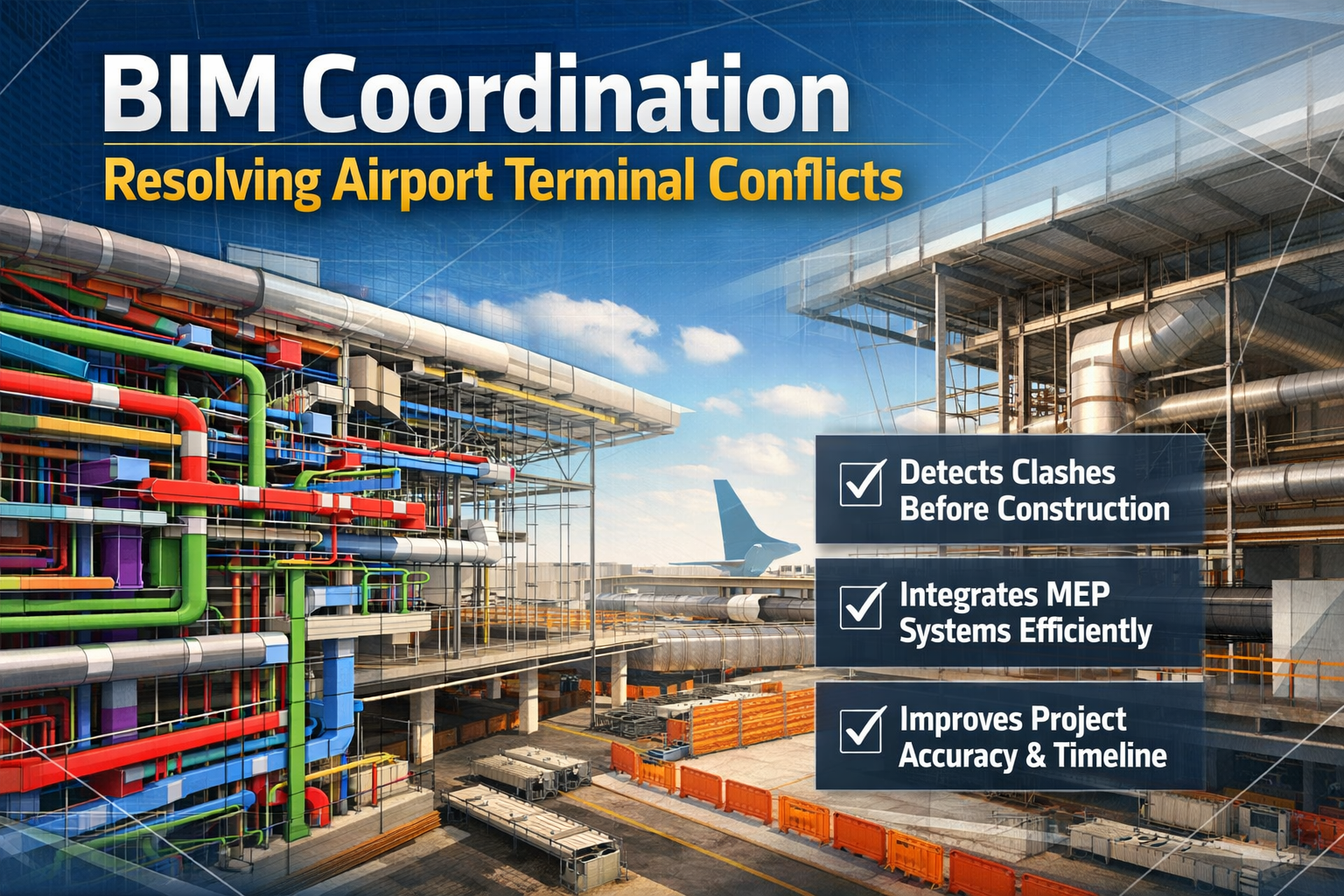


The execution of modern airport terminal projects involves an unprecedented level of complexity, specifically regarding the integration of diverse mechanical, electrical, and plumbing systems within constrained architectural envelopes. BIM coordination reducing airport terminal construction conflicts serves as the primary mechanism for identifying spatial overlaps before physical installation begins. By utilizing high-fidelity three-dimensional models, engineering teams can visualize the interaction between structural elements and utility routing in a virtual environment. This predictive capability allows for the adjustment of ductwork, piping, and cable trays without the need for costly field modifications. The precision afforded by these models ensures that every component is assigned a dedicated spatial volume, preventing the common issue of trades competing for the same physical space.
In the context of large-scale aviation infrastructure, the density of specialized systems such as baggage handling, security screening, and passenger boarding bridges creates a high risk for installation errors. Traditional two-dimensional drafting often fails to capture the intricate vertical clearances required for these systems. Through coordinated modeling, project managers can enforce strict clearance zones, ensuring that maintenance access and operational requirements are satisfied. The transition from reactive problem-solving to proactive spatial management significantly reduces the volume of requests for information and change orders that typically plague the middle stages of terminal development. The modeling process also allows for the early identification of structural constraints that might limit the routing of critical utilities, providing the design team with the opportunity to refine the architectural layout before construction starts.
Automated Clash Detection Protocols in Complex Terminal Environments
The implementation of automated clash detection software has refined the process of BIM coordination reducing airport terminal construction conflicts by highlighting hard and soft clashes with mathematical certainty. Hard clashes occur when two physical components occupy the same location, such as a structural beam intersecting with a main HVAC supply line. Soft clashes refer to violations of clearance requirements or maintenance access paths. By running routine clash reports across all trade models, the lead coordinator can isolate these issues and assign them to the relevant stakeholders for resolution. This systematic approach ensures that the digital representation of the building is entirely constructible before any materials are ordered or delivered to the site.
The effectiveness of these protocols is particularly evident during the installation of life safety and communication systems. In a terminal environment, these systems must remain uninterrupted and easily accessible. Automated detection tools allow engineers to simulate various installation sequences, identifying potential conflicts that might arise during the build phase. This level of foresight is essential for maintaining the project schedule, as it prevents the cascading delays that occur when one trade is forced to stop work due to an unforeseen obstruction. The data generated through these clash reports also provides a clear audit trail of design decisions, facilitating better communication between architects, engineers, and sub-contractors. This digital workflow enables the project team to address thousands of potential issues in a virtual setting, ensuring that the physical construction proceeds with minimal interruption.
Streamlining Trade Collaboration and Communication Channels
Effective communication remains the cornerstone of successful aviation construction, and the use of centralized data environments facilitates BIM coordination reducing airport terminal construction conflicts by providing a single source of truth for all participants. When multiple sub-contractors work on different aspects of a terminal, the risk of data silos is high. A coordinated model acts as a focal point for weekly coordination meetings, where participants can view the current state of the design and discuss resolution strategies for identified conflicts. This collaborative atmosphere encourages trades to work together rather than in isolation, leading to more creative and efficient engineering solutions.
The availability of cloud-based coordination platforms allows site personnel to access the most current models via mobile devices. This real-time access ensures that the field team is always working from the most recent revisions, further minimizing the likelihood of installation errors. When a conflict is discovered on-site despite rigorous virtual coordination, the digital model can be used to quickly evaluate alternative routes and obtain immediate approval from the design team. This rapid feedback loop is vital for maintaining the momentum of terminal construction, where every day of delay can result in significant financial consequences for the airport operator and airline tenants. By breaking down the traditional barriers between trades, the coordination process fosters a sense of shared responsibility for the project’s success.
Data Integration for Long-Term Asset Management and Operations
The benefits of rigorous coordination extend far beyond the initial construction phase, as the coordinated model becomes a valuable asset for the long-term operation of the airport terminal. BIM coordination reducing airport terminal construction conflicts ensures that the as-built documentation accurately reflects the physical reality of the facility. This accuracy is critical for maintenance teams who must locate concealed valves, electrical panels, or communication hubs behind finished ceilings and walls. By integrating equipment data and maintenance schedules into the final model, the facility management team can optimize the performance of the terminal and reduce the lifecycle costs of the infrastructure.
Future expansions and renovations also rely heavily on the data captured during the original coordination process. When an airport decides to add new gates or upgrade its security systems, the existing coordinated model provides a reliable baseline for planning these changes. Designers can confidently insert new systems into the virtual environment, knowing exactly where existing utilities are located. This continuity of data prevents the need for extensive field surveys and exploratory demolition, making future projects more predictable and cost-effective. The commitment to high-quality coordination during the initial build establishes a foundation for digital maturity that serves the airport for decades. The model serves as a living document that can be updated as the physical terminal evolves, providing a constant source of accurate information for the operations team.
Optimizing Construction Logistics and Prefabrication Strategies
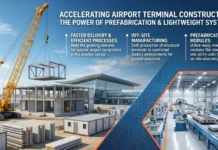
The high level of detail achieved through BIM coordination reducing airport terminal construction conflicts enables the broader use of prefabrication and modular assembly. When the spatial location of every pipe and conduit is fixed and verified in the digital model, those components can be manufactured off-site in a controlled environment. Prefabricated modules are then delivered to the terminal and installed with minimal field adjustments. This approach not only improves the quality of the installation but also reduces the number of personnel required on-site, which is a major advantage in the secure and congested areas of an active airport. The ability to assemble complex mechanical skids in a factory setting ensures that the final product meets the highest engineering standards while reducing the risk of on-site accidents.
Logistics planning is also enhanced by the data available in the coordinated model. Project managers can use the model to plan the delivery and staging of large components, ensuring that cranes and transport vehicles have sufficient clearance. The ability to simulate the installation of massive structural elements or baggage handling carousels in the virtual world prevents logistical bottlenecks that could otherwise stall the project. By aligning the construction sequence with the coordinated model, the site team can achieve a higher degree of predictability and efficiency. This integration of design, coordination, and logistics represents the highest standard of modern aviation construction, ensuring that complex terminal projects are delivered on time and within budget. The precise coordination of deliveries also minimizes the environmental impact of the project by reducing the time that transport vehicles spend idling on the site.
Impact of Precise Coordination on Project Timelines and Budgets
The financial implications of BIM coordination reducing airport terminal construction conflicts are substantial, as it directly impacts the ability to deliver the project within the approved budget. By identifying and resolving conflicts in the virtual environment, the project team avoids the high costs associated with emergency field fixes and material waste. Every resolved clash represents a potential saving in both labor and materials, contributing to a more efficient use of the airport’s capital investment. The increased predictability of the construction process allows for more accurate financial forecasting and risk management. Owners and developers can have greater confidence in the project’s financial performance, knowing that the digital coordination process has mitigated many of the primary risks.
The reduction in project duration also provides significant economic benefits for the airport operator and its airline partners. A terminal that opens on schedule can begin generating aeronautical and non-aeronautical revenue sooner, improving the overall return on investment for the project. The ability to meet the promised opening date is also critical for the operational planning of the airlines, who must coordinate their flight schedules and ground handling operations with the new facility. By providing a reliable and efficient construction process, BIM coordination helps to build strong relationships between the airport authority and its key stakeholders. The long-term value of a well-coordinated facility is reflected in lower operational costs and a better experience for the millions of passengers who pass through the terminal each year. This focus on efficiency and quality ensures that the airport remains competitive in the global aviation market.