






















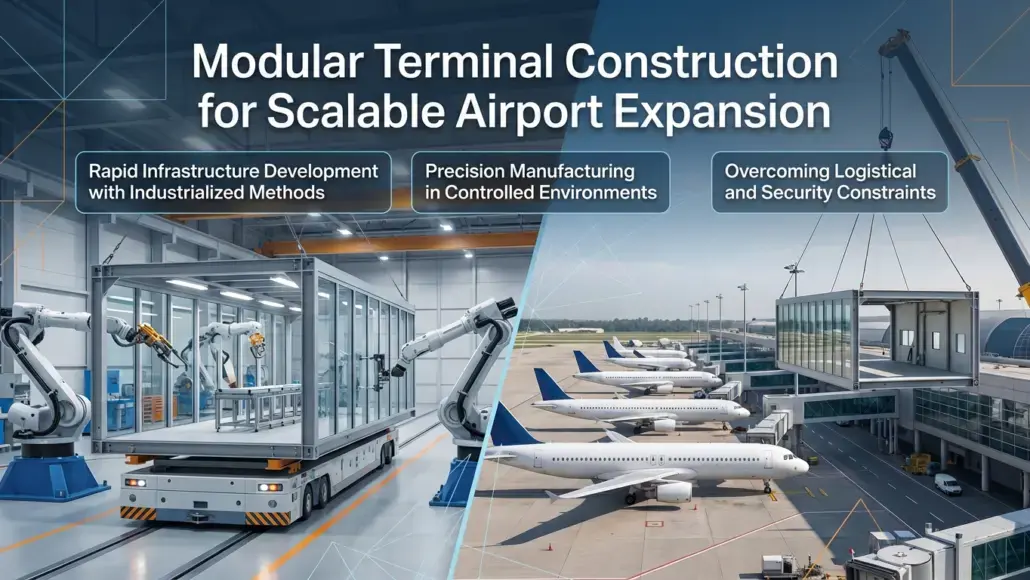


The demand for rapid aviation infrastructure development has led to the widespread adoption of industrialized construction methods. Modular terminal construction enabling scalable airport expansion relies on the precision manufacturing of building components in a controlled factory environment. By shifting a significant portion of the work away from the active airfield, contractors can circumvent the logistical constraints and security restrictions that typically slow down traditional on-site builds. These prefabricated modules, which can include entire sections of the building complete with interior finishes, electrical systems, and plumbing, are then transported to the airport for final assembly. This method drastically reduces the on-site footprint and minimizes the disruption to ongoing flight operations, which is a critical requirement for any major hub.
The quality control achieved through factory-based manufacturing is far superior to that of conventional site work. In a specialized facility, environmental conditions are strictly regulated, and automated assembly tools ensure that every component meets exacting tolerances. This level of precision is essential for terminal projects where complex baggage systems and passenger loading bridges must integrate perfectly with the building structure. The use of modular units allows for parallel workstreams: while the foundation and civil works are being prepared on-site, the terminal modules are being manufactured concurrently. This overlap in the construction schedule can reduce the total delivery time by as much as thirty to fifty percent, allowing airports to respond more quickly to sudden shifts in passenger demand. The factory environment also provides a safer and more ergonomic workspace for the assembly team, leading to higher levels of craftsmanship and consistency across the entire project.
Achieving Unprecedented Flexibility and Scalability
One of the primary advantages of this industrialized approach is the inherent adaptability it provides to airport operators. Modular terminal construction enabling scalable airport expansion allows for a “plug-and-play” architecture where additional gates, lounges, or retail spaces can be added with minimal effort. As an airport outgrows its current capacity, new modules can be manufactured and integrated into the existing structure during off-peak hours. This incremental growth strategy prevents the need for massive, high-risk capital projects that take years to complete. Instead, airports can scale their facilities in alignment with actual traffic growth, ensuring that infrastructure investments are always justified by demand.
This scalability is particularly valuable for secondary airports or regional hubs that may experience rapid growth due to the arrival of new airline carriers. The ability to deploy a fully functional terminal annex in a matter of months rather than years provides a significant competitive advantage. These modular units are not merely temporary structures; they are designed to the same rigorous standards as permanent buildings, offering a high-quality passenger experience and long-term durability. The flexibility of the modular system also extends to the reconfiguration of the interior space. As security requirements or passenger processing technologies change, the internal modules can be swapped or updated without impacting the primary structure of the terminal. This ability to evolve with the industry ensures that the terminal remains functional and efficient throughout its entire operational life.
Minimizing Environmental Impact and Operational Disruption
The environmental benefits of off-site construction are becoming increasingly important in the aviation sector, where sustainability is a top priority. Modular terminal construction enabling scalable airport expansion significantly reduces the amount of waste generated on-site. In a factory setting, materials can be measured and cut with extreme accuracy, and any leftover scraps can be easily recycled or repurposed. This reduction in material waste, combined with fewer delivery truck trips to the construction site, results in a lower carbon footprint for the project. Additionally, the decrease in on-site noise, dust, and vibration is a major benefit for both passengers and airport staff, as it allows the terminal to remain functional and comfortable throughout the expansion process.
The safety profile of modular construction is also superior to traditional methods. By performing the majority of the work at ground level in a controlled environment, the risks associated with working at heights or in confined spaces are greatly reduced. The factory setting also allows for better ergonomic design of the assembly process, reducing the physical strain on the workforce. For the airport authority, the reduced number of construction personnel required on the airfield simplifies security screening and badge management, which are major logistical hurdles in the post-9/11 aviation environment. The combination of environmental stewardship and operational efficiency makes modular construction the preferred choice for forward-thinking airport developers who are committed to reducing their carbon footprint and improving site safety. The use of sustainable materials in the factory further enhances the environmental credentials of the modular terminal.
Economic Advantages and Risk Mitigation in Large-Scale Builds
From a financial perspective, the predictability of modular construction is one of its most compelling attributes. Modular terminal construction enabling scalable airport expansion offers a high degree of cost certainty because the factory production process is less susceptible to weather delays, site conditions, or local labor shortages. Contracts for modular units are typically based on fixed manufacturing costs, providing owners with greater protection against the price fluctuations that often affect traditional construction materials. The shorter project duration also means that the airport can begin generating revenue from the new facility much sooner, significantly improving the internal rate of return for the investment.
Risk mitigation is further enhanced by the ability to test and commission entire modules before they arrive on-site. For example, a modular security checkpoint can be fully wired and tested for network connectivity at the factory, ensuring that it is ready for immediate operation upon installation. This “off-site commissioning” reduces the likelihood of technical failures during the critical opening phase of a new terminal. By resolving potential issues in the factory rather than in the field, the project team can avoid the high costs and public relations challenges associated with delayed terminal openings. The shift toward modular methods represents a move from high-risk bespoke engineering toward a more reliable and industrialized product-based approach to aviation infrastructure. This systematic approach to risk management provides airport authorities with greater peace of mind throughout the entire development process.
Integration of Smart Technologies within Modular Units
The standardized nature of modular components provides an ideal platform for the integration of advanced digital technologies. Modular terminal construction enabling scalable airport expansion allows for the seamless inclusion of IoT sensors, automated lighting controls, and high-efficiency HVAC systems during the manufacturing process. These systems can be pre-configured and optimized to ensure maximum energy efficiency and passenger comfort. Because the wiring and ductwork are installed in a factory setting, the quality of the installation is consistently high, and the maintenance access is carefully planned. This results in a “smart” terminal that is easier to operate and more responsive to the needs of the airport staff and passengers.
The data collected from the manufacturing phase can be directly imported into the airport’s facility management system. Every module is essentially a digital asset with a complete history of its materials, components, and testing results. This level of data transparency is invaluable for long-term maintenance and future renovations. When a component needs to be replaced, the facility team knows exactly what part is required and how to access it, thanks to the precise documentation generated during the modular build. The synergy between modular physical structures and digital data management creates a sophisticated infrastructure system that can evolve alongside the rapidly changing aviation industry. This integration of smart technology ensures that the terminal remains at the forefront of innovation, providing a superior experience for both travelers and airport operators.
Future Outlook for Industrialized Aviation Construction
The future of airport expansion will undoubtedly be defined by a greater reliance on modular and prefabricated solutions. As the global demand for air travel continues to rise, the pressure to deliver infrastructure quickly and sustainably will only intensify. Modular terminal construction enabling scalable airport expansion is poised to become the standard delivery model for both new terminals and major expansions. We can expect to see further innovations in material science, such as the use of lightweight composites and high-performance timber, which will make modular units even easier to transport and assemble. The ongoing development of global standards for modular aviation components will also facilitate greater cross-border collaboration and more efficient supply chains.
The role of the architect and engineer is also evolving in this new paradigm. Design teams must now focus on creating flexible and modular systems that can be adapted to a variety of site conditions and operational requirements. This shift requires a deep understanding of manufacturing processes and logistics, as well as a commitment to digital collaboration. By embracing the principles of Design for Manufacture and Assembly (DfMA), the aviation industry can reach new levels of efficiency and quality. The transition to modular terminal construction is not just a change in how we build; it is a fundamental shift in how we conceive and manage the lifecycle of our most important transportation assets. This evolution ensures that the aviation industry remains resilient and capable of meeting the challenges of the 21st century, providing the infrastructure needed for a more connected world.