























Close
MCE 2026
Tuesday, January 27, 2026
JEC WORLD 2026

Comansa upgrades two flat-top tower crane models

Note* - All images used are for editorial and illustrative purposes only and may not originate from the original news provider or associated company.

Subscribe

- Never miss a story with notifications

- Gain full access to our premium content

- Browse free from any location or device.

Media Packs

Expand Your Reach With Our Customized Solutions Empowering Your Campaigns To Maximize Your Reach & Drive Real Results!

– Access the Media Pack Now

– Book a Conference Call

Leave Message for Us to Get Back

Related stories

Smart Construction Equipment Driving Jobsite Productivity

The integration of intelligent systems within heavy machinery is fundamentally altering how infrastructure is built, focusing on the synergy between automated controls and data-driven insights to maximize efficiency. By leveraging the power of connected assets, project managers can now achieve levels of precision and speed that were once considered unattainable in the traditional building environment.

Sustainable Construction Machinery for Low Emission Sites

Reducing the carbon footprint of the building sector requires a total reimagining of engine technology and energy consumption, leading to the rise of specialized machinery that balances power with environmental stewardship. By prioritizing low emission operation and energy-efficient designs, contractors are meeting the dual challenge of fulfilling ambitious infrastructure goals while adhering to increasingly stringent global climate regulations.

Digital Construction Sites Powered by Connected Equipment

The concept of a connected jobsite revolves around a unified digital ecosystem where every asset contributes real-time data to a centralized management hub, ensuring seamless coordination across large-scale projects. By integrating sophisticated data analytics and satellite-driven monitoring, the industry is moving toward a more transparent and highly optimized way of delivering complex infrastructure.
- Advertisement -
Advancing Prefabrication 2026

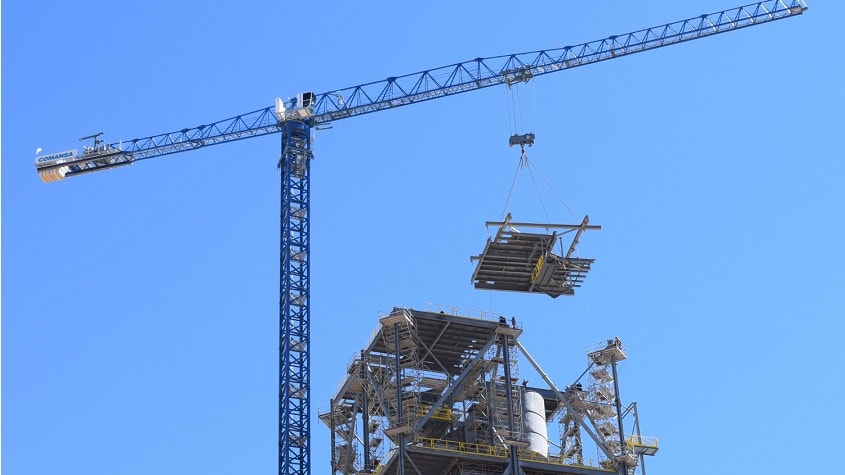
The design of new solutions for the 21LC1050 Flat-Top tower crane, launched two months ago (September 2018), allowed COMANSA’s R&D team to apply some of these developments to two of the manufacturer’s most successful cranes.

Thus, models 21LC660 and 21LC750, mainly designed for large industrial projects, energy, mining and PPVC construction, improve their performance significantly.

The versions of 24, 36 and 48 tonnes (52,910, 79,360 and 105,820 lb) of both models have increased their maximum load capacity to 25, 37.5 and 50 tonnes (55,120, 82,670 and 110,230 lb). This improvement is achieved thanks to the use of a compacted wire rope, of smaller diameter, and an optimized design of the now lighter trolley-hook set. Such change does not only increase the maximum load capacity of the crane, but also improves the loads in all radius, including the jib-end load.

During the design of the 21LC1050, space restrictions at construction sites that exist in some countries due to regulation were taken into account. That is why a highly modular counterjib was created for such model, which allows up to six different configurations according to the jib length. The advantages of this new counterjib and its good reception in the market encouraged COMANSA to apply this design to cranes 21LC660 and 21LC750, which will improve the counterjib radius of both models when they are erected with reduced jib-lengths. Thus, when the 21LC750 crane is erected with a 50-metre jib (164 ft), the counterjib radius is 25 metres instead of 31, of the previous design (82 ft instead of 102).

As a novelty in terms of jib length, COMANSA now offers an optional 90 metre radius (295.3 ft), for special applications. This option is available for the 21LC660 and 21LC750 models, as well as for the 21LC1050 crane.

Models 21LC660 and 21LC750 (except the 20t version of 21LC660) now feature a new optional hoist mechanism (132 kW – 177 hp), which allows speeds of up to 300 metres per minute (984 ft/min). COMANSA also added the Effi-Plus system to the optional 110 kW hoist mechanisms (148 hp), available for all versions of such models. This system, which was already implemented in the other motors of both models, increases the hoist speed almost 15% with light loads. These two mechanisms greatly improve the productivity of the crane, especially when working at large heights. Both motors can have wire rope capacity of 720 or 1,570 metres (2,360 and 5,150 ft), which allows these cranes to work with heights under hook of up to 785 metres (2,575 ft).

To simplify and unify the range of tower sections, the 21LC750 now has the D36B as standard section. This mast is the same as that of the 21LC1050 Flat-Top and the LCL700 luffing-jib crane, and is fully compatible with the D36 mast section, with was the standard for the 21LC750 and will now be discontinued.

The “new” 21LC660 and 21LC750 cranes are now available worldwide and are shipped with the XL-size CUBE cab as standard. Thanks to its fully glazed front part and its spacious design, this new cab represents an important improvement in the productivity and comfort of the crane operator.

The 21LC660 and the 21LC750 cranes are two of COMANSA’s models with best acceptance globally thanks to their productivity and competitiveness. These cranes have worked in projects in different countries such as Germany, South Korea, Canada, Angola, Singapore, Sweden, Qatar, Australia, Argentina, Hong Kong, Ivory Coast, etc.

Few manufacturers offer tower cranes with 50 tonnes of maximum load in their range, and most of those cranes have pendant lines, with the disadvantages that this represents. In addition to the Flat-Top design, models 21LC660, 21LC750 and 21LC1050 offer the customer advantages such as the ease and safety of their erection and enormous versatility and modularity.

Summary of the improvements of 21LC660 and 21LC750 models:

  • Increase of the loads, including maximum load capacity: 25, 37.5 and 50 tonnes / 55,120, 82,670 and 110,230 lb (Not applies in model 21LC660 20 t – 44,090 lb).
  • New modular counterjib design for reduced radius.
  • Optional 90-metre jib length for special projects (295.3 ft).
  • New 132 kW / 177 hp hoist mechanism (Not applies in model 21LC660 20 t – 44,090 lb).
  • Increase of hoist speeds in the 110 kW mechanisms (148 hp) thanks to the Effi-Plus System.
  • Larger wire rope capacity.
Achema Middleeast

Latest stories

Related stories

Smart Construction Equipment Driving Jobsite Productivity

The integration of intelligent systems within heavy machinery is fundamentally altering how infrastructure is built, focusing on the synergy between automated controls and data-driven insights to maximize efficiency. By leveraging the power of connected assets, project managers can now achieve levels of precision and speed that were once considered unattainable in the traditional building environment.

Sustainable Construction Machinery for Low Emission Sites

Reducing the carbon footprint of the building sector requires a total reimagining of engine technology and energy consumption, leading to the rise of specialized machinery that balances power with environmental stewardship. By prioritizing low emission operation and energy-efficient designs, contractors are meeting the dual challenge of fulfilling ambitious infrastructure goals while adhering to increasingly stringent global climate regulations.

Digital Construction Sites Powered by Connected Equipment

The concept of a connected jobsite revolves around a unified digital ecosystem where every asset contributes real-time data to a centralized management hub, ensuring seamless coordination across large-scale projects. By integrating sophisticated data analytics and satellite-driven monitoring, the industry is moving toward a more transparent and highly optimized way of delivering complex infrastructure.

Automation Redefining Heavy Construction Equipment Operations

Removing the physical limitations of manual operation through sophisticated control logic allows heavy machinery to achieve tolerances and safety standards that were previously impossible, defining the new era of autonomous building. By transitioning toward self-correcting systems and remote-controlled assets, the sector is ensuring that complex infrastructure can be delivered with surgical precision and minimal human risk.

Subscribe

- Never miss a story with notifications

- Gain full access to our premium content

- Browse free from any location or device.

Media Packs

Expand Your Reach With Our Customized Solutions Empowering Your Campaigns To Maximize Your Reach & Drive Real Results!

– Access the Media Pack Now

– Book a Conference Call

Leave Message for Us to Get Back

Translate »