
















The building envelope serves as the critical physical interface between the internal environment and the external world. Historically viewed as a static shield against the elements, the modern facade is increasingly being treated as a dynamic, high-performance system. The implementation of building envelope technologies is a fundamental requirement for meeting the ambitious net-zero energy goals that are now being mandated by global building codes. By integrating advanced materials, responsive glazing, and superior insulation techniques, architects and engineers are creating a “skin” that can actively manage the flow of heat, light, and air. This shift is turning the building envelope from a source of energy loss into a vital tool for environmental resilience and occupant comfort across all climate zones.
The Evolution of the High-Performance Thermal Boundary
The thermal performance of a building is largely determined by its envelope’s ability to resist the transfer of heat. Traditional envelopes often relied on thick, heavy materials like masonry to provide thermal mass, but modern building envelope technologies utilize “thin-film” logic and advanced composites to achieve even higher performance with a fraction of the weight. The concept of the “passive house” standard has driven a radical rethink of the envelope, prioritizing air-tightness and the elimination of thermal bridges. A thermal bridge is a point in the structure where heat can easily pass through the insulation, such as at a floor slab or a window frame. By utilizing continuous insulation layers and specialized structural connectors, modern envelope systems ensure that the building’s thermal integrity is maintained across every square inch of its surface.
Dynamic Glazing and the Optimization of Daylight
Windows have traditionally been the weakest link in the building envelope, allowing for significant heat gain in the summer and heat loss in the winter. However, the emergence of dynamic glazing is transforming this dynamic. These building envelope technologies allow the window’s transparency to change in response to external conditions or occupant preference. Electrochromic glass, for instance, uses a small electrical charge to darken the glass, blocking solar radiation during peak hours while maintaining views of the outside. Other technologies, such as thermochromic or photochromic glass, respond automatically to temperature or light intensity. By treating the window as a “smart filter” rather than a static opening, architects can maximize the use of natural daylight while strictly controlling the building’s solar heat gain, drastically reducing the demand for artificial lighting and mechanical cooling.
Smart Facades and Responsive Building Skins
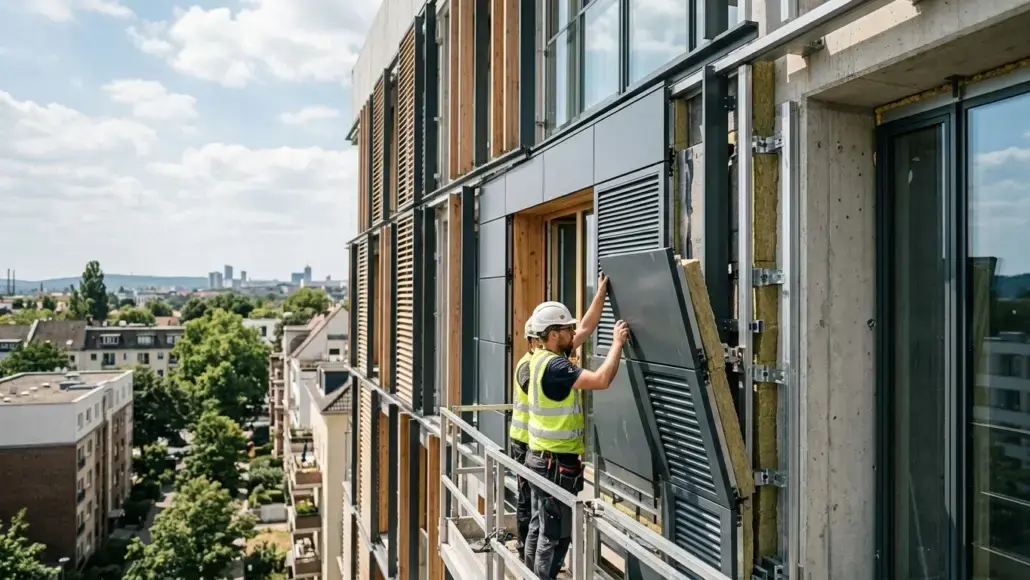
The next frontier for the building envelope is the “smart facade,” which can actively respond to its environment like a living organism. These building envelope technologies integrate sensors, actuators, and control systems directly into the facade panels. A smart facade might feature automated louvers that track the sun’s position to provide optimal shading, or “breathable” panels that open and close to facilitate natural ventilation. By linking the facade directly to the Building Management System (BMS), the building’s “skin” can adapt to real-time weather fluctuations, ensuring that the internal environment remains comfortable with minimal energy input. This level of responsiveness is essential for creating buildings that can thrive in the increasingly volatile weather patterns of the twenty-first century.
Advanced Insulation Materials: Aerogels and VIPs
The thickness of the insulation is a major constraint in urban architecture, where every square inch of floor space is valuable. To address this, building envelope technologies are utilizing high-performance materials like Vacuum Insulation Panels (VIPs) and aerogels. VIPs provide the insulation value of a traditional thick wall in a panel just a few centimeters thick, making them ideal for high-density urban developments and the retrofitting of existing structures. Aerogels, often referred to as “frozen smoke,” are among the lightest and most effective insulating materials known to man. When integrated into the building envelope, these materials provide an unprecedented level of thermal resistance, allowing for the creation of ultra-efficient structures that occupy a minimal physical footprint. This material innovation is a key driver of the move toward net-zero urban development.
The Role of Air-Tightness and Vapor Management
While insulation manages heat transfer through conduction, the management of air leakage is equally critical for climate performance. Building envelope technologies now emphasize the creation of a continuous “air barrier” that prevents the uncontrolled movement of air and moisture into and out of the building. This is vital not just for energy efficiency but also for the long-term health and durability of the structure. If warm, moist air is allowed to penetrate the envelope and condense on cold structural members, it can lead to mold growth and structural decay. Modern vapor-permeable membranes and specialized sealing tapes ensure that the building is “air-tight but vapor-open,” allowing the structure to “breathe” while preventing the energy losses associated with traditional leaky envelopes.
Building Envelope Commissioning and Lifecycle Verification
As the complexity of the building envelope grows, the process of verifying its performance has become more rigorous. Building envelope commissioning (BECx) is a systematic process of ensuring that the envelope is designed, installed, and verified to meet the project’s performance requirements. This involves everything from the review of design details to on-site testing, such as blower-door tests to verify air-tightness and infrared thermography to identify insulation gaps. These building envelope technologies ensure that the “as-built” performance matches the “as-designed” intent, protecting the owner’s investment and ensuring that the building meets its sustainability targets. Lifecycle verification is also becoming common, using embedded sensors to monitor the envelope’s performance over decades to ensure it does not degrade over time.
Retrofitting the Existing Built Environment
A significant portion of the energy waste in our cities comes from existing buildings with poor-performing envelopes. Building envelope technologies are increasingly being developed specifically for the retrofit market. This includes “over-cladding” systems, where a new high-performance skin is installed directly over the existing facade. This approach allows for a radical improvement in energy efficiency without the need for a full demolition, preserving the embodied carbon of the original structure. Other technologies, such as secondary glazing or internal insulation systems, provide a path for historical buildings to meet modern sustainability standards. By “upcycling” the existing built environment through advanced envelope tech, we can achieve massive carbon reductions across our entire urban infrastructure.
Integration with On-Site Energy Generation
The modern building envelope is no longer just a passive barrier; it is also becoming an active energy generator. Building-Integrated Photovoltaics (BIPV) are building envelope technologies that incorporate solar cells directly into the facade materials, such as glass, shingles, or cladding panels. This allows the entire surface area of the building to contribute to its energy needs, turning every facade into a localized power plant. As the efficiency of solar cells increases and the cost of thin-film technology decreases, BIPV is becoming a standard feature of the high-performance building envelope. This integration is a critical component of the “positive-energy” building concept, where the structure generates more energy than it consumes over the course of a year.
The Challenge of Material Durability and Recycling
As we integrate more complex materials and electronic systems into the building envelope, the issues of durability and end-of-life recycling become more prominent. Building envelope technologies must be designed to withstand decades of exposure to UV radiation, temperature fluctuations, and moisture. Ensuring that these high-performance systems can be safely deconstructed and recycled at the end of their life is a key challenge for the circular economy. This requires a move toward “modular” facade designs where the different components can be easily separated for repair or recycling. By designing for “circularity” from the outset, the facade industry can ensure that the sustainable buildings of today do not become the hazardous waste of tomorrow.
Aesthetic Innovation and the Future of Urban Design
High climate performance does not have to come at the expense of architectural beauty. On the contrary, building envelope technologies are opening up new aesthetic possibilities for urban design. The use of advanced composites and 3D-printed facade panels allows for the creation of complex, organic forms that were previously impossible to build. High-performance glazing can be produced in a wide variety of colors and textures, allowing architects to play with transparency and light in new ways. The building envelope of the future will be a perfect synthesis of form and function a beautiful, expressive skin that is also a highly efficient environmental engine. This aesthetic innovation is essential for winning public support for the transition to a more sustainable and resilient urban world.
Conclusion: The Skin as a Strategic Environmental Asset
The building envelope is the most important component of a sustainable building strategy. By embracing advanced building envelope technologies, we can create structures that are fundamentally in harmony with their environment. This shift from a static barrier to a dynamic, responsive skin is the key to achieving the net-zero goals of the twenty-first century. As the climate continues to change, the building’s skin will be its primary defense a strategic asset that manages energy, light, and air to ensure the safety and comfort of its occupants. The buildings that define our future will be those that understand how to use their envelope not just to protect from the world, but to intelligently engage with it.