






























The construction industry is undergoing a paradigm shift as it moves away from energy-intensive, synthetic materials toward organic, renewable alternatives. The rise of bio based construction materials marks a significant milestone in the quest for a carbon-neutral built environment. These materials, derived from living organisms such as plants, fungi, and bacteria, are no longer confined to experimental or niche ecological projects. Instead, they are increasingly driving mainstream projects, offering a unique combination of carbon sequestration, thermal efficiency, and healthy indoor environments. From mass timber skyscrapers to hempcrete residential blocks, the integration of biological systems into building technology is redefining the future of urban architecture.
The Carbon Sequestration Potential of Biological Infrastructure
The fundamental appeal of bio based construction materials lies in their ability to act as carbon sinks. Unlike traditional materials like steel and concrete, which release vast amounts of CO2 during production, bio-based materials store carbon that was absorbed by the source organisms during their growth phase. For instance, timber used in cross-laminated timber (CLT) panels can lock away carbon for decades, effectively turning buildings into urban forests. This transition to “biological infrastructure” is essential for meeting international climate targets, as it addresses the embodied carbon the emissions associated with material extraction and manufacturing that accounts for a substantial portion of a building’s total lifetime impact.
Industrial Hemp and the Performance of Hempcrete
One of the most prominent examples of bio based construction materials entering the mainstream is the use of industrial hemp. Hempcrete, a composite material made from the woody inner core of the hemp plant mixed with a lime-based binder, is gaining traction for its exceptional thermal and hygroscopic properties. It is naturally insulating, fire-resistant, and capable of regulating indoor humidity, which reduces the reliance on mechanical heating and cooling systems. As building codes become more stringent regarding energy performance, the multi-functional nature of hemp-based products makes them an attractive option for developers looking to future-proof their assets while supporting regional agricultural economies.
Mycelium and Fungi-Based Innovation
Fungi-based materials, specifically mycelium, represent another frontier in the mainstream adoption of biological building components. Mycelium, the root structure of mushrooms, can be grown into specific shapes using agricultural waste as a substrate. The resulting material is lightweight, strong, and entirely biodegradable. Mycelium insulation boards and acoustic panels are already being utilized in commercial interiors, providing a sustainable alternative to petroleum-based foams. The ability to “grow” building materials in a matter of weeks, rather than extracting them through mining or intensive manufacturing, exemplifies the shift toward a more circular and regenerative construction model.
Engineered Wood and Mass Timber Skyscrapers
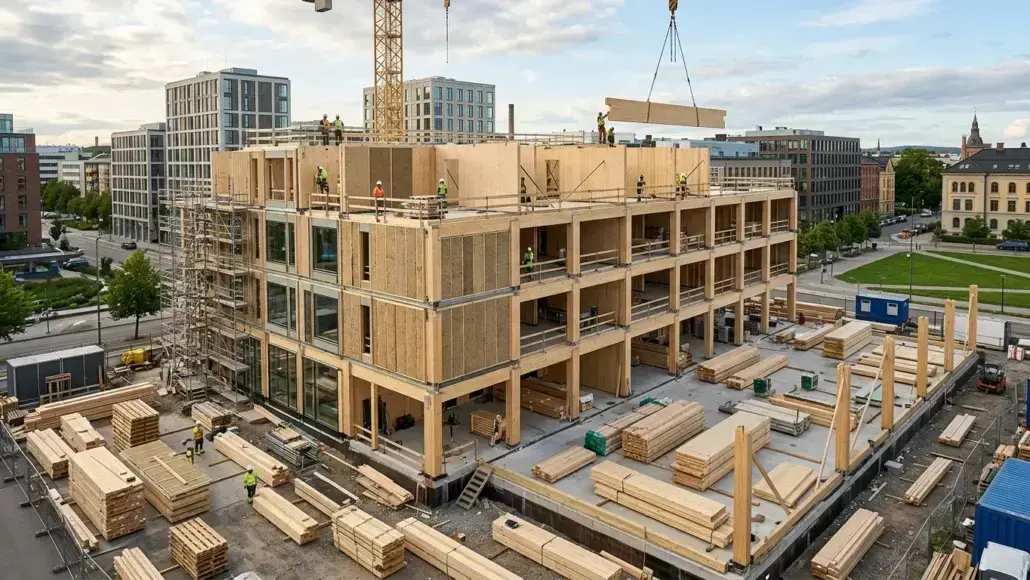
The scaling of bio based construction materials into large-scale mainstream projects is supported by advancements in engineered wood products. Mass timber, including CLT and glulam, has proven that wood can match the structural performance of steel and concrete in mid-to-high-rise applications. These engineered products offer high strength-to-weight ratios and predictable fire performance, allowing for faster construction times and reduced site disturbance. The aesthetic and psychological benefits of exposed wood often referred to as biophilic design have also been shown to improve the well-being and productivity of building occupants, adding a layer of human-centric value to sustainable development.
Addressing Myths of Fire Safety and Structural Stability
To truly understand why bio based construction materials are capturing the attention of mainstream developers, one must look at the rigorous engineering behind mass timber. For decades, the primary concern regarding large-scale wood construction was fire safety. However, extensive testing has demonstrated that thick mass timber panels, such as Cross-Laminated Timber (CLT), possess a predictable and safe fire rating. When exposed to fire, the outer layer of the timber chars, creating a protective barrier that prevents the core from burning and maintains structural stability longer than many steel beams, which can warp and fail under intense heat. This realization has led to significant revisions in building codes across Europe and North America, allowing for the construction of timber towers that reach eighteen stories and beyond. Buildings like the Mjøstårnet in Norway serve as global beacons, proving that bio-based materials can handle the structural and safety demands of modern high-density living.
Material Passports and the Circular Economy
The integration of bio based construction materials also facilitates a more sophisticated approach to the circular economy. Traditional demolition often results in a massive volume of non-recyclable waste, but bio-based components offer a different path. By using “Material Passports” digital records that track the origin, composition, and potential for reuse of every building element architects can design for disassembly. At the end of a building’s life, timber beams can be repurposed for new structures, and hemp or mycelium insulation can be composted to enrich the soil. This “cradle-to-cradle” lifecycle transforms the building industry from a linear consumer of resources into a circular participant in the earth’s natural cycles. This level of transparency and resource management is increasingly required by green building certifications and impact-focused investors.
Regenerative Agriculture and Sustainable Forestry
The shift toward these materials also creates a profound opportunity for regenerative agriculture and forestry. Unlike the extraction of minerals or the production of synthetic chemicals, the cultivation of bio based construction materials can actively improve the land. Industrial hemp, for instance, is a rotation crop that cleans the soil of heavy metals and requires minimal pesticides, while sustainably managed forests provide essential habitats and protect water quality. By creating a high-value market for these crops, the construction industry becomes a driver for ecological restoration. This connection between the city and the countryside is a vital component of a resilient economy, ensuring that our urban expansion supports rather than depletes the natural world.
Biophilic Design and Occupational Wellness
From a human-centric perspective, the impact of bio based construction materials on the indoor environment is transformative. Studies in biophilic design have shown that being surrounded by natural materials reduces cortisol levels, lowers blood pressure, and improves cognitive function. In mainstream commercial projects, where employee productivity and health are top priorities, the use of exposed wood, cork flooring, and clay-based plasters provides a significant competitive advantage. These materials do not off-gas harmful chemicals, which is a common issue with synthetic carpets and paints. Instead, they create a “breathable” building skin that naturally buffers fluctuations in temperature and moisture, leading to a more comfortable and vibrant indoor atmosphere that promotes long-term health.
Economic Incentives and Risk Mitigation
The financial narrative is also catching up with the environmental one. As institutional investors face increasing pressure to report on the carbon intensity of their portfolios, the inherent carbon-negative properties of bio based construction materials make them a low-risk asset. Banks and insurers are beginning to offer better rates for projects that can prove their sustainability through rigorous LCA data. This “green premium” is not just about a higher sale price; it is about risk mitigation in a world where carbon-heavy assets may soon become stranded. The transition is being further accelerated by the emergence of “Green Mortgages” and specialized ESG-linked financing, which reward developers for choosing materials that contribute to a healthier planet.
Future Frontiers in Biotechnology and Architectural Design
Looking forward, the convergence of synthetic biology and architectural design promises even more radical innovations. We are entering an era where we might not just build with wood, but grow entire structural components using programmed organisms. Imagine a building whose facade can repair its own cracks or a roof that changes its insulation properties based on the season, all powered by biological processes. While these may sound like science fiction, the foundational research is happening today in laboratories around the world. The mainstream projects of the 2030s and 2040s will likely look very different from those of today, as the boundaries between the built and the grown continue to blur. The adoption of bio based construction materials is the first step in this long-term journey toward a truly symbiotic relationship with the biosphere.
In summary, the transition to bio based construction materials is a multi-faceted revolution that touches on engineering, economics, ecology, and human psychology. It represents a move away from the “extractive” mindset of the industrial age toward a “regenerative” mindset for the ecological age. By embracing the materials that nature provides, and enhancing them with modern technology, we are building a future that is not only sustainable but also deeply connected to the life-giving processes of our planet. Every mainstream project that chooses timber over steel or hemp over foam is a vote for a more resilient and vibrant world. The momentum is undeniable, and the rewards for developers, occupants, and the earth itself are immense. Thus, the biological turn in construction is not merely an alternative; it is the essential path forward for a global society seeking to thrive within the limits of its environment.