


























In the high-stakes arena of modern construction, where timelines are tight and margins are razor-thin, the efficiency of material and resource movement can be the difference between a project’s success and its failure. Construction logistics optimization is a multi-dimensional discipline that focuses on the seamless coordination of people, equipment, and materials from the point of origin to the final point of installation. Historically, logistics was often treated as a secondary concern, secondary to design and structural engineering. However, as projects grow in complexity and sites become more constrained particularly in dense urban environments the ability to manage the flow of resources has become a critical competitive advantage. By treating logistics as a core strategic function, firms can significantly reduce project delays, minimize waste, and enhance overall productivity.
The primary goal of construction logistics optimization is to ensure that the right materials arrive at the right place at exactly the right time. When this harmony is disrupted, a “ripple effect” of delays occurs: workers stand idle, equipment sits unused, and specialized subcontractors are forced to reschedule their visits, often leading to months of cumulative downtime. To combat this, industry leaders are turning to sophisticated planning models that integrate logistics into the very earliest stages of the project lifecycle. This proactive approach allows for the identification of potential bottlenecks such as limited site access, seasonal weather disruptions, or global supply chain volatility before they manifest as physical delays on the ground.
The Architecture of an Optimized Supply Chain
A robust construction supply chain is the backbone of any successful logistics strategy. Optimization begins with a shift from reactive purchasing to proactive supply chain management. This involves building deep partnerships with suppliers and manufacturers, moving beyond transactional relationships to a model based on shared data and mutual accountability. When contractors and suppliers share a common digital platform, they gain real-time visibility into production schedules and inventory levels. This transparency allows for more accurate forecasting and reduces the need for “safety stock” the excess material often stored on-site as a buffer against uncertainty, which consumes valuable space and risks damage or theft.
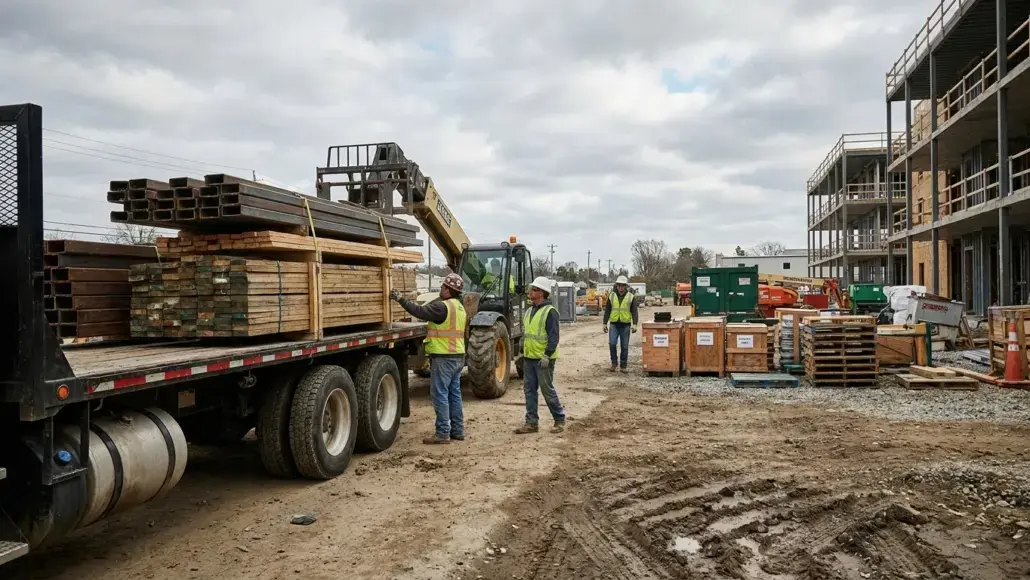
Material flow optimization also requires a granular understanding of the “last mile” of delivery. In construction, the last mile isn’t just getting the truck to the site; it’s getting the material from the truck to the specific floor or room where it is needed. This often involves complex vertical transportation and crane scheduling. By optimizing these movements, firms can reduce the time materials spend sitting in temporary staging areas, which is a major source of on-site congestion and safety hazards. Implementing a “Just-In-Time” (JIT) delivery model ensures that materials move directly from the delivery vehicle to the point of use, drastically improving the throughput of the site and keeping the project on its critical path.
Digital Transformation and Real-Time Tracking
The integration of technology is the primary engine driving construction logistics optimization. Tools such as Global Positioning Systems (GPS), Radio Frequency Identification (RFID), and Internet of Things (IoT) sensors now allow project managers to track every high-value asset in real-time. Whether it’s a specific batch of custom-fabricated steel or a fleet of heavy excavators, knowing exactly where these resources are and when they will arrive enables a level of precision that was previously impossible. If a delivery truck is delayed by traffic, the system can automatically alert the site supervisor, who can then reassign the waiting crew to another task, thereby neutralizing the potential for idle time.
Beyond simple tracking, advanced data analytics and Artificial Intelligence (AI) are being used to predict and mitigate risks. Machine learning algorithms can analyze historical project data alongside external factors like weather patterns and port congestion to identify the probability of a delay. For example, if the data suggests that a particular supplier consistently struggles with deliveries during the winter months, the logistics team can choose to stockpile critical components in advance or seek an alternative vendor. This transition from “descriptive” logistics (knowing what happened) to “predictive” logistics (knowing what will happen) is a game-changer for reducing project delays and ensuring predictable delivery dates.
Enhancing On-Site Productivity through Hub-and-Spoke Logistics
In crowded urban settings, the traditional model of delivering everything directly to the job site is often unfeasible. To address this, many forward-thinking firms are adopting a “Consolidation Center” or “Hub-and-Spoke” model. In this setup, materials from various suppliers are delivered to a regional warehouse located on the outskirts of the city. Here, the materials are inspected, kitted into specific “work packages,” and then delivered to the site in smaller, more manageable loads during off-peak hours. This centralized approach to construction logistics optimization significantly reduces the number of large vehicles entering the city center, easing traffic congestion and reducing the project’s carbon footprint.
Kitting, in particular, is a powerful technique for boosting on-site productivity. By pre-assembling all the components needed for a specific task such as all the piping and fixtures for a particular bathroom unit the logistics team ensures that the subcontractor has everything they need in a single delivery. This eliminates the “search time” that often plagues workers who have to hunt for missing parts across a sprawling site. When the logistics team handles the complexity of organization and preparation, the skilled labor on-site can focus purely on installation, leading to faster completion times and higher quality output. This synergy between off-site preparation and on-site execution is a hallmark of a modern, optimized construction environment.
The Human and Environmental Benefits of Efficiency
While the financial benefits of construction logistics optimization are clear, the human and environmental impacts are equally significant. A well-organized site is a safer site. By reducing congestion and minimizing the unnecessary movement of heavy machinery, the risk of accidents is substantially lowered. Furthermore, when materials are managed with precision, there is far less waste. Estimates suggest that up to 30% of materials on a typical construction site end up in the bin, often due to damage from improper storage or over-ordering. Optimization directly tackles this issue, ensuring that resources are used to their fullest potential and reducing the industry’s immense burden on landfills.
From a human perspective, a project that runs like clockwork reduces the stress and burnout often experienced by site managers and workers. When the logistics are handled professionally, the daily “firefighting” that characterizes many construction projects is replaced by a calm, structured workflow. This leads to higher job satisfaction, better worker retention, and a more professional industry image. Ultimately, the goal of optimizing logistics is to create a construction process that is as sophisticated and reliable as a high-tech manufacturing line. By embracing these strategies, the industry can move toward a future where “on time and on budget” is no longer a rare achievement but a standard expectation.
Overcoming Resistance and Implementing Change
The path to construction logistics optimization is not without its challenges. The industry is notoriously fragmented, with dozens of independent stakeholders involved in a single project, each with their own processes and priorities. Achieving the level of integration required for true optimization necessitates a significant shift in culture and a willingness to share data. It requires a move away from the “siloed” thinking that has traditionally dominated the sector. Resistance to new technology and a lack of digital literacy among the workforce can also be barriers to adoption.
To overcome these hurdles, leadership must champion the value of logistics from the top down. This means investing in training, selecting partners who are committed to digital collaboration, and demonstrating the tangible ROI of optimized systems. Pilot projects can be an effective way to prove the concept, allowing firms to test new technologies and processes on a smaller scale before rolling them out across the entire organization. As more firms successfully implement these strategies and the benefits become undeniable, the “logistics-first” approach will inevitably become the industry norm. In a world where efficiency is the ultimate currency, construction logistics optimization is the most powerful tool we have for building the future with speed, sustainability, and certainty.