
























One of the great paradoxes of today’s construction industry is the growing demand for predictability in the face of increasingly complex projects and volatile labor and material markets. While few project stakeholders are comfortable with surprises once construction begins, scope changes, coordination issues, and schedule delays remain nearly inevitable.
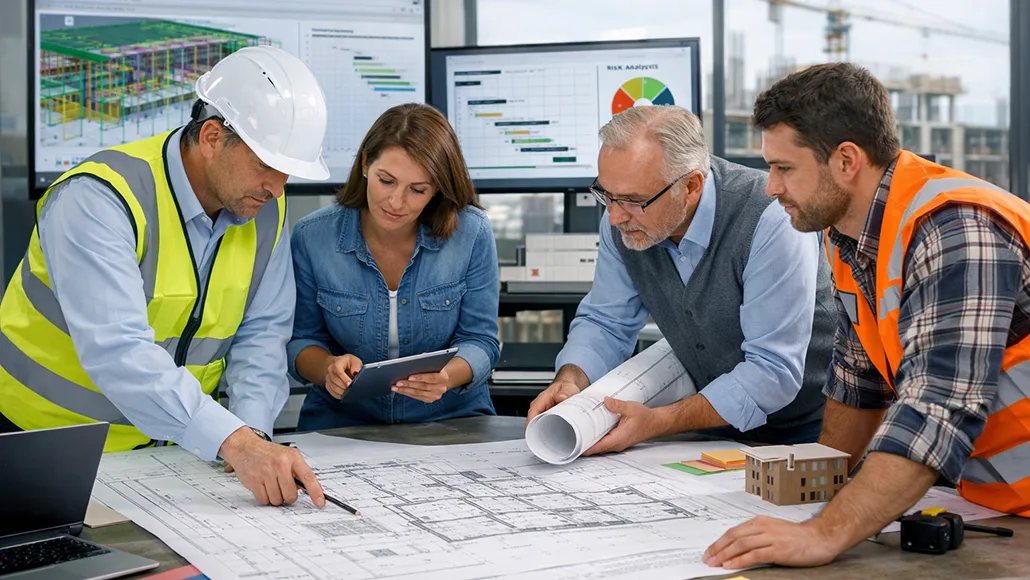
As owners seek greater confidence prior to approving investments, industry focus is moving upstream to the preconstruction phase. Early deployment of advanced software tools, along with improved visibility and collaboration, make predictability more achievable.
The Cost of Uncertainty in Modern Construction
Minimizing uncertainty in construction projects has never been easy, with factors like weather events, hidden site conditions, and dispersed project teams creating an endless list of potential risk factors. Today’s construction projects also face growing uncertainty due to:
- Inflation and price fluctuations
- Ongoing skilled labor shortages
- Stringent regulatory requirements
- Internet disruptions and cyberattacks
Increased project scope and complexity can turn small uncertainties into major project risks. For example, unexpected material shortages can jeopardize schedule, cost, design, and sustainability objectives simultaneously.
Why Preconstruction Is Receiving More Attention
To ensure that critical risk factors get the visibility they need, project teams are infusing the preconstruction phase with more rigor and analysis. Traditionally, preliminary estimates, conceptual drawings, and rough schedule outlines during preconstruction established a basic framework, but detailed risk identification, sequencing, and procurement strategies were reserved for the construction (execution) phase of the project.
This traditional model is unworkable when shrinking schedules and profit margins magnify the impact of even the smallest miscalculations. Advanced planning and design software tools now make it possible to begin essential planning and risk management activities long before ground is broken.
Visibility Creates Better Decisions
Moving more tasks and decisions to the preconstruction phase allows project owners and clients to fully understand the scope and potential of each project before committing significant resources. Real-time visibility is a prerequisite for informed investment choices that reduce uncertainty and improve stakeholder alignment.
This enhanced visibility would not be possible without technologies like BIM that allow various workflows and concepts to be tested and compared in the digital realm. Building information modeling platforms also enable errors and clashes between system elements to be detected and resolved quickly during preconstruction.
Collaboration Is Becoming a Risk Management Strategy
As artificial intelligence (AI), digital twins, and 6D BIM platforms that layer sustainability factors on top of design, cost, and schedule elements move into the mainstream, schedules, budgets, and performance become more stable and predictable. Despite these advantages, the improved collaboration brought by cloud-based BIM platforms may be the most important benefit.
Errors and disputes that hamper countless projects are often the result of miscommunication or misalignment, rather than technical challenges. Construction management software and shared BIM platforms make it possible to reduce risk and uncertainty by collaborating on designs early, sharing project challenges in real-time, and planning cross-functionally.
Predictability Extends Beyond Cost
Budget conformance is among the obvious and important benefits of predictability in construction, but it is not the only perk. With dispersed project teams, ambitious sustainability goals, and increasingly volatile supply chains, predictability also influences:
- Schedule and completion date reliability
- Material and workmanship quality
- Resource and equipment utilization
- Embodied carbon reduction from materials and processes
- Investor, regulator, and project owner confidence
The Future Belongs to Projects That Start Smarter
Turning preconstruction into an active project phase where vital decisions are made, rather than an administrative phase where boxes are checked, is no longer optional. Top-tier construction companies around the world are already onboard, as they seek out opportunities to reduce risks, maximize profits, and improve visibility.
Like most industry shifts with rapid global adoption, the financial benefits of this approach are a key motivator. Successful businesses understand the value of investments in BIM and other enabling technologies.
Conclusion
It was once nearly impossible for construction projects to increase in complexity and predictability at the same time, but advanced software, proactive risk management practices, and enhanced collaboration during preconstruction are redefining what is possible. As they recognize the impact and importance of the earliest decisions, construction businesses are leveraging the benefits of software and technology for more informed material, design, and sequencing choices, and harnessing the cloud to bring project teams closer together.