
























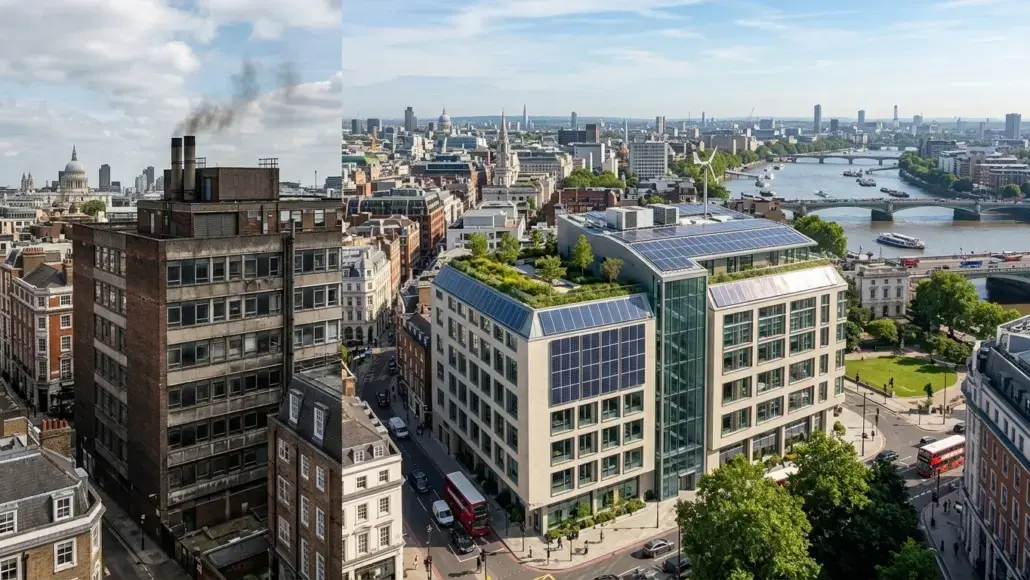


The vast majority of the buildings that will stand in 2050 have already been built. This reality underscores the critical importance of net zero retrofits in the global effort to mitigate climate change. While new sustainable construction often captures the headlines, the true challenge of urban decarbonization lies within our existing building stock. Older structures are frequently characterized by poor insulation, inefficient heating and cooling systems, and high operational carbon footprints. Transforming these buildings through deep energy retrofits is not just an environmental necessity; it is a profound opportunity to revitalize urban infrastructure, improve occupant comfort, and unlock long-term economic value. The process of implementing net zero retrofits involves a holistic overhaul of a building’s envelope, systems, and energy sources, turning yesterday’s liabilities into tomorrow’s high-performance assets.
The Fabric-First Strategy for Thermal Performance
A successful net zero retrofits project begins with a “fabric-first” approach. This strategy prioritizes the building’s envelope the walls, roof, windows, and floors to minimize energy demand before addressing mechanical systems. By enhancing insulation, replacing single-pane windows with high-performance glazing, and sealing air leaks, the thermal performance of a building can be radically improved. This reduction in heat loss (or gain) allows for the installation of smaller, more efficient heating and cooling equipment. In many cases, deep retrofits can reduce a building’s energy demand by 50% to 80%, making it feasible to meet the remaining energy needs through on-site renewable sources or a green power grid. This fundamental efficiency is the bedrock upon which all other sustainable technologies are built.
Electrification of Heat and Smart Building Controls
The electrification of heat is another cornerstone of net zero retrofits for existing buildings. Traditional boilers and furnaces that rely on fossil fuels must be replaced with advanced electric solutions, such as air-source or ground-source heat pumps. These systems are significantly more efficient than their combustion-based counterparts, as they move heat rather than generate it through burning fuel. When paired with smart building controls and energy management systems, heat pumps can respond dynamically to occupancy patterns and grid signals, further optimizing performance. This shift not only eliminates on-site carbon emissions but also improves air quality and safety for the building’s inhabitants, making it a key component of the transition to a cleaner, healthier urban environment.
Integrating Renewable Energy and Grid Resilience
Integrating renewable energy generation is the final step in achieving the “net zero” status during the retrofit process. Rooftop solar photovoltaic (PV) panels, building-integrated photovoltaics (BIPV), and even small-scale wind turbines can be incorporated into the design of existing structures. When combined with battery storage systems, these buildings can become active participants in the energy grid, storing excess power during the day and releasing it during peak demand. This decentralized approach to energy production enhances the resilience of the overall urban infrastructure, reducing the strain on centralized power plants and providing a buffer against energy price volatility. Net zero retrofits thus transform buildings from passive consumers of energy into active, intelligent producers.
Economic Value and Social Impact of Deep Renovations
The economic and social benefits of net zero retrofits extend far beyond energy savings. High-performance buildings offer superior indoor environmental quality, including better air filtration, consistent temperatures, and acoustic comfort. These factors are directly linked to the health, productivity, and well-being of occupants. For commercial landlords, retrofitted buildings command higher rents, experience lower vacancy rates, and are better protected against “brown discounting” the loss in property value associated with poor environmental performance. Furthermore, the massive scale of the required retrofitting effort represents a significant driver for job creation in the construction, engineering, and green technology sectors, fostering a skilled workforce for the twenty-first-century economy.
Industrialization and the Energiesprong Model
To accelerate the adoption of net zero retrofits, innovative delivery models like the “Energiesprong” (Energy Leap) approach are gaining international traction. Originating in the Netherlands, this model utilizes off-site manufacturing to create high-performance, prefabricated insulated panels and integrated roof systems that can be “snapped” onto an existing building in a matter of days. This industrialized process drastically reduces on-site construction time, minimizes disruption to residents, and ensures a high level of quality control that is difficult to achieve with traditional site-built retrofits. By standardizing the retrofit package, costs can be brought down through economies of scale, making deep energy upgrades financially viable for large social housing portfolios and eventually the broader private residential market.
Technical Challenges of Insulation and Moisture Management
The decision between internal and external insulation is a fundamental technical challenge in the net zero retrofits landscape. External wall insulation (EWI) is generally preferred because it wraps the building in a continuous thermal blanket, eliminating thermal bridges and protecting the original structure from weathering. However, in dense urban areas where property lines are tight or in historic districts where the facade must be preserved, internal wall insulation (IWI) becomes the only viable option. IWI requires meticulous attention to detail to prevent moisture buildup and mold growth between the new insulation and the original wall. The use of vapor-permeable materials and smart sensors can help manage these risks, ensuring that the drive for energy efficiency does not compromise the structural health of the building.
Embodied Carbon and Material Selection
A sophisticated analysis of net zero retrofits must also account for the “embodied carbon of the intervention.” Every piece of insulation, every new window, and every heat pump requires energy and raw materials to manufacture and transport. It is essential to ensure that the carbon saved through reduced operational energy consumption far outweighs the carbon emitted to produce the retrofit materials. This “carbon payback period” should be as short as possible. Architects are increasingly selecting bio-based insulation materials, such as wood fiber or recycled hemp, which have much lower embodied carbon than petroleum-based foams. By optimizing the material selection, the total lifecycle impact of the retrofit can be minimized, ensuring that the project truly serves its environmental purpose.
Regulatory Frameworks and Policy Drivers
The regulatory environment is rapidly evolving to mandate these changes. In New York City, Local Law 97 sets strict carbon emissions limits for large buildings, with significant fines for non-compliance starting in 2024. This has sent a clear signal to the real estate market that net zero retrofits are no longer optional but a legal and financial necessity. Similarly, the European Union’s “Renovation Wave” initiative aims to double the annual energy renovation rate of buildings by 2030. These top-down policies, combined with bottom-up technological innovation, are creating a robust ecosystem for sustainable urban transformation. When policy, technology, and finance align, the speed at which we can decarbonize our cities increases exponentially.
Digital Twins and AI-Driven Performance Monitoring
Looking ahead, the role of digital twins and artificial intelligence in net zero retrofits will be transformative. By creating a precise digital replica of an existing building, engineers can simulate various retrofit scenarios to identify the most cost-effective and impactful interventions. During the operation phase, AI-driven building management systems can continuously monitor performance and detect inefficiencies in real-time. This data-driven approach ensures that the promised energy savings are actually realized and maintained over the building’s lifecycle. As these digital tools become more accessible, the barrier to entry for complex retrofit projects will continue to fall, accelerating the pace of urban transformation.
Human Behavior and the Performance Gap
Finally, the success of net zero retrofits depends on the active engagement of the people who live and work in these buildings. Even the most efficient building can underperform if occupant behavior is not aligned with the building’s systems. Integrating intuitive smart-home interfaces and providing clear information on energy use can empower residents to become partners in the sustainability journey. When occupants understand how their choices such as window operation or thermostat settings impact the building’s overall performance, the “performance gap” between designed and actual energy use can be closed. This human element is the final piece of the puzzle, ensuring that retrofitted buildings are not just technical marvels but vibrant, lived-in spaces that inspire a broader culture of conservation.
In conclusion, net zero retrofits represent the most effective tool we have for decarbonizing the built environment. By taking a holistic approach that prioritizes efficiency, electrification, and renewables, we can transform our existing building stock into a source of climate solutions rather than a source of emissions. The transition will require unprecedented collaboration between policymakers, financiers, and the construction industry, but the rewards a more resilient, healthy, and prosperous urban future are well worth the effort. The buildings of the past do not have to be the polluters of the future; through the power of net zero retrofits, they can be the cornerstone of a sustainable global legacy.