























The industrial landscape of the 21st century is defined by a relentless drive toward precision, efficiency, and scalability. In the realm of material science, few fields have seen as much transformative change as the fabrication of metal components for the built environment. Specifically, the field of aluminium processing construction innovations has undergone a radical evolution, moving from traditional mechanical shaping to a sophisticated blend of digital design and automated manufacturing. This progress is not merely an incremental improvement in technique; it represents a fundamental shift in how we conceive and create the building blocks of modern architecture. By leveraging advanced metallurgy and robotics, the industry is now producing high-performance components that were once considered the stuff of science fiction, enabling a new era of structural efficiency and architectural daring.
Central to this revolution is the ability to manipulate aluminium with unprecedented accuracy. As a material, aluminium is uniquely suited for complex processing due to its low melting point and high ductility. However, the true breakthrough has come from the integration of computer-aided design (CAD) with direct-to-factory production lines. This seamless workflow allows for the creation of bespoke components with tolerances measured in microns. For the construction sector, this means that every joint, every beam, and every facade panel fits perfectly the first time, drastically reducing on-site errors and material waste. The strategic adoption of aluminium processing construction innovations is, therefore, a primary driver of productivity in an industry that has historically struggled with efficiency gains and labor shortages.
The Evolution of Extrusion and Precision Engineering
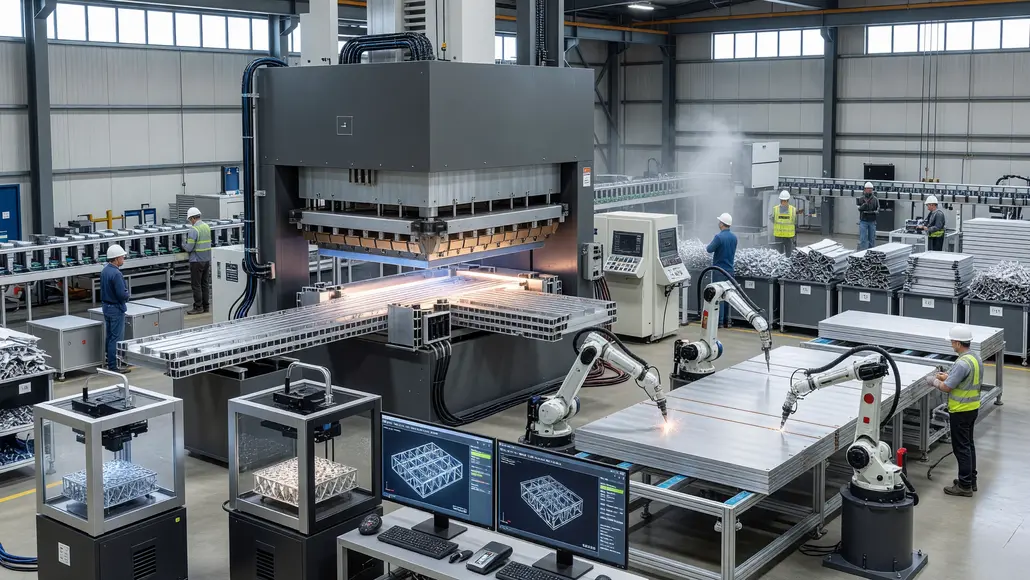
The cornerstone of aluminium manufacturing has always been the extrusion process the method of forcing heated metal through a shaped die to create long, uniform profiles. While the basic principle remains the same, modern innovations have added layers of complexity and capability. High-tonnage presses, coupled with advanced die cooling systems, now allow for the creation of larger and more intricate profiles than ever before. These “super-extrusions” can integrate multiple functions into a single piece of metal, such as structural support, thermal insulation cavities, and attachment points for glazing. This multifunctionality is a hallmark of construction technology, where the goal is to do more with less material and labor, streamlining the entire building lifecycle from design to assembly.
Furthermore, the development of friction stir welding (FSW) has revolutionized the way aluminium components are joined. Unlike traditional fusion welding, which melts the metal and can weaken the structural integrity of certain alloys, FSW uses a rotating tool to generate frictional heat and “stir” the solid-state metal together. This results in joints that are stronger, lighter, and free from the porosity associated with conventional welding. In the context of aluminium processing construction innovations, FSW is particularly valuable for creating large, load-bearing panels for floors, roofs, and bridge decks. The ability to create seamless, high-strength assemblies on an industrial scale has opened up new possibilities for modular and prefabricated construction, where speed and reliability are paramount.
Digital Fabrication and the Rise of Robotic Assembly
The intersection of metal processing innovations and robotics is perhaps the most exciting frontier in the industry today. Robotic arms, equipped with high-precision cutters and welders, are now capable of performing complex fabrication tasks that would be impossible for human workers. These machines can operate 24/7, maintaining a level of consistency and speed that significantly lowers production costs. In the manufacture of building components, this robotic precision allows for the mass-customization of architectural elements. No longer are architects restricted to the “standard catalog”; they can now design unique, project-specific profiles that are manufactured with the same efficiency as mass-produced goods. This democratization of bespoke design is a direct result of the flexibility inherent in modern aluminium processing construction innovations.
Moreover, the rise of additive manufacturing, or 3D printing, for aluminium is beginning to make its mark on the construction world. While still in the early stages of large-scale adoption, the ability to “print” complex metal nodes and structural connectors directly from a digital file is a game-changer. This technology allows for the creation of topologically optimized structures forms that use the minimum amount of material necessary to support a specific load. By reducing the weight of these critical components, aluminium processing construction innovations are contributing to the overall “ethic of lightness” that is becoming so prevalent in contemporary architecture. This synergy between digital design and physical manufacturing is the bedrock of the future construction technology landscape, where material efficiency and structural performance are perfectly aligned.
Sustainability and Efficiency in Industrial Fabrication
As the global community focuses on reducing carbon emissions, the industrial fabrication sector is under intense pressure to improve its environmental performance. Innovations in aluminium processing for construction are playing a vital role in this transition. One of the most significant developments is the move toward “dry” machining and the elimination of hazardous coolants in the fabrication process. By using air-cooling or minimal quantity lubrication (MQL), manufacturers can reduce their water and chemical consumption while maintaining the high-quality surface finishes required for architectural applications. This focus on clean manufacturing is a key component of sustainable industrial innovation and is increasingly a requirement for companies looking to maintain their competitive edge in a green-conscious market.
Additionally, the energy efficiency of the processing equipment itself is being scrutinized and improved. Modern electric extrusion presses and high-efficiency melting furnaces are significantly reducing the carbon footprint of the fabrication stage. When combined with the high levels of recyclable aluminium used in the industry, these process improvements create a compelling narrative for the environmental benefits of aluminium. The ability to track the “cradle-to-gate” carbon footprint of individual building components through digital twins and blockchain technology is also becoming a reality. This level of transparency allows developers and architects to make informed choices about the materials they use, further driving the demand for advanced aluminium processing construction innovations that prioritize both performance and the planet.
Enhancing Performance Through Surface Treatment Innovations
The final stage of aluminium processing surface treatment has also seen remarkable advancements. Anodizing and powder coating are the two primary methods used to protect and color aluminium building components. Recent innovations in these fields have focused on durability and environmental safety. For instance, the development of “hyper-durable” powder coatings, which can withstand extreme UV exposure and coastal salt spray for decades, has significantly extended the maintenance cycles for modern buildings. These coatings are now often applied using automated electrostatic systems that ensure 100% coverage with zero waste, as any overspray is captured and reused. This precision in finish ensures that the building components remain functional and attractive for their entire intended lifespan.
In the realm of anodizing, the use of organic acids and closed-loop water filtration systems has made the process far more eco-friendly. Furthermore, new architectural finishes that mimic the appearance of other materials, such as wood or stone, are allowing architects to achieve their aesthetic goals while maintaining the performance and sustainability benefits of aluminium. This marriage of high-performance building components with diverse aesthetic options is a direct result of the continuous cycle of aluminium processing construction innovations. As we look forward, the ability to treat the surface of the metal at the molecular level to create self-cleaning or anti-microbial properties is the next frontier, ensuring that aluminium remains the material of choice for the health-conscious and technologically advanced urban environments of the future.
Conclusion: The Future of Metal Fabrication
The trajectory of aluminium processing construction innovations is clear: a move toward greater precision, deeper integration of digital technology, and a steadfast commitment to sustainability. As these technologies mature, we can expect to see even more impressive feats of engineering and architecture made possible by the unique properties of aluminium. The ability to manufacture components that are at once lighter, stronger, and more environmentally friendly is not just an industrial achievement; it is a necessary evolution for a world that must build more with less. Aluminium, with its infinite recyclability and molecular versatility, is the perfect medium for this industrial renaissance. As we continue to innovate, the building blocks of our world will become smarter, cleaner, and more resilient.