


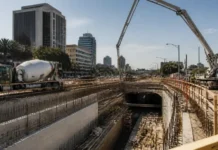















Cemex has supplied more than 300,000 cubic yards of concrete for Section 1 of the Los Angeles Metro D Line Extension, supporting the construction of underground transit infrastructure beneath one of the city’s busiest corridors. The company is expected to supply more than 400,000 additional cubic yards of concrete across the extension’s remaining two sections.
The project extends the existing metro D Line westward from Wilshire/Western to Wilshire/La Cienega, adding three underground stations: Wilshire/La Brea, Wilshire/Fairfax and Wilshire/La Cienega. The extension is designed to expand public transit capacity and improve connections between Downtown Los Angeles and the Westside.
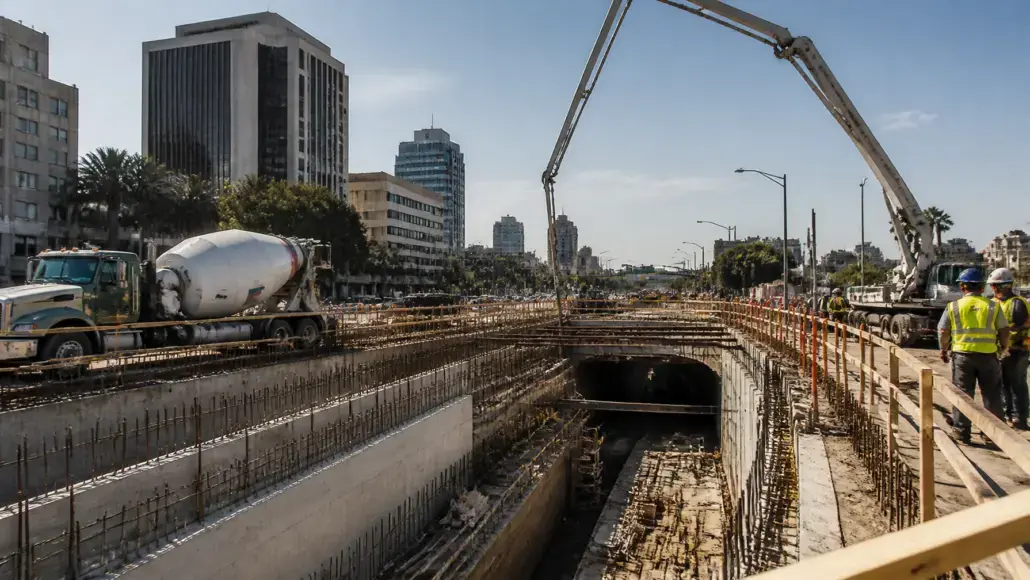
Construction is being carried out by the Skanska–Traylor–Shea Joint Venture, with Skanska serving as the lead contractor. Cemex’s concrete supplies are supporting major structural elements within the underground stations, including vaulted roofs and reinforced concrete side walls.
Concrete Supports Complex Underground Station Construction
The D Line Extension involves extensive underground construction in a densely developed urban environment. Building beneath existing roads, utilities and other infrastructure requires careful coordination of excavation, waterproofing and structural concrete placement.
Cemex supplied concrete for key station structures, including reinforced concrete side walls measuring up to four feet thick. These structural elements help support the underground facilities while enabling open, column-free passenger platforms.
The vaulted concrete roofs and reinforced walls are designed to meet the structural demands of subway construction beneath the city. Their installation forms part of the wider engineering work required to develop underground stations within a busy metropolitan corridor.
“Resilient infrastructure is fundamental to building more connected and liveable cities,” said Jesus González, Cemex US President. “Cemex is proud to support the D Line Extension with the essential materials, technical expertise and execution needed for one of Los Angeles’ most complex underground construction projects.”
The scale of the concrete supply highlights the material requirements of major urban transit developments, where structural durability and coordinated deliveries are essential to construction progress.
Ground Conditions Require Specialised Engineering
Construction of the extension has presented several geotechnical challenges. The project corridor includes tar sand, high groundwater levels, gassy soils and areas near earthquake fault zones. These conditions require specialised excavation methods, continuous geotechnical monitoring and careful management of underground construction activities.
The presence of existing utility infrastructure adds another layer of complexity. Construction teams must coordinate tunnelling and structural work while managing the risks associated with excavation beneath established urban areas.
Waterproofing and concrete placement are also critical to the development of underground stations. These activities must be coordinated with excavation sequences and the installation of supporting structural elements to meet the requirements of the underground environment.
For material suppliers, projects of this scale require reliable production, delivery planning and technical coordination with contractors. Cemex’s role includes supplying concrete for the station structures while working within the construction requirements of a complex metropolitan infrastructure project.
Three New Stations to Extend Los Angeles Subway Service
The D Line Extension will add approximately nine miles of subway service, connecting Downtown Los Angeles with the Westside. The three stations included in Section 1 are part of the broader plan to expand rail access through the Wilshire corridor.
Section 1 has been completed, while Sections 2 and 3 are expected to continue development through 2026 and 2027, according to the project information provided by LA Metro. Cemex is expected to supply more than 400,000 additional cubic yards of concrete across these remaining sections.
The phased approach allows the wider extension to progress through multiple construction packages, each involving substantial underground engineering and material requirements.
Infrastructure Expansion Drives Demand for Construction Materials
The project demonstrates the importance of concrete and construction logistics in delivering large-scale urban transportation infrastructure. Underground rail projects require materials capable of supporting demanding structural applications, alongside coordination between suppliers, contractors and engineering teams.
Cemex supports infrastructure developments through concrete supply, technical expertise and logistics coordination. For the Los Angeles Metro extension, its deliveries are contributing to the construction of station structures designed to accommodate future passenger services.
As the remaining sections progress, continued concrete supply will form part of the work required to expand the D Line and strengthen public transit connections across Los Angeles. The extension is intended to increase subway access between Downtown and the Westside, supporting the development of a more connected urban transportation network.