

























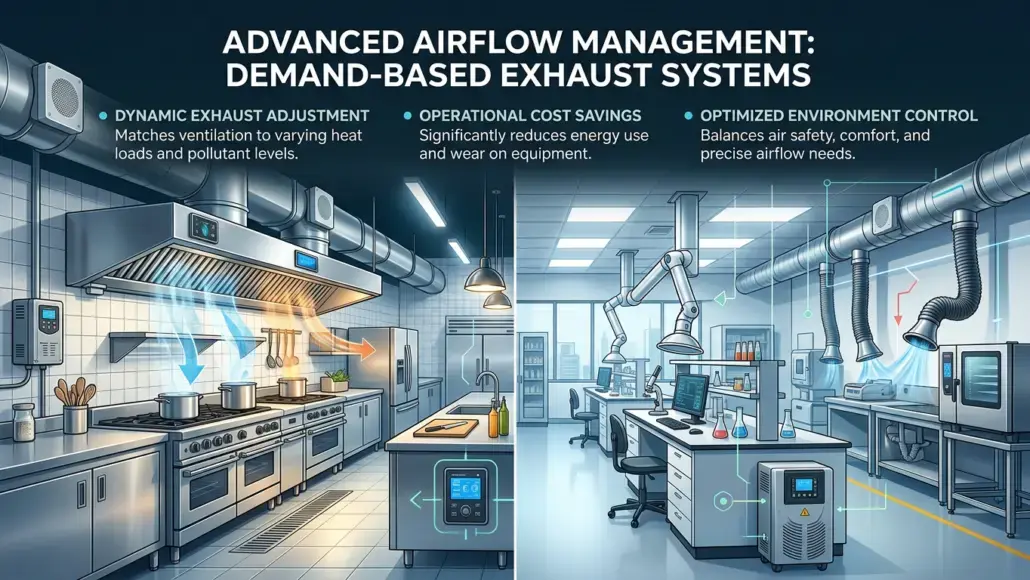


Managing the movement of air within specialized commercial environments requires a precise balance between safety, comfort, and energy conservation. In facilities such as commercial kitchens, laboratories, and manufacturing plants, the exhaust requirements can fluctuate significantly throughout the day. Traditional constant-volume exhaust systems are often inefficient, as they operate at maximum capacity regardless of the actual pollutant levels or heat loads. This inefficiency leads to excessive energy consumption and increased wear on mechanical components. The adoption of responsive ventilation systems provides a more intelligent solution, utilizing sensors and variable speed controllers to adjust airflow in real time. By aligning the exhaust rate with the actual needs of the space, building operators can achieve substantial energy savings while maintaining a safe and healthy indoor environment.
Mechanics of responsive ventilation control
The core of a demand-based exhaust system lies in its ability to detect changes in the indoor environment and respond accordingly. This is typically achieved through an array of sensors that monitor variables such as temperature, humidity, carbon dioxide levels, and the presence of specific contaminants or particulates. In a commercial kitchen, for example, infrared sensors can detect the heat signature of cooking appliances, triggering the exhaust fans to ramp up as soon as activity begins. In a laboratory setting, chemical sensors can monitor for the presence of volatile organic compounds, ensuring that the ventilation rate is sufficient to maintain safe exposure levels for researchers. This responsive behavior ensures that the system is never moving more air than is necessary, preserving the building’s conditioned air and reducing the load on the heating and cooling equipment.
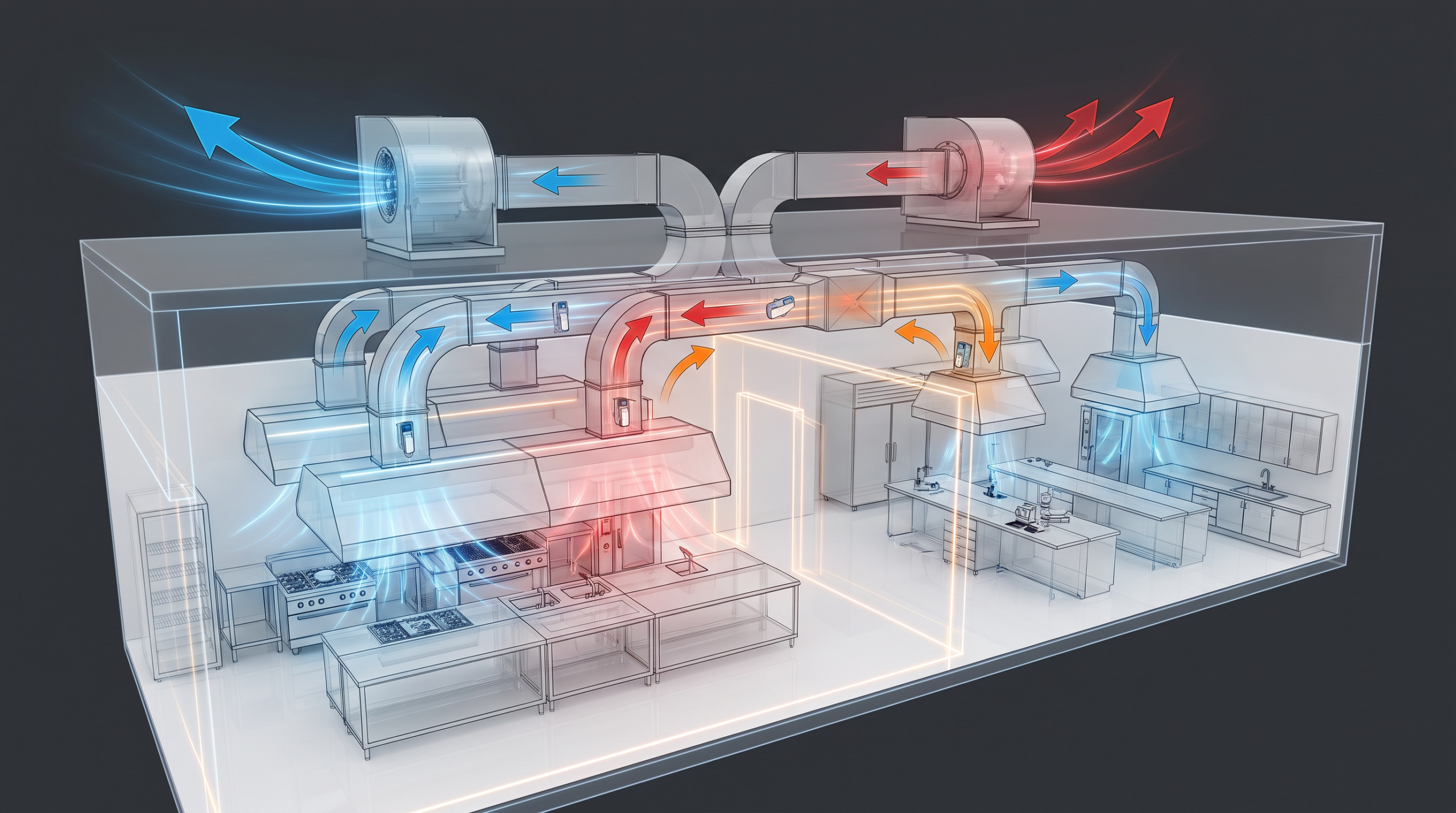
The integration of variable frequency drives on the exhaust fans is a critical component of this technology. These drives allow the fan speed to be modulated across a wide range, providing precise control over the volume of air being moved. When the sensors detect low levels of activity, the fan speed is reduced, which significantly lowers the electrical power consumption of the motor. Because fan power follows a cubic relationship with airflow, even a small reduction in speed can lead to a large decrease in energy usage. This mechanical efficiency is complemented by advanced control logic that coordinates the exhaust fans with the building’s make-up air units, ensuring that the overall pressure of the space remains balanced. This coordination is essential for preventing drafts, door-closing issues, and the infiltration of unconditioned air from adjacent areas.
Strategies for optimizing kitchen and laboratory airflow
Implementing efficient airflow management in specialized environments requires a tailored approach that accounts for the unique challenges of each space. In commercial kitchens, the focus is often on managing the intense heat and grease-laden vapors produced during cooking operations. Laboratory environments, on the other hand, prioritize the containment of hazardous materials and the maintenance of specific pressure relationships between different zones. By utilizing high-resolution sensors and sophisticated control algorithms, engineers can design systems that meet these stringent requirements while maximizing energy efficiency.
Key strategies for optimizing responsive exhaust systems include:
- Placement of sensors in the direct path of pollutants to ensure rapid detection and response times.
- Integration of the exhaust controls with the building management system for centralized monitoring and data logging.
- Regular calibration of sensors to maintain the accuracy of the airflow control logic over time.
- Implementation of staged response profiles that allow the system to ramp up in increments based on the severity of the load.
- Utilization of high-efficiency exhaust hoods designed to capture contaminants with lower total airflow requirements.
These strategies ensure that the building remains compliant with all health and safety regulations while operating at peak efficiency. The efficiency of these ventilation strategies is further enhanced by the inclusion of advanced filtration systems that remove contaminants before air is recirculated or exhausted. By reducing the volume of air that needs to be conditioned and moved, demand-based exhaust systems provide a clear path for commercial facilities to lower their operating costs and improve their sustainability profiles. This focus on intelligent airflow management is particularly important in large scale developments where ventilation accounts for a significant portion of the total energy budget.
Impact on indoor air quality and occupant safety
Beyond the energy savings, the primary benefit of a responsive exhaust system is the improvement of indoor air quality and the protection of building occupants. By providing a higher ventilation rate exactly when and where it is needed, these systems ensure that pollutants are removed quickly and effectively. In environments with high heat loads, such as commercial kitchens, the rapid removal of hot air also contributes to a more comfortable working environment for staff, which can improve productivity and reduce turnover. In laboratories, the precise control of airflow is a critical component of the containment strategy, preventing the spread of hazardous fumes and protecting the integrity of sensitive research projects.
The use of these dynamic ventilation controls also contributes to a more stable indoor environment by reducing the fluctuations in building pressure that can occur with constant-volume systems. When exhaust rates are excessive, they can draw in outdoor pollutants, humidity, and allergens through gaps in the building envelope. By maintaining a more balanced airflow, responsive systems help to keep these contaminants out, leading to a cleaner and healthier indoor space. This proactive approach to air quality management is a vital consideration for modern construction projects, as developers seek to create environments that support the health and well-being of their tenants. The integration of advanced sensors and controls ensures that the building is always responding to the needs of its occupants, providing a safe and comfortable environment regardless of the activity levels within the space.
Integration with building management architectures
The full potential of a responsive ventilation system can only be realized when it is fully integrated into the building’s broader control architecture. Modern building management systems provide a centralized platform for monitoring the performance of all mechanical and electrical assets, allowing for a holistic view of the facility’s operation. By connecting the exhaust sensors and variable speed drives to this central network, facility managers can track energy savings, monitor equipment health, and adjust setpoints from a single interface. This level of connectivity also allows for the implementation of advanced diagnostic tools that can identify and alert staff to performance issues in real time.
Integrating demand-based exhaust into the building management system also facilitates better coordination with other HVAC components, such as air handling units and chillers. For example, if the exhaust system in a large cafeteria ramps up due to increased occupancy, the air handling units can be signaled to increase the supply of conditioned make-up air simultaneously. This synchronized response prevents sudden changes in temperature or pressure that could disrupt the comfort of building occupants. The ability to log and analyze performance data over time also provides a valuable resource for future optimization efforts, allowing facility managers to refine their control strategies based on historical trends. This data-driven approach is a key component of high-performance building design, ensuring that mechanical systems are always operating at their most efficient points.
Long term operational savings and ROI
The financial justification for adopting demand-based exhaust systems is compelling, particularly in facilities with high ventilation requirements. While the initial investment in sensors and variable speed drives is higher than for traditional systems, the energy savings often result in a rapid return on investment. In many commercial kitchens, the reduction in fan and conditioning energy can lead to a payback period of less than three years. When combined with the lower maintenance costs associated with reduced equipment wear, the total cost of ownership for a responsive system is significantly lower than for a constant-volume alternative.
Additionally, the improved control of airflow can lead to a longer lifespan for the exhaust hoods and ductwork, as they are less likely to be subjected to excessive heat or moisture during periods of low activity. This reduction in physical stress translates to fewer repairs and a more reliable ventilation system overall. In a competitive commercial real estate market, facilities that can demonstrate lower operating costs and a commitment to occupant health are more attractive to both tenants and investors. The strategic use of demand-based exhaust is thus a cornerstone of modern construction and facility management, providing a clear path to both economic and environmental success. By prioritizing intelligent airflow control, the construction industry is creating a new generation of commercial buildings that are safer, more efficient, and more resilient than ever before. This ongoing evolution in ventilation technology is essential for meeting the growing demand for high-performance buildings in a rapidly changing world. Additionally, the development of these systems reflects a broader industry trend toward more autonomous and intelligent building operations. As construction practices continue to integrate advanced digital technologies, the ability to manage airflow with such precision will become a standard requirement for all commercial developments. This forward-looking approach ensures that facilities are prepared for future environmental regulations and occupant expectations, providing a stable and efficient foundation for commercial success. By prioritizing the intelligent control of exhaust systems, the construction sector is demonstrating its commitment to technical excellence and environmental responsibility.