


























The movement of people and goods is the lifeblood of the global economy, and the physical networks that support this mobility are currently undergoing a period of intense modernization. At the heart of this transformation is a shift in the selection of transport construction materials, with a significant move toward the integration of high-performance aluminium. For over a century, the transport sector has valued aluminium for its lightweight properties in vehicle design; however, we are now seeing these benefits translate to the infrastructure itself. The current aluminium transport infrastructure development trends are characterized by a focus on longevity, reduced maintenance, and the rapid deployment of essential assets like bridges, rail terminals, and noise barriers. This evolution is not merely a matter of convenience; it is a strategic response to the dual challenges of aging public assets and the urgent need for more sustainable mobility solutions in an urbanizing world.
One of the most compelling reasons for the rise of aluminium in this sector is its inherent resistance to the elements. Infrastructure is, by definition, exposed to the harshest environmental conditions from the de-icing salts used on roads in winter to the corrosive salt air of coastal shipping lanes. Traditional materials like steel and reinforced concrete require constant monitoring and expensive remedial work to combat rust and spalling. In contrast, the use of durable metals like aluminium eliminates the need for protective painting or chemical treatments, as the metal naturally develops its own protective oxide layer. This “low-maintenance” characteristic is a primary driver for the adoption of aluminium transport infrastructure development in projects where the total cost of ownership over 50 or 100 years is a critical metric for public funding and private investment.
Revolutionizing Bridge Construction with Lightweight Systems
The application of aluminium in bridge engineering is perhaps the most visible of the current infrastructure trends. While steel has been the default choice for large-span structures for decades, the development of aluminium bridges is gaining traction, particularly for pedestrian walkways, cycling paths, and even short-to-medium span vehicular crossings. The primary advantage here is the massive reduction in dead weight. An aluminium bridge deck can be up to 50% lighter than a comparable steel structure and significantly lighter than concrete. This weight reduction allows for more slender support structures and shallower foundations, which is particularly valuable in urban areas where underground utilities or sensitive geological conditions limit the scope of heavy construction. By choosing aluminium, engineers can overcome the physical constraints of the site while maintaining the highest safety standards.
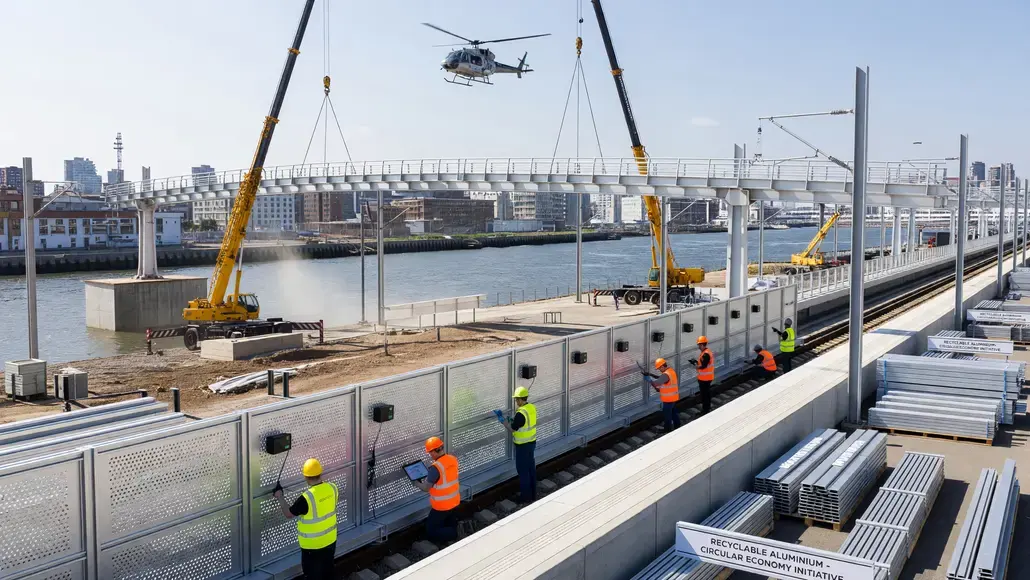
Furthermore, the lightweight transport systems enabled by aluminium allow for a radical rethink of the installation process. Entire bridge spans can be pre-assembled in a controlled factory environment and transported to the site as a single unit. Because they are so light, they can often be lifted into place by smaller, more mobile cranes or even transported by helicopter to remote or inaccessible locations. This “plug-and-play” approach to infrastructure significantly reduces the time that roads or rail lines must be closed for construction, minimizing the economic disruption to the surrounding region. The integration of aluminium transport infrastructure development into the bridge-building sector is, therefore, as much about logistical efficiency and community impact as it is about material performance. This speed of deployment is essential for repairing or replacing critical infrastructure in the wake of natural disasters or aging failures.
Transforming Rail Infrastructure and Mobility Hubs
The rail sector has long been a proponent of aluminium for rolling stock, but the focus is now expanding to rail infrastructure materials. Modern rail terminals, sound barriers along high-speed lines, and overhead line equipment (OLE) are increasingly being designed with aluminium. The non-magnetic nature of aluminium is a significant advantage in the vicinity of high-voltage electrical systems and sensitive signaling equipment, reducing the risk of interference. Moreover, the ease with which aluminium can be extruded into complex, multi-functional profiles allows for the creation of station furniture, platform edges, and signage systems that are not only durable and fire-resistant but also easy to install and replace. These modular components ensure that transit hubs can be easily updated as technology and passenger needs evolve.
In the context of the burgeoning high-speed rail networks, the need for effective noise mitigation is paramount. Aluminium noise barriers have become a standard solution due to their ability to provide excellent acoustic insulation while remaining lightweight and visually unobtrusive. These barriers can be manufactured with integrated perforated panels and sound-absorbent cores, tailored to the specific frequency of the passing trains. Because these durable metals do not degrade when exposed to the vibration and pressure pulses of high-speed transit, they offer a long-term solution that maintains its effectiveness for decades. This reliability is a cornerstone of current aluminium transport infrastructure development efforts aimed at making rail travel more socially and environmentally acceptable in densely populated urban corridors.
Sustainability and the Circular Economy in Transport
As governments worldwide commit to net-zero targets, the environmental impact of transport construction materials is under intense scrutiny. The “embodied carbon” of the materials used to build our roads and railways is a significant contributor to the total lifecycle emissions of the transport network. Here, the case for aluminium is bolstered by its exceptional recyclability. When an aluminium bridge or terminal reaches the end of its service life, the material can be recovered and recycled with minimal energy input and no loss of quality. This ensures that the capital investment in the material is preserved for future generations, a key tenet of the circular economy. The high scrap value of aluminium also provides an economic incentive for responsible decommissioning and material recovery.
Moreover, the lightweight transport systems facilitated by aluminium contribute to lower energy consumption during the operational phase of the infrastructure’s life. For example, the use of aluminium in floating bridges or floating docks for ferry terminals reduces the buoyancy requirements, leading to more efficient designs that require less material. In the case of moveable bridges, such as bascule or swing bridges, the reduction in weight translates directly into smaller motors and lower power consumption during every opening cycle. These cascading benefits highlight why aluminium transport infrastructure development is increasingly seen as a vital component of the “green” infrastructure agenda, providing a material solution that is both high-performing and environmentally responsible. The long-term durability of the metal also means that fewer resources are consumed for repairs and replacements over the decades.
Future Trends: Smart Infrastructure and Digital Integration
Looking ahead, the next phase of aluminium transport infrastructure development will likely be defined by the integration of digital technologies. Researchers are currently developing “smart” aluminium profiles that contain embedded fiber-optic sensors to monitor structural health in real-time. These sensors can detect changes in temperature, strain, or vibration, providing early warnings of potential issues and allowing for proactive, data-driven maintenance. This fusion of metallurgy and the Internet of Things (IoT) will transform infrastructure from a passive set of assets into an active, self-monitoring network. This transition is essential for ensuring the safety and reliability of our transport networks in the face of increasing usage and climate-related stress.
Additionally, the trend toward modularity and standardized “kit-of-parts” design will continue to accelerate. By creating a library of standardized aluminium components, transport authorities can respond more rapidly to the need for repairs or capacity upgrades. This modular approach is particularly suited to the development of “mobility hubs” integrated transit centers that cater to electric vehicles, e-scooters, and public transit. The versatility of aluminium allows for the creation of lightweight, adaptable shelters and charging stations that can be easily reconfigured as technology and travel patterns evolve. In conclusion, the partnership between aluminium and transport infrastructure is a dynamic and growing field, offering the durability, efficiency, and sustainability required to keep our world moving in the decades to come. The future of mobility is built on a foundation of lightness, resilience, and smart material integration.
Conclusion: A New Era for Global Mobility
The integration of aluminium into the very fabric of our transport infrastructure marks the beginning of a new era for global mobility. By prioritizing lightweight transport systems and durable metals, we are building a network that is not only faster and more efficient but also more resilient to the challenges of the 21st century. The environmental benefits of aluminium, from its low embodied carbon to its infinite recyclability, make it the ideal choice for a world striving for sustainability. As we continue to innovate and integrate digital technologies, our infrastructure will become more intelligent and responsive, ensuring the safe and efficient movement of people and goods for generations to come. Aluminium transport infrastructure development is the key to unlocking a more connected and sustainable future.