









The global construction industry is at a pivotal crossroads, where the urgent need for rapid urbanization must be balanced against the imperative of environmental preservation. In this context, the adoption of sustainable aluminium solutions building has emerged as a cornerstone of the green building movement. As architects and engineers strive to reduce the carbon footprint of the built environment, the unique lifecycle of aluminium offers a compelling path forward. Unlike many other construction materials that degrade over time or require significant energy to repurpose, aluminium stands as a beacon of the circular economy, providing a material that is not only infinitely recyclable but also integral to high-performance, energy-efficient design. This paradigm shift in material selection is essential for achieving the ambitious climate targets set by international accords, transforming the way we conceptualize the longevity and impact of our structures.
The journey toward truly sustainable building design begins with the selection of materials that possess low embodied carbon. While the primary production of aluminium is energy-intensive, the industry has made significant strides in transitioning to renewable energy sources, such as hydroelectric power, to fuel smelters. This “green” primary aluminium, combined with the extensive use of recyclable aluminium, creates a material profile that aligns with the most stringent sustainability certifications, including LEED and BREEAM. By prioritizing sustainable aluminium solutions building, developers are acknowledging that the environmental impact of a structure is determined not just by its operational phase, but by the entire lifecycle of the components that comprise it. The ability to verify the origin and carbon footprint of aluminium through transparent supply chains is becoming a standard requirement for major public and private infrastructure projects.
The Circular Economy and the Power of Recyclability
The most profound environmental benefit of aluminium is its status as a permanent material. Approximately 75% of all aluminium ever produced is still in active use, a statistic that underscores the efficiency of the recycling infrastructure. In the construction sector, the recovery rate for aluminium from demolished buildings often exceeds 95%. This closed-loop system is vital for reducing the demand for virgin ore and the associated environmental disruption of mining. When a building reaches the end of its functional life, its aluminium components can be collected, melted down, and reformed into new high-performance building materials with no loss of physical properties. This process requires only 5% of the energy needed for primary production, making it a key driver for low carbon materials in the market and a fundamental element of eco friendly construction.
Furthermore, the versatility of sustainable aluminium solutions building allows for the creation of modular and demountable structures. In a rapidly changing urban environment, the ability to disassemble and relocate building components rather than demolishing them is a hallmark of sustainable building design. Aluminium’s lightweight nature makes this logistical flexibility possible, reducing the energy required for transport and on-site assembly. This approach not only preserves the value of the material but also minimizes the generation of construction and demolition waste, which remains one of the largest contributors to global landfills. The economic incentives for recycling aluminium are also strong, as the scrap value of the metal often offsets a significant portion of the demolition costs, providing a tangible return on investment for building owners.
Driving Energy Efficiency Through Advanced Systems
Beyond its recyclability, the contribution of sustainable aluminium solutions building to the operational energy efficiency of a structure is immense. In modern curtain wall systems, aluminium serves as the structural framework for high-performance glazing and integrated shading devices. The precision of aluminium extrusions allows for the inclusion of advanced thermal breaks insulating barriers that prevent the transfer of heat through the metal frame. This technology is essential for maintaining stable indoor temperatures, thereby reducing the heating and cooling loads on a building’s HVAC system. As building codes worldwide move toward net-zero energy standards, the role of aluminium in achieving these goals becomes increasingly indispensable, providing the thermal performance needed to meet rigorous energy intensity targets.
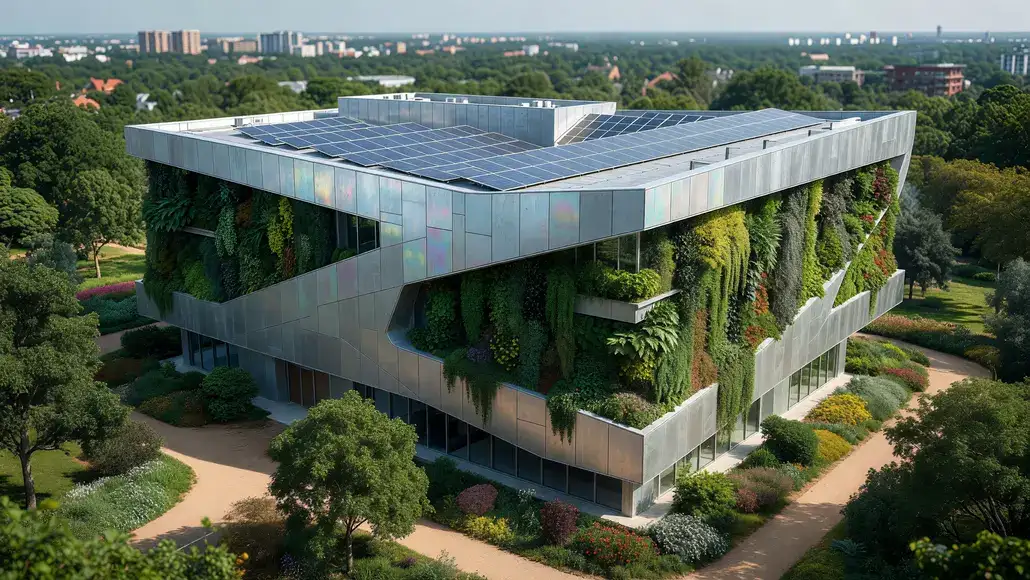
Moreover, the reflective properties of aluminium can be leveraged to enhance natural lighting and reduce the need for artificial illumination. Polished or specially coated aluminium surfaces can redirect sunlight deep into the interior of a building, improving the well-being of occupants while lowering energy consumption. This synergy between green construction materials and intelligent design is at the heart of modern architectural philosophy. When combined with integrated photovoltaic panels where aluminium frames provide the necessary support and electrical conductivity the building envelope transforms from a passive barrier into an active energy generator, further solidifying the case for sustainable aluminium solutions building. These integrated systems represent the next generation of “active” building skins that adapt to the environment while harvesting energy.
Innovation in Material Science and Low-Carbon Production
The industry’s commitment to low carbon materials is also reflected in the development of new alloys that require less energy to process. Manufacturers are increasingly utilizing scrap-heavy alloys that maintain the structural integrity required for modern infrastructure while significantly reducing the carbon footprint of the manufacturing process. These innovations are supported by sophisticated sorting technologies that use laser-induced breakdown spectroscopy (LIBS) to accurately categorize aluminium scrap by alloy type, ensuring that the recycled material meets the precise specifications of high-end architectural applications. This level of technical rigor is what makes sustainable aluminium solutions building a reliable and scalable option for large-scale urban projects, ensuring that “recycled” does not mean “inferior.”
In addition to metallurgical advances, the surface treatments applied to aluminium have also evolved to meet environmental standards. Modern powder coating and anodizing processes are now largely free of volatile organic compounds (VOCs) and heavy metals, ensuring that the material remains safe for both human health and the ecosystem throughout its life. These durable finishes not only provide aesthetic flexibility but also protect the metal from atmospheric corrosion, extending the maintenance cycles and overall lifespan of the building. This “durability by design” is a fundamental tenet of eco friendly construction, as it reduces the frequency of material replacement and the associated environmental costs. The long-term aesthetic stability of these finishes also ensures that buildings retain their value and appeal for decades, reducing the pressure for premature redevelopment.
Shaping the Future of Sustainable Urbanization
As we look toward 2030 and beyond, the role of sustainable aluminium solutions building will only grow in importance. The rapid expansion of cities in the developing world presents a unique opportunity to leapfrog traditional, carbon-intensive construction methods in favor of lightweight, recyclable, and energy-efficient alternatives. By integrating aluminium into the very fabric of our urban centers, we can create buildings that are not only resilient and beautiful but also fundamentally aligned with the health of our planet. The transition to a low-carbon future is not a single event, but a continuous process of material innovation and responsible stewardship, with aluminium leading the charge in the built environment. The adoption of digital passports for building materials will further enhance this sustainability, allowing for precise tracking of aluminium’s journey through multiple lifecycles.
Ultimately, the choice to use green construction materials is a statement of values. It reflects a commitment to future generations and an understanding that the structures we build today will define the environmental legacy of tomorrow. Sustainable aluminium solutions building offer a rare combination of performance, aesthetics, and ethics, proving that it is possible to build big, build fast, and build responsibly. As the construction industry continues to evolve, the partnership between human ingenuity and this remarkable metal will remain a cornerstone of our progress toward a truly sustainable world. The ongoing research into carbon-free smelting and even more efficient recycling processes promises to make aluminium the ultimate material for a net-zero future.
Conclusion: A Resilient Path Forward
The integration of sustainable aluminium solutions building into the mainstream of construction is more than a technological achievement; it is a necessary evolution for a resource-constrained world. By embracing the principles of the circular economy and leveraging the material’s inherent efficiency, we can build an urban future that is both prosperous and sustainable. The versatility of aluminium allows it to adapt to any architectural style or climatic condition, making it a universal tool for the global building community. As we refine our methods of production and recycling, the environmental benefits of aluminium will only become more pronounced, solidifying its place as the primary material for the green buildings of the future. The commitment to these solutions is an investment in a resilient, low-carbon world where our infrastructure works in harmony with the natural environment.