


























The construction industry, for a long time, was characterized by its reliance on paper-based processes and fragmented communication. However, we are currently in the midst of a profound shift as digital transformation in construction project management takes hold. After fifteen years in the field, I can confidently say that the adoption of digital tools is no longer a luxury for the largest firms; it has become a fundamental requirement for any project aiming for efficiency and profitability. This transformation is not just about replacing paper with tablets; it is about fundamentally changing how we collect, share, and utilize information to drive better project outcomes. The siloed approach of the past is being replaced by integrated ecosystems where data flows seamlessly between architects, engineers, contractors, and owners.
This digital evolution is driven by the increasing complexity of modern building projects. With tighter budgets, shorter timelines, and more stringent regulatory requirements, the margin for error has never been thinner. Digital construction project management provides the framework needed to navigate these complexities with precision. By leveraging cloud-based platforms and real-time data, we can now manage every aspect of a project from initial design to final handover with a level of visibility that was previously unimaginable. This shift is empowering project managers to move from a reactive stance to a proactive one, identifying and resolving issues before they impact the critical path.
The Centrality of Building Information Modeling (BIM)
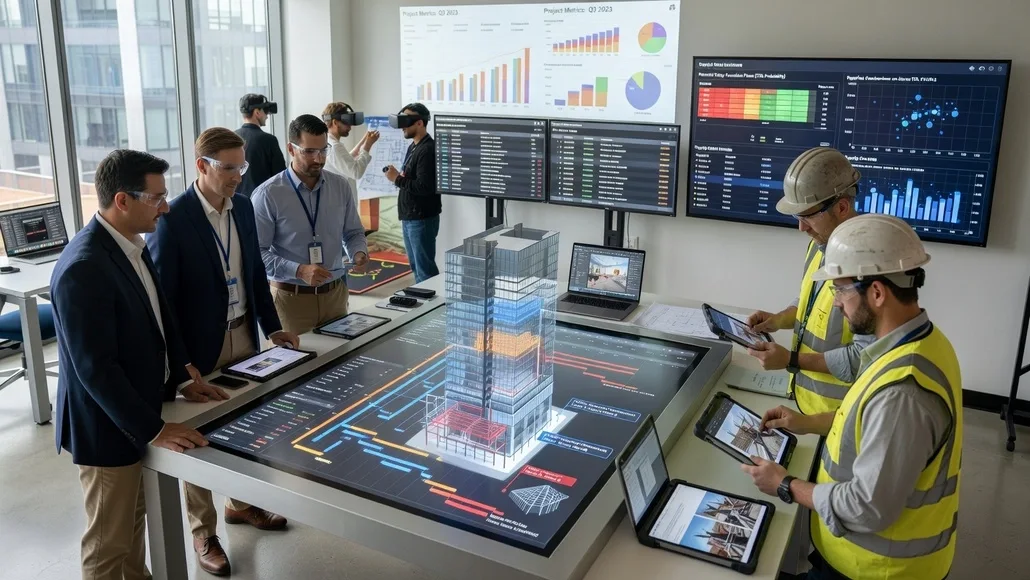
At the core of digital transformation is Building Information Modeling (BIM). While many still view BIM as merely a 3D modeling tool, its true value lies in the “I” the information. BIM serves as a single source of truth for the entire project lifecycle. It allows all stakeholders to collaborate on a shared digital representation of the building, ensuring that everyone is working from the most up-to-date information. This level of coordination is essential for identifying spatial conflicts between different systems, such as structural beams and HVAC ducts, during the design phase rather than on the job site where changes are exponentially more expensive.
Moving Beyond 3D: 4D, 5D, and 6D BIM
The evolution of BIM has seen the addition of dimensions that extend its utility far beyond geometry. 4D BIM integrates the project schedule into the model, allowing us to visualize the construction sequence over time. This is invaluable for planning site logistics and identifying potential scheduling conflicts. 5D BIM goes a step further by adding cost data, enabling real-time budget tracking and more accurate financial forecasting. Most recently, 6D BIM has introduced facility management information, ensuring that the building owner has all the data needed to operate and maintain the asset efficiently for decades to come. These advancements are the bedrock of modern digital construction project management.
Enhanced Collaboration and Cloud Connectivity
One of the greatest hurdles in traditional project management was the delay in communication between the office and the field. Digital transformation has bridged this gap through cloud connectivity. Field teams can now access the latest drawings, specifications, and schedules on mobile devices, ensuring they are never working from outdated information. Conversely, site reports, photos, and safety inspections can be uploaded instantly, providing the project management team with real-time updates on progress. This constant loop of information fosters a culture of transparency and accountability, where everyone is aligned with the project’s goals.
The Power of Construction Analytics and Big Data
As we digitize our processes, we are generating vast amounts of data. The real challenge and opportunity lies in how we analyze this information to drive improvements. Construction analytics is becoming a vital tool for project managers, allowing them to identify trends and patterns that would otherwise be missed. By analyzing historical data from past projects, we can more accurately estimate costs and timelines for new work. Furthermore, real-time analytics can help us identify potential risks, such as a trend of safety near-misses or a persistent lag in a specific subcontractor’s performance, allowing for early intervention.
Predictive Risk Management and Decision Making
The ultimate goal of using data in project management is to improve decision-making. We are moving toward a model of predictive risk management, where algorithms can forecast the likelihood of a project delay or budget overrun based on current performance metrics. This allows project managers to allocate resources more effectively and develop robust contingency plans. In an industry where uncertainty is the only constant, the ability to make data-driven decisions is a significant competitive advantage. This is the true promise of digital construction project management: turning raw data into actionable intelligence.
Artificial Intelligence and Machine Learning
Looking forward, the integration of Artificial Intelligence (AI) and Machine Learning (ML) will further enhance our project management capabilities. AI can automate many of the repetitive administrative tasks that currently consume a project manager’s time, such as processing submittals or tracking material deliveries. More importantly, ML models can be trained to recognize complex relationships between project variables, providing insights that go beyond human intuition. As these technologies mature, they will become indispensable tools for managing the increasingly complex and data-rich projects of the future.
Streamlining the Supply Chain and Procurement
Digital transformation is also revolutionizing the way we manage the construction supply chain. Traditional procurement processes were often slow and prone to errors. Today, digital platforms allow for more efficient bidding, automated purchase orders, and real-time tracking of material deliveries. This level of logistical control ensures that materials arrive on site exactly when they are needed, reducing waste and minimizing the need for on-site storage. By digitizing the supply chain, we are creating a more resilient and responsive procurement process that can better handle the fluctuations of the global market.
Transparency in Material Sourcing and Sustainability
Beyond efficiency, digital tools are providing greater transparency in how materials are sourced. This is particularly important as the industry moves toward more sustainable practices. We can now track the carbon footprint and recycled content of the materials we use, ensuring that our projects meet the highest environmental standards. This level of detail is increasingly required by both regulators and investors, making digital construction project management an essential tool for demonstrating a project’s sustainability credentials.
Enhancing Safety and Compliance Through Digital Tools
Safety is the top priority on any construction site, and digital transformation is playing a crucial role in improving safety outcomes. Digital safety management systems allow for real-time tracking of incidents and near-misses, ensuring that hazards are identified and addressed immediately. Furthermore, virtual reality (VR) is being used for safety training, allowing workers to experience hazardous scenarios in a controlled environment before they set foot on the site. These tools are not only protecting workers but also ensuring that projects remain in compliance with increasingly complex safety regulations.
The shift toward digital construction project management is a transformative journey that is reshaping the entire industry. By embracing BIM, cloud connectivity, and advanced analytics, we are creating a more efficient, transparent, and resilient way of building. While the transition requires a significant investment in technology and cultural change, the benefits are clear: better project outcomes, lower risks, and a more sustainable built environment. As we continue to innovate and refine these digital tools, we are not just improving the way we manage projects; we are building a stronger and more capable industry for the future.