


























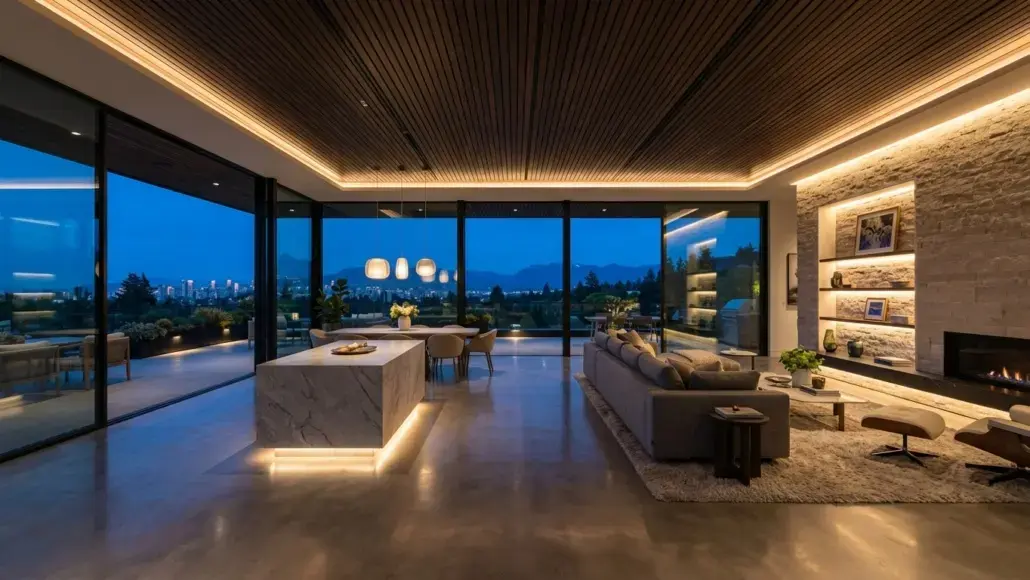


The role of illumination within architectural and interior design has undergone a significant conceptual revolution. For decades, interior lighting was treated primarily as a functional necessity, specified late in the design process to provide baseline visibility. However, as the boundaries between technology, physical space, and human well-being dissolve, light is now recognized as a highly dynamic, primary medium of spatial expression. This shift is led by intelligent lighting systems elevating interior design, converting static spaces into responsive environments that actively adapt to the tasks, moods, and biological needs of their occupants. By combining advanced solid-state LED sources with digital control networks and sensors, modern lighting design transcends simple illumination to become an essential tool for spatial optimization and aesthetic refinement.
The core power of this technological evolution lies in the seamless transition from manual switches to automated orchestration. In conventional interior spaces, adjusting light levels to suit different times of day or specific activities required manual dimming, which was often imprecise and underutilized. Today, sophisticated building automation protocols allow for the precise calibration of light intensity, color temperature, and directional beam angles across entire structures. This level of precise control ensures that lighting is no longer a static element of a room, but a fluid, responsive layer of the interior design that enhances spatial perception, highlights architectural details, and creates deeply personalized atmospheres that support the health and performance of the people within them.
The Synthesis of Light, Space and Technology
Integrating advanced lighting controls into modern structures requires a deep understanding of both design aesthetics and complex technology. The strategic deployment of smart lighting is no longer just about selecting beautiful fixtures; it involves engineering an invisible, integrated digital infrastructure. Designers and systems integrators must collaborate early in the planning phases to map out electrical layouts, wireless communication paths, and hardware locations. This comprehensive approach ensures that the physical space is fully prepared to support the high data throughput and low latency required by modern lighting networks. By treating light as a core architectural utility, builders can deliver interiors that are clean, uncluttered, and ready for future software and hardware upgrades.
Furthermore, the development of solid-state lighting technology has enabled a level of physical integration that was previously impossible. Modern LED fixtures feature incredibly compact forms, allowing them to be seamlessly recessed into ceilings, hidden within structural moldings, or integrated directly into custom cabinetry. These low-profile installations ensure that the hardware remains hidden, leaving only the pure, glare-free light to define the space. This clean integration is a hallmark of premium interior design technology, where physical equipment disappears behind architectural lines, allowing the beauty of the materials, textures, and spatial forms to take center stage.
Human-Centric Lighting and Circadian Synchronization
One of the most profound developments in modern interior design technology is the concept of human-centric lighting. This design approach recognizes that human biology is deeply tied to the natural, daily cycle of sunlight, which regulates our sleep, hormone production, and cognitive alertness. By utilizing advanced spectral tuning, intelligent lighting systems elevating interior design can automatically replicate this natural cycle indoors. Cool, high-intensity blue-white light is delivered during morning hours to suppress melatonin production and boost focus, while warm, low-intensity golden light is gradually introduced in the evening to encourage natural relaxation. This active biological support is particularly valuable in commercial offices, educational facilities, and residences, where optimizing the circadian rhythm directly enhances long-term health and mental well-being.
Wireless Architecture and Digital Control Protocols
The execution of complex, dynamic lighting scenes depends heavily on the robustness of the underlying communication protocols. Traditional analog wiring systems are increasingly replaced by highly flexible digital control standards such as DALI, KNX, and wireless mesh protocols like Zigbee and Thread. These digital networks assign a unique digital address to every individual light source, enabling designers to program, group, and automate fixtures with infinite flexibility without requiring physical rewiring. Should the layout of an office or residential space change, the lighting zones can be instantly reconfigured through software updates. This digital agility minimizes long-term maintenance costs and ensures that the physical envelope remains highly adaptable to changing user needs.
Enhancing Spatial Aesthetics and Architectural Form
Light possesses the unique ability to alter our perception of physical volume, scale, and texture. Through the strategic placement of light sources and the precise calibration of light output, designers can make small rooms feel spacious, highlight the textures of natural stone or timber, and draw the human eye toward specific focal points. Intelligent lighting systems elevate these design techniques by introducing dynamic variation into the space. For instance, wall-washing fixtures can be programmed to cast a soft, uniform glow that expands the visual boundaries of a hallway during the day, while directional spotlighting can be activated at night to create intimate pockets of light and shadow, adding dramatic contrast and artistic depth to the interior landscape.
Moreover, the integration of smart lighting allows for the creation of cohesive, multi-sensory environments that enhance the emotional quality of a space. By establishing pre-programmed lighting presets—such as scenes for focused work, formal dining, or evening relaxation—occupants can instantly change the entire mood of a room with a single touch or voice command. Each preset coordinates dozens of individual fixtures, adjusting their intensity and color temperature in perfect unison. This ability to instantly transform a physical environment through light adds a layer of dynamic luxury to modern residences and commercial spaces, ensuring that the physical design remains continuously aligned with the human activities occurring within it.
Dynamic Scenes and Adaptable Environments
The true magic of advanced lighting design is realized when spaces can morph to support different activities throughout the day. In multi-functional open-plan homes, a single large space must host home-schooling, professional video calls, family meals, and late-night entertainment. Intelligent lighting systems manage these diverse demands by dividing the open layout into independent virtual zones. During a work call, the system can illuminate a specific desk area with crisp, directional white light while keeping the surrounding areas softly dimmed to reduce visual distraction. In the evening, the system can dim the functional work zones entirely, highlighting the dining table and architectural features with warm, ambient pools of light that encourage social connection and rest.
Integration with Broader Building Automation
The utility of modern lighting is magnified when it is fully integrated with broader building automation and smart home networks. By connecting lighting systems with motion, occupancy, and daylight sensors, the home can actively manage its own physical environment. For example, occupancy sensors can detect when a room is vacant, automatically turning off lights and adjusting climate settings to conserve resources. When paired with motorized window shades, the system can measure incoming solar radiation and adjust internal light levels in real-time, maintaining a perfect balance between natural and artificial light. This high level of cross-system coordination minimizes energy waste and creates a highly intuitive, seamless occupant experience that simplifies daily routines.
Sustainability, Energy Efficiency and Operational Gains
While the aesthetic and biological benefits of smart illumination are highly compelling, the system’s impact on energy conservation is equally profound. Traditional lighting systems are major drivers of operational carbon emissions and electrical waste, often running at full capacity regardless of occupancy or natural light availability. In contrast, modern, energy efficient lighting strategies rely on a combination of high-efficacy LED sources, automated dimming schedules, and daylight harvesting to reduce power consumption by up to seventy percent. By dynamically dimming fixtures near windows when natural daylight is abundant, buildings can significantly lower their energy footprint while maintaining optimal lighting conditions across the floor plate.
Furthermore, these operational savings extend to fixture lifespan and maintenance overhead. Running LED sources at dimmed levels reduces heat generation, extending the operational life of the hardware and delaying costly replacement cycles. For large commercial properties, hospitality venues, and multi-family residential complexes, this longevity translates into a substantial reduction in facility maintenance labor and material waste. By transforming lighting from a static, unmonitored utility into a highly optimized, data-driven system, building owners can achieve rapid payback on their initial technology investment while aligning their physical operations with global sustainability and carbon reduction standards.
Maintenance, Lifespan and Predictive Analytics
The operational management of large-scale lighting installations is being transformed by the introduction of predictive analytics and digital diagnostic tools. Modern intelligent lighting networks continuously monitor the performance of every driver, module, and controller within the building, tracking operational temperature, energy draw, and running hours. This continuous data stream allows the system to identify potential component failures before they occur, alerting facility managers to perform targeted maintenance and prevent unexpected outages. This proactive approach is particularly valuable in commercial environments, hospitals, and hotels where operational continuity, occupant safety, and uninterrupted comfort are critical priorities.
Designing for the Future: Professional Collaboration
Successfully implementing intelligent lighting systems elevating interior design requires a collaborative, multidisciplinary design process. The traditional division of labor—where architects designed the space, engineers calculated electrical loads, and interior designers selected decorative lamps—is no longer sufficient. Today, high-performance projects demand early, continuous collaboration between spatial designers, lighting engineers, software programmers, and technology integrators. This integrated team must work together to establish clear performance targets, coordinate physical and digital boundaries, and ensure that the final system is intuitive, secure, and fully aligned with the client’s long-term lifestyle and operational goals.
Moreover, user education and intuitive interface design are critical to ensuring that the system is fully utilized and enjoyed by its occupants. If a system is overly complex, with confusing control panels or slow software interfaces, users will quickly become frustrated, undermining the value of the investment. Forward-thinking designers solve this challenge by creating simple, human-centric control schemes, using familiar tactile keypads with engraved scene labels, and utilizing automated, sensor-driven routines that operate silently in the background. By keeping the interface simple and intuitive, technology becomes an empowering, invisible enhancer of daily life, allowing occupants to effortlessly enjoy the full spectrum of benefits that modern spatial illumination has to offer.
A New Vision for Architectural Illumination
The rapid evolution of intelligent lighting systems elevating interior design represents a fundamental transition in how we conceptualize and build our physical living environments. By transforming light from a static, functional utility into a dynamic, responsive, and biologically supportive medium, sustainable architecture is establishing a new standard for high-performance spatial design. As solid-state technology matures, wireless protocols standardize, and artificial intelligence begins to predictively manage our spaces, the boundaries between physical structure and digital intelligence will continue to dissolve. The homes and workplaces of tomorrow will not merely shelter us; they will actively interact with us, using the power of light to protect our health, spark our creativity, and enrich our sensory experience of the world.