


















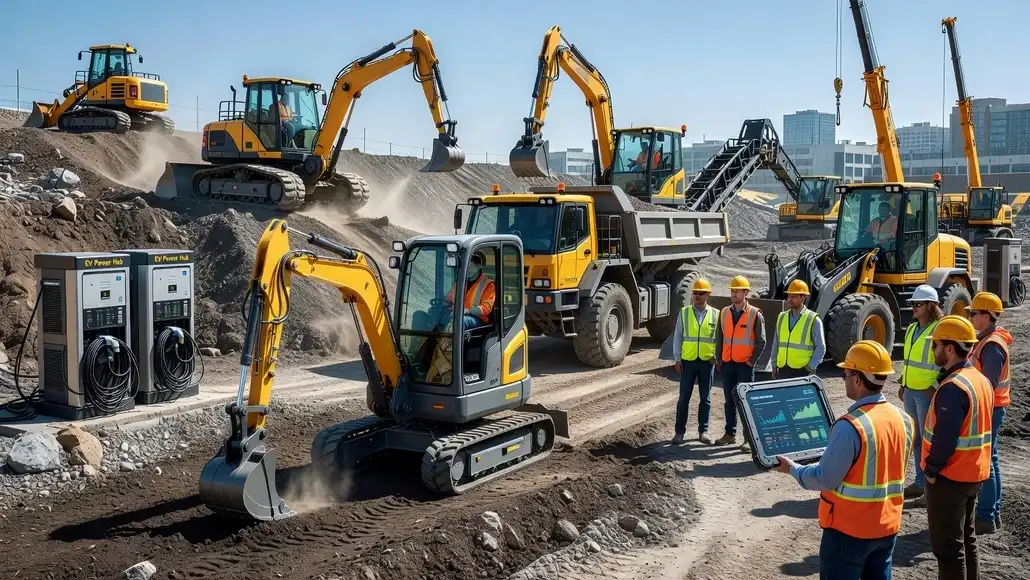


In the high-stakes world of heavy construction, productivity is the ultimate metric of success. For over fifteen years, I have seen how the evolution of machinery has directly correlated with our ability to tackle increasingly complex projects within tighter timelines. We are currently in the midst of a technological surge that is fundamentally changing the nature of heavy machinery. The latest construction equipment trends are not just about making machines bigger or more powerful; they are about making them smarter, more efficient, and more connected. This shift is being driven by the integration of digital technology, the push for environmental sustainability, and a critical need to overcome the persistent labor shortages that plague our industry.
The impact of these advancements is felt on every job site. Gone are the days when heavy equipment was operated purely by feel and experience. Today’s operators have at their fingertips a level of precision and information that was once the stuff of science fiction. This digital layer comprising GPS, telematics, and real-time data analytics is allowing us to maximize every hour of operation and minimize the waste that has traditionally been a byproduct of large-scale earthmoving and structural work. As we look at the specific trends shaping our equipment today, it becomes clear that we are entering an era of unprecedented mechanical capability.
The Rise of Electrification in Heavy Machinery
One of the most visible construction equipment trends is the move toward electrification. While the automotive industry has been moving in this direction for years, the transition for heavy machinery is significantly more challenging due to the massive power requirements of these machines. However, we are now seeing the arrival of fully electric compact excavators, wheel loaders, and even some mid-sized equipment. These machines offer several advantages over their diesel counterparts, including zero tailpipe emissions and significantly reduced noise levels. This makes them ideal for work in urban environments where noise ordinances and air quality regulations are becoming increasingly strict.
Performance and Maintenance of Electric Units
Beyond the environmental benefits, electric construction equipment is proving to be highly efficient. Electric motors provide instant torque, which can lead to faster cycle times in digging and loading operations. Furthermore, the simplicity of an electric drivetrain means there are fewer moving parts to maintain no engine oil, no fuel filters, and no exhaust systems. This translates into lower maintenance costs and less downtime over the life of the machine. As battery technology continues to improve, offering longer run times and faster charging, the adoption of electric heavy machinery will undoubtedly expand into larger classes of equipment.
Challenges of Charging Infrastructure
The transition to electric machinery is not without its hurdles, particularly regarding the infrastructure needed to keep these machines running. Construction sites are often in remote or undeveloped areas where access to a high-capacity power grid is limited. This has led to the development of portable charging solutions and mobile battery storage units that can be moved from site to site. Overcoming these logistical challenges is a key focus for manufacturers and contractors alike, as the long-term benefits of electrification both in terms of cost and sustainability are too significant to ignore.
Automation and Autonomous Operations
If electrification is changing how machines are powered, automation is changing how they are operated. We are seeing a rapid progression from simple operator assistance systems to fully autonomous machines that can perform tasks without human intervention. This trend is particularly evident in repetitive or high-risk tasks. For instance, autonomous haul trucks have become a staple in mining and are now making their way onto large-scale civil engineering projects. These machines can operate around the clock with a level of consistency that human operators cannot match, significantly boosting overall project productivity.
Semi-Autonomous Control and Precision
For most construction sites, semi-autonomous technology is providing the most immediate benefits. Grade control systems, which use GPS and 3D models to automatically adjust the blade or bucket of a machine, allow even less-experienced operators to achieve perfect grades on the first pass. This eliminates the need for constant re-staking and manual checking, which has traditionally been a major bottleneck in earthmoving. These construction equipment trends are not about replacing human operators but rather augmenting their skills, allowing them to focus on the more complex and nuanced aspects of the job while the machine handles the precision details.
Remote Operation and Workforce Safety
Another facet of automation is remote operation, which allows an operator to control a machine from a safe distance or even from a central office miles away. This technology is invaluable for working in hazardous environments, such as steep slopes, demolition sites, or areas with unstable ground. Remote operation also opens up the industry to a more diverse workforce, as it reduces the physical strain of operating heavy equipment and allows for a more flexible work environment. By making the job safer and more accessible, we are not only protecting our workers but also addressing the ongoing challenge of attracting new talent to the construction sector.
Telematics and the Connected Job Site
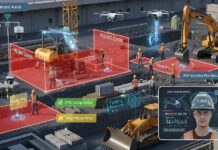
The modern job site is a massive source of data, and telematics is the key to unlocking its value. Virtually every new piece of heavy equipment is now equipped with sensors that monitor everything from fuel consumption and engine health to idle time and location. This data is transmitted in real time to project managers and fleet owners, providing a comprehensive overview of how assets are being utilized. By analyzing this information, we can identify inefficiencies such as machines that are idling for too long or operators who may need additional training and take immediate corrective action.
Predictive Maintenance and Asset Lifecycle
Perhaps the most significant benefit of telematics is its ability to facilitate predictive maintenance. Instead of following a fixed schedule or waiting for a component to fail, we can now use real-time health data to predict when a part is nearing the end of its life. This allows for maintenance to be performed at the most convenient time, such as during a scheduled break or at the end of a shift, preventing unexpected breakdowns that can bring a project to a standstill. These construction equipment trends are essential for maximizing the return on investment for expensive heavy machinery and ensuring that the fleet is always ready for peak production.
Data Integration for Project Management
The value of telematics is further enhanced when it is integrated into broader project management software. When we can correlate machine performance data with project timelines and budgets, we get a much clearer picture of the true cost of a project. This level of insight allows for more accurate bidding on future work and more effective resource allocation on current projects. The connected job site is no longer a vision for the future; it is a reality that is driving the highest levels of productivity in the industry today.
The landscape of heavy machinery is being reshaped by a powerful combination of mechanical innovation and digital intelligence. The construction equipment trends we are witnessing today electrification, automation, and telematics are providing us with the tools to build faster, safer, and more sustainably than ever before. While these technologies require a significant investment in both capital and training, the productivity gains they offer are transformative. As we continue to push the boundaries of what these machines can do, we are not just improving the efficiency of individual projects; we are elevating the standards of the entire construction industry for the next generation.