






















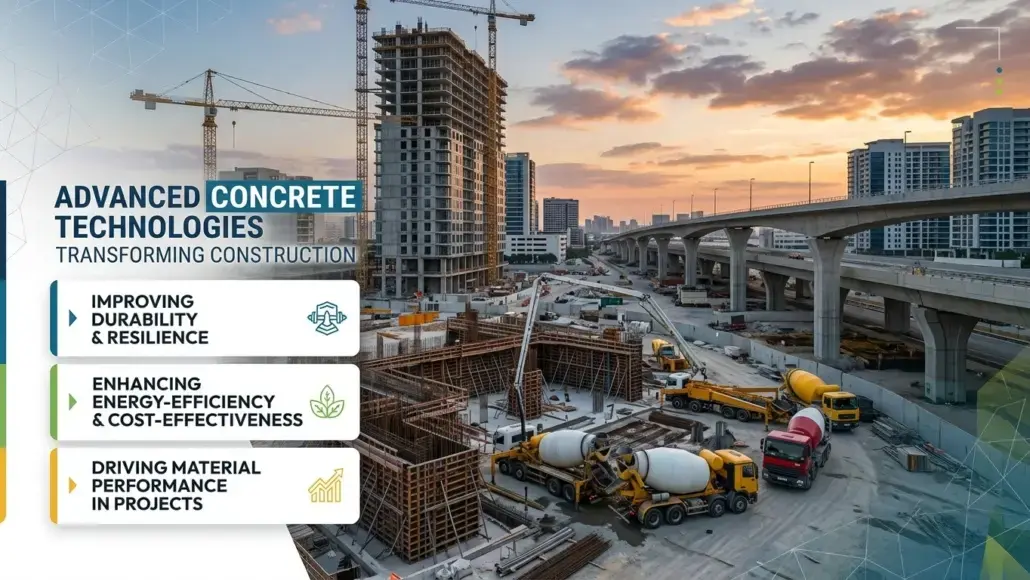


Construction projects today face requirements that go far beyond structural strength. Developers, architects, and contractors are increasingly expected to deliver buildings that are durable, resilient, energy-efficient, and cost-effective throughout their lifecycle. This shift is placing greater emphasis on material performance, particularly concrete, which remains one of the most widely used construction materials in the world.
As project expectations evolve, advanced concrete technologies are helping the construction sector rethink what concrete can achieve beyond its traditional role as a structural component.
From Structural Material to Performance Material
For decades, concrete selection was largely based on compressive strength and cost considerations. Today, project teams are evaluating materials based on a much broader set of performance criteria.
Factors such as durability, crack resistance, thermal performance, maintenance requirements, and environmental exposure are increasingly influencing specification decisions. As a result, advanced concrete technologies are transforming concrete from a basic construction material into a performance-driven solution that contributes directly to project outcomes.
High-Performance Concrete and Modern Building Demands
The rise of taller buildings, longer spans, and more complex structures is driving demand for high-performance concrete solutions.
Modern construction projects require materials capable of supporting ambitious architectural designs while maintaining structural reliability. High-performance concrete offers enhanced strength, durability, and resistance to environmental stress, making it particularly valuable in commercial towers, transportation projects, industrial facilities, and large mixed-use developments.
For contractors and developers, these materials can improve long-term building performance while reducing future maintenance requirements.
Self-Healing and Smart Concrete Technologies
One of the most discussed innovations within advanced concrete technologies is self-healing concrete. Designed to address microcracks before they become major defects, these systems have the potential to improve durability and reduce maintenance needs.
At the same time, researchers and manufacturers are exploring smart concrete solutions capable of monitoring structural conditions and providing performance insights over time.
While still emerging, these technologies reflect a broader industry movement toward materials that actively contribute to building performance rather than simply supporting loads.
Material Innovation Is Changing Construction Economics
The adoption of advanced concrete solutions is also influencing project economics.
Although higher-performance materials may involve increased upfront costs, they can deliver value through:
- Reduced repair requirements
- Longer service life
- Improved structural performance
- Lower lifecycle costs
- Enhanced project sustainability
As developers increasingly evaluate projects through a lifecycle lens, material selection is becoming a strategic decision rather than a procurement exercise.
Sustainability Is Accelerating Concrete Innovation
Environmental targets are creating additional pressure for material innovation across the construction sector.
Advanced concrete technologies are helping project teams reduce embodied carbon, improve resource efficiency, and support sustainability objectives without compromising performance. This is becoming increasingly important as regulations tighten and clients place greater emphasis on long-term environmental impact.
Conclusion
The future of construction will not be shaped solely by design innovation or digital tools. It will also be influenced by the materials that enable projects to perform better over decades of use.
Advanced concrete technologies are helping construction professionals meet rising expectations around durability, sustainability, efficiency, and resilience. As buildings become more complex and performance requirements continue to increase, concrete innovation is evolving from a technical consideration into a strategic advantage.