



























Close
WORLD OF CONCRETE
Saturday, December 20, 2025
JEC WORLD 2026

Why is Plywood a Good Construction Material

Note* - All images used are for editorial and illustrative purposes only and may not originate from the original news provider or associated company.

Subscribe

- Never miss a story with notifications

- Gain full access to our premium content

- Browse free from any location or device.

Media Packs

Expand Your Reach With Our Customized Solutions Empowering Your Campaigns To Maximize Your Reach & Drive Real Results!

– Access the Media Pack Now

– Book a Conference Call

Leave Message for Us to Get Back

Related stories

How To Choose Trailer GPS Units That Actually Work for UK Fleets

You know the drill. A trailer van goes missing...

Improving Construction Efficiency Without Compromising Quality

Achieving construction efficiency requires process-focused improvements that enhance productivity while maintaining or improving quality standards. Through workflow optimization, enhanced coordination mechanisms, quality management practices, and strategic technology integration, construction organizations deliver projects faster and more cost-effectively without sacrificing structural integrity or compliance. Balancing speed with excellence transforms construction management from a trade-off exercise into a synergistic approach where efficiency and quality reinforce one another.

Training Strategies for Operating Advanced Construction Equipment

Modern construction equipment demands operator skills that extend far beyond basic machinery operation. Comprehensive training programs combining classroom instruction, simulator practice, and hands-on field experience prepare operators to safely and efficiently manage increasingly sophisticated equipment. Through structured certification approaches, ongoing skill development, and commitment to continuous learning, construction organizations develop operator competency that enhances project safety, productivity, and equipment longevity.
- Advertisement -
Achema Middleeast

Plywood is a material that’s revolutionised construction and carpentry, since its introduction in the early 20th century. In truth, the idea of a layered wood product had been around for far longer – but it was only in the 1920s that the eight-by-four-foot sheet that we know today first came to market.

What is plywood?

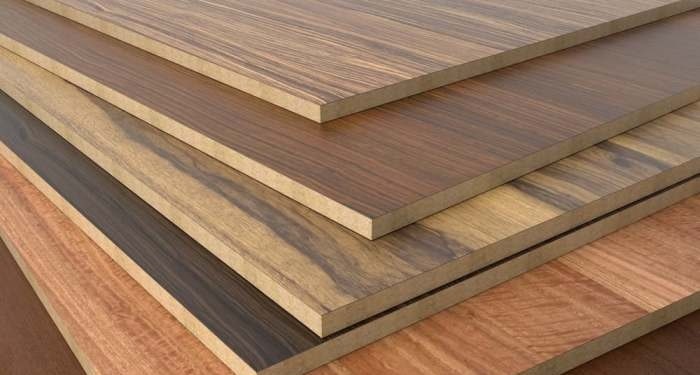
Plywood is a product made from very thin layers of wood veneer, glued together in a stack. It confers many significant advantages over traditional timber – while retaining many of the qualities that make timber desirable. You’ll find plywood made using all kinds of different timbers, and it comes in a range of different thicknesses – but you’ll always find that it’s made from an odd number of sheets.

Over the years, plywood has been used in everything from armchairs to aeroplanes – but it’s most often used today in construction and furniture-making.

How is plywood made?

Plywood is made using at least three layers of timber. These are rolled out and pressed together using adhesive. The grain of each layer is usually placed perpendicular to the last. This is what enables the material to resist warping. While a solid-wood structure might end up twisting this way or that, the sheets that make up plywood will tend to twist against one another – and ultimately cancel one another out.

Why is plywood good for construction?

Plywood confers several advantages which make it ideal for construction projects.

To begin with, it’s much simpler to use than traditional timber. There’s no need to mill a sheet, or to glue planks together. Each sheet instead comes ready to install. You need only cut your sheet to size and get started.

As we’ve mentioned, plywood tends to be ‘dimensionally stable’ – which means that it can be relied upon in structural applications. If you screw a plywood board into the back of a built-in wardrobe, you can be sure that it isn’t going to change shape over time.

Plywood tends to be more affordable than the equivalent solid-timber product, as it’s not only ready-made, but mass-produced in such quantities that economies of scale become significant. It’s also more attractive than many chipboard products, which means that it can be mistaken for solid-wood if you know how to disguise the end-grain.

Since the veneers are solid wood, they can be finished in much the same way – they won’t soak up paint or varnish in the same way as a chipboard product like MDF. You can even paint the edges – but you’ll need to be careful to treat them, first, to prevent the paint from seeping in. A very thin layer of glue will tend to do the job.

Finally, since plywood comes in many different thicknesses, it’s versatile enough to be adapted to a range of applications – whether you need something load bearing or purely decorative.

Achema Middleeast

Latest stories

Related stories

How To Choose Trailer GPS Units That Actually Work for UK Fleets

You know the drill. A trailer van goes missing...

Improving Construction Efficiency Without Compromising Quality

Achieving construction efficiency requires process-focused improvements that enhance productivity while maintaining or improving quality standards. Through workflow optimization, enhanced coordination mechanisms, quality management practices, and strategic technology integration, construction organizations deliver projects faster and more cost-effectively without sacrificing structural integrity or compliance. Balancing speed with excellence transforms construction management from a trade-off exercise into a synergistic approach where efficiency and quality reinforce one another.

Training Strategies for Operating Advanced Construction Equipment

Modern construction equipment demands operator skills that extend far beyond basic machinery operation. Comprehensive training programs combining classroom instruction, simulator practice, and hands-on field experience prepare operators to safely and efficiently manage increasingly sophisticated equipment. Through structured certification approaches, ongoing skill development, and commitment to continuous learning, construction organizations develop operator competency that enhances project safety, productivity, and equipment longevity.

Managing Material Costs in a Volatile Construction Market

Construction material price volatility presents significant challenges to project budgeting and risk management. Strategic procurement approaches, supply chain resilience strategies, and contract mechanisms that balance risk effectively enable stakeholders to navigate market fluctuations successfully. Understanding market dynamics, implementing escalation clauses, developing flexible procurement strategies, and maintaining strong supplier relationships help construction professionals maintain project viability despite unpredictable material cost movements.

Subscribe

- Never miss a story with notifications

- Gain full access to our premium content

- Browse free from any location or device.

Media Packs

Expand Your Reach With Our Customized Solutions Empowering Your Campaigns To Maximize Your Reach & Drive Real Results!

– Access the Media Pack Now

– Book a Conference Call

Leave Message for Us to Get Back

Translate »