


























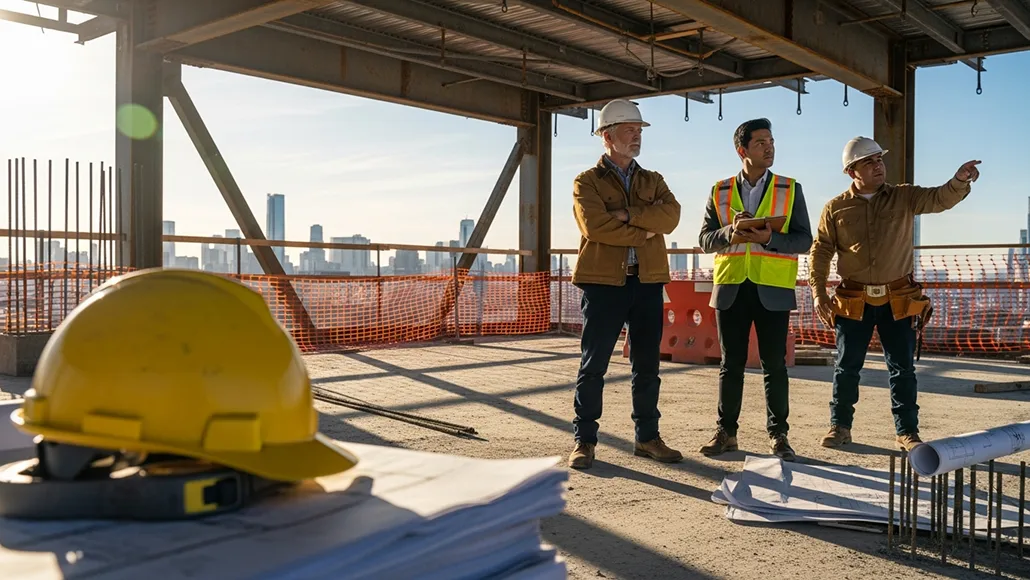

The financial and human stakes of construction site accidents are exceptionally high. With workplace injuries potentially constituting 6-9% of total project costs and the construction industry accounting for approximately one in five workplace deaths in the U.S. in 2023, risk management is paramount. A common misconception among general contractors (GCs) and property owners is that the workers’ compensation system provides a complete shield against all injury-related lawsuits. This oversimplification ignores a critical legal distinction that represents a significant financial and operational threat. Understanding the difference between the “exclusive remedy” rule and third-party liability actions is essential for industry leaders looking to manage risk and protect their businesses from potentially massive construction accident settlements.
The Foundation: Workers’ Compensation and the ‘Exclusive Remedy’ Rule
At the heart of workplace injury law lies the workers’ compensation system, a framework designed to create a predictable process for both employers and employees. However, the protections it offers are not absolute, particularly on a dynamic construction site with multiple entities working in close proximity. GCs and owners must understand both the rule and its significant exceptions to accurately assess their liability.
Defining the Workers’ Compensation System
Workers’ compensation is a state-mandated, no-fault insurance system that provides injured employees with medical benefits and partial wage replacement for on-the-job injuries. The system operates on a foundational trade-off: in exchange for these guaranteed benefits, employees are generally barred from suing their direct employer for negligence. This principle, known as the “exclusive remedy” rule, is intended to prevent costly and protracted litigation between an employee and their direct employer, ensuring workers receive care quickly without needing to prove fault.
The Critical Exception: Third-Party Liability
The immunity shield provided by the exclusive remedy rule typically only protects the direct employer. As legal experts explain, it does not extend to other negligent parties on a complex construction site, opening the door for what are known as third-party lawsuits. The modern job site involves an intricate web of overlapping responsibilities, where an injured worker may be employed by a subcontractor, operating on property owned by another entity, and using equipment from a third-party supplier. This complexity in assigning responsibility is a major factor in litigation, making it crucial to identify all potentially liable parties. Potential third-party defendants can include:
- General Contractors
- Property Owners
- Other Subcontractors
- Architects and Engineers
- Equipment Manufacturers or Suppliers
Navigating the ‘Statutory Employer’ Defense
In an attempt to extend their immunity, GCs sometimes invoke the “statutory employer” or “borrowed servant” doctrine. This legal argument posits that, for the purposes of the incident, the GC was acting as the primary employer of a subcontractor’s injured worker and should therefore be protected by the exclusive remedy rule. However, the application of this defense varies dramatically from state to state. This creates a complex and unpredictable legal landscape for companies operating across multiple jurisdictions, making a universal risk management strategy difficult to implement without localized legal guidance.
Opening the Door: Conditions Allowing Lawsuits Against GCs and Owners
While workers’ compensation is the first recourse for an injured worker, certain conditions can create a direct path to litigation against a general contractor or property owner. These situations typically arise from a higher degree of negligence or the violation of specific safety laws, effectively removing the standard liability shields and exposing companies to significant financial damages.
Gross Negligence and Intentional Acts
There is a critical legal distinction between simple negligence—a failure to exercise reasonable care—and gross negligence. Gross negligence is defined as a conscious and reckless disregard for the safety and well-being of others. This could include failing to address a known, life-threatening hazard or intentionally ignoring established safety protocols to save time or money. In some states, compelling evidence of gross negligence can dismantle the typical liability protections afforded to GCs and owners, allowing an injured worker to sue directly for damages far exceeding what workers’ compensation provides.
Violations of Specific Labor Laws and Safety Statutes
Certain state and federal laws impose non-delegable duties on GCs and owners to maintain a safe worksite for all workers, regardless of who directly employs them. A prime example is New York’s Labor Law, particularly Sections 240 (“Scaffold Law”) and 241(6). These statutes can impose strict or absolute liability on GCs and owners for specific types of accidents, such as gravity-related falls, irrespective of the worker’s own potential fault. Furthermore, while the Occupational Safety and Health Administration (OSHA) does not create a private right to sue, its citations are often used as powerful evidence of negligence in third-party lawsuits. OSHA’s “Fatal Four”—falls, struck-by objects, electrocutions, and caught-in/between incidents—account for over 60% of construction deaths and are a central focus in liability cases involving multiple contractors.
| Feature | Workers’ Compensation Claim | Third-Party Lawsuit |
| Defendant | Direct Employer | Negligent third party (GC, Owner, etc.) |
| Basis of Claim | Injury occurred during employment (no-fault) | Proof of negligence or statutory violation |
| Recoverable Damages | Medical bills, partial lost wages (statutory limits) | All economic damages plus non-economic damages like pain & suffering |
| Potential Payout | Defined and limited by state law | Can be significantly higher, with wrongful death settlements reaching $1M-$10M+ |
Mitigating Risk: Financial Implications and Legal Strategy
Successfully navigating the complex liability landscape of a construction site requires more than just adherence to baseline safety rules. It demands a proactive, multi-faceted strategy that combines rigorous site management, strong contractual language, and a clear understanding of the legal avenues available to all parties following an incident.
The Financial Reality of Third-Party Claims
The financial consequences of a third-party lawsuit extend far beyond the direct settlement amount. Severe injury claims can lead to massive payouts that drastically impact insurance premiums, erode project profitability, and damage a company’s reputation for years. This risk is compounded by organized fraud rings that specifically target construction companies with exaggerated or staged injury claims, further inflating the financial and administrative burden on GCs and owners. A single major lawsuit can threaten the financial viability of a project and even the company itself.
Proactive Site Management and Contractual Safeguards
Effective risk management is the best defense against crippling lawsuits. Key strategies include:
- Implementing and meticulously documenting a comprehensive site safety plan that exceeds minimum OSHA standards. Investing in high-quality online regulatory compliance training can be a crucial component of this strategy.
- Using strong, attorney-reviewed contractual language that clearly defines roles, responsibilities, and indemnification obligations for every subcontractor on site.
- Verifying that all subcontractors carry adequate insurance coverage and ensuring the GC and property owner are named as additional insured parties. Understanding the nuances of contractor liability insurance cost is vital for this step.
The Importance of Specialized Counsel in Maximizing Injury Construction Accident Settlements and Defending Claims
When a serious accident occurs, the ensuing legal actions require specialized expertise. Navigating the interplay between a workers’ compensation claim and a potential third-party lawsuit is complex. Experienced legal firms understand how to thoroughly investigate multi-contractor incidents, identify all liable parties, and counter sophisticated legal defenses like the “statutory employer” doctrine. For injured workers, particularly in states with robust protections like New York, this expertise is crucial for recovering damages for pain and suffering—compensation that workers’ comp does not provide and is a key factor in maximizing injury construction accident settlements. For GCs and owners, understanding these legal dynamics is the first step in building an effective defense strategy.
A Strategic Imperative for Site Safety and Liability
The belief that workers’ compensation provides blanket immunity for general contractors and property owners is a dangerous oversimplification. As projects grow in complexity, third-party lawsuits have become a real, prevalent, and costly risk that cannot be ignored. The potential for litigation stemming from gross negligence or violations of specific labor laws means that simply having a workers’ compensation policy is not enough to protect a company’s assets and reputation.
A deep understanding of state-specific labor laws, such as New York’s Scaffold Law, coupled with rigorous, documented safety protocols and ironclad contractual protections, is no longer just about compliance—it is a core component of financial and operational strategy in the modern construction industry. As projects become more legally scrutinized, the most successful and resilient firms will be those that treat legal and safety risk management not as a cost center, but as an integrated, proactive discipline essential for long-term survival and profitability.
