
























Close
MCE 2026
Wednesday, January 21, 2026
JEC WORLD 2026

Scottish architect Kettle Collective designs worlds second tallest tower for Russia

Note* - All images used are for editorial and illustrative purposes only and may not originate from the original news provider or associated company.

Subscribe

- Never miss a story with notifications

- Gain full access to our premium content

- Browse free from any location or device.

Media Packs

Expand Your Reach With Our Customized Solutions Empowering Your Campaigns To Maximize Your Reach & Drive Real Results!

– Access the Media Pack Now

– Book a Conference Call

Leave Message for Us to Get Back

Related stories

FP McCann Easy-Trim Acquisition Expands Roofing Products

FP McCann has completed the Easy-Trim acquisition, adding roofing...

Titan America Keystone Acquisition Spans Mid-Atlantic Reach

Titan America has signed an agreement to complete the...

Sustainable Construction Machinery for Low Emission Sites

Reducing the carbon footprint of the building sector requires a total reimagining of engine technology and energy consumption, leading to the rise of specialized machinery that balances power with environmental stewardship. By prioritizing low emission operation and energy-efficient designs, contractors are meeting the dual challenge of fulfilling ambitious infrastructure goals while adhering to increasingly stringent global climate regulations.
- Advertisement -
Advancing Prefabrication 2026

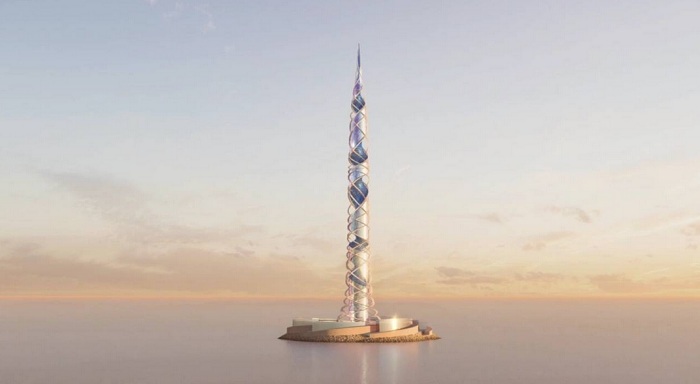
Scotland-based architect Kettle Collective has unveiled its design for a spiralling 703m tower for St Petersburg, Russia that would be the second highest skyscraper in the world next to Dubai’s Burj Khalifa (828m).

Although the Burj is taller, this tower, called Lakhta Centre II, would have the highest occupied floor in the world at 590m, the firm said in a press release, adding it would knock the Shanghai Tower (632m) from its current place as the world’s second tallest tower, at 632m.

The tower would be located on the outskirts of St Petersburg next to Europe’s tallest building, the Lakhta Center (462m), which is the headquarters of energy giant Gazprom.

Gazprom yesterday revealed its proposal for Lakhta Center II in a meeting with St Petersburg city government, saying the tower would be built on land Gazprom would provide.

The company said the project would “be implemented via project financing outside the scope of Gazprom’s investment program by a special-purpose company unaffiliated with Gazprom”.

The existing Lakhta Center seen from the shore of the Neva Bay in Olgino (Alexey Komarov/CC BY-SA 4.0)

Kettle Collective design lead Tony Kettle designed the existing Lakhta Centre when he worked at architectural firm RMJM, winning a competition in 2006.

He said the new tower would be “a template of sustainable design for global high-rise projects”, with features including multi-car lifts powered by energy generated by their own movement.

He said the spiralling exterior columns would form an “open organic helical diagrid”.

Kettle Collective managing director?Colin Bone said the tower would have national significance, “showcasing Russia on the world stage as an investor in business, innovation and creative thinking”.


Achema Middleeast

Latest stories

Related stories

FP McCann Easy-Trim Acquisition Expands Roofing Products

FP McCann has completed the Easy-Trim acquisition, adding roofing...

Titan America Keystone Acquisition Spans Mid-Atlantic Reach

Titan America has signed an agreement to complete the...

Sustainable Construction Machinery for Low Emission Sites

Reducing the carbon footprint of the building sector requires a total reimagining of engine technology and energy consumption, leading to the rise of specialized machinery that balances power with environmental stewardship. By prioritizing low emission operation and energy-efficient designs, contractors are meeting the dual challenge of fulfilling ambitious infrastructure goals while adhering to increasingly stringent global climate regulations.

Digital Construction Sites Powered by Connected Equipment

The concept of a connected jobsite revolves around a unified digital ecosystem where every asset contributes real-time data to a centralized management hub, ensuring seamless coordination across large-scale projects. By integrating sophisticated data analytics and satellite-driven monitoring, the industry is moving toward a more transparent and highly optimized way of delivering complex infrastructure.

Subscribe

- Never miss a story with notifications

- Gain full access to our premium content

- Browse free from any location or device.

Media Packs

Expand Your Reach With Our Customized Solutions Empowering Your Campaigns To Maximize Your Reach & Drive Real Results!

– Access the Media Pack Now

– Book a Conference Call

Leave Message for Us to Get Back

Translate »