




























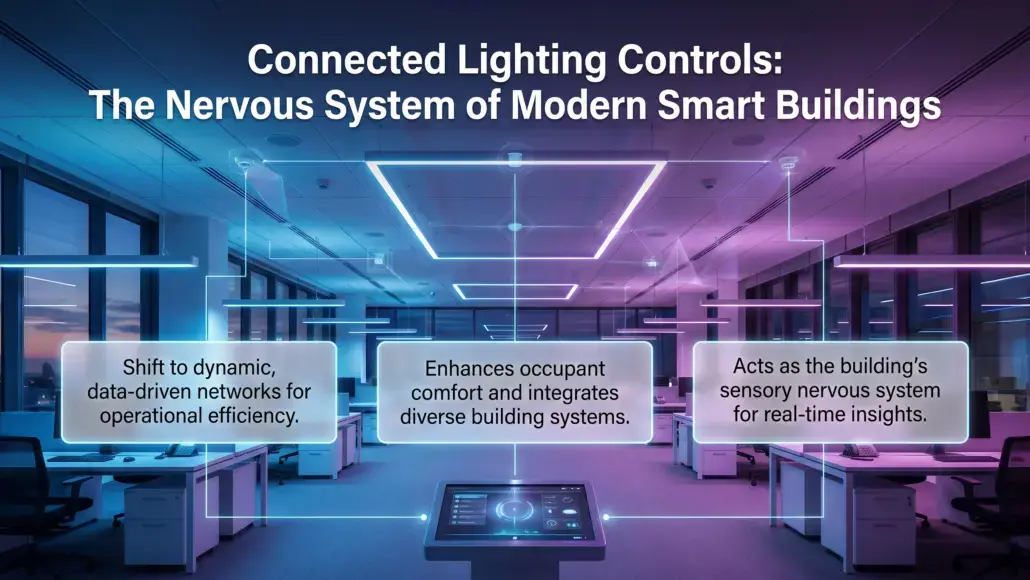


The deployment of connected lighting controls within modern smart building infrastructure represents a fundamental transition from static electrical systems to dynamic, data driven networks. This evolution is driven by the necessity for greater operational efficiency, improved occupant comfort, and the integration of diverse building systems into a unified management platform. In the context of commercial construction, these systems serve as the sensory nervous system of a structure, providing a platform for data collection that extends far beyond simple illumination management. Engineers and developers are increasingly specifying these advanced controls to meet the rigorous demands of energy codes and sustainability certifications. The shift toward networked architecture allows for a level of granular control that was previously unattainable, enabling facility managers to respond to real time occupancy patterns and environmental changes. By embedding intelligence into every luminaire and sensor node, the construction industry is laying the groundwork for more resilient and adaptable building assets.
The technical architecture of connected lighting controls relies on a combination of wired and wireless communication protocols that facilitate bidirectional data exchange. Unlike traditional standalone sensors, these networked components communicate status updates, power consumption data, and occupancy events to a centralized server or cloud based gateway. This connectivity enables sophisticated logic such as daylight harvesting, task tuning, and demand response strategies to be implemented across entire campuses. From a construction perspective, the selection of the appropriate communication standard (whether it be Zigbee, Bluetooth Mesh, or wired DALI) is a critical decision that impacts the project’s scalability and interoperability. The goal is to create an ecosystem where lighting, HVAC, and security systems can share information to optimize the building’s overall performance. For example, occupancy data from the lighting network can be used to adjust temperature setpoints in vacant rooms, significantly reducing the energy waste associated with heating and cooling unoccupied spaces.
The Shift to Wireless and IoT Lighting Platforms
The adoption of wireless technologies within the field of connected lighting controls has significantly simplified the installation process in both new builds and renovation projects. By eliminating the need for extensive dedicated control wiring, construction teams can reduce material costs and labor time while providing greater flexibility for future reconfigurations. Modern wireless protocols are designed to be self healing, where each device acts as a repeating node in a mesh network, ensuring reliable communication even in large, complex architectural environments. This decentralized approach increases the resilience of the system, as the failure of a single node does not compromise the integrity of the entire network. In commercial office settings where floor plans are frequently updated, wireless controls allow for rapid reassignment of luminaires to new zones without the need for physical rewiring.
The integration of Internet of Things (IoT) capabilities further expands the utility of these systems, turning luminaires into multi functional data nodes. Modern fixtures are often equipped with sensors that monitor temperature, humidity, and even air quality in addition to motion and light levels. This wealth of environmental data provides facilities managers with a comprehensive view of the building’s internal conditions, supporting more informed decisions regarding maintenance and operational adjustments. Beyond the technical benefits, the IoT connectivity enables advanced user interfaces, where occupants can control their local lighting environment through smartphone applications or dedicated web portals. This level of personalization is increasingly expected in high end commercial spaces, where occupant well being and productivity are prioritized. The ability to update the system’s firmware over the air ensures that the building remains current with the latest security patches and feature enhancements, protecting the long term value of the investment.
Data Harvesting and Occupancy Analytics in Commercial Spaces
The most significant advantage of connected lighting controls is the ability to harvest and analyze data regarding how space is utilized within a building. By tracking occupancy patterns over time, building owners can gain valuable insights into the efficiency of their floor plans and identify underused areas. This information is particularly useful in the post pandemic era, where corporate tenants are seeking to optimize their real estate footprints in response to hybrid work models. Heat mapping and traffic flow analysis allow for the optimization of cleaning schedules, space allocation, and even energy use based on historical trends. The data generated by the lighting network becomes a strategic asset that informs long term leasing and development decisions.
Analytical tools integrated into the control platform can process thousands of data points to identify anomalies or opportunities for further optimization. For instance, if a specific conference room is consistently reported as occupied but with lights at full brightness despite ample daylight, the system can recommend adjustments to the daylight harvesting settings. This level of proactive management ensures that the building continues to perform at its peak efficiency throughout its lifecycle. Beyond this, the integration of occupancy data with third party room booking systems can help to eliminate the frustration of ghost bookings, where rooms remain reserved but unoccupied. The lighting network effectively acts as a real time verification layer that improves the overall utility of the office environment. By providing a clear, data driven picture of building usage, these systems empower developers to create more effective and efficient spaces for their clients.
Interoperability and Integration with Building Management Systems
For connected lighting controls to be truly effective within a smart building, they must be fully interoperable with other essential building systems. The convergence of lighting, HVAC, and security into a unified Building Management System (BMS) is a primary objective for modern construction projects. This integration is typically achieved through open protocols like BACnet or through specialized APIs that allow different software platforms to communicate. When these systems are synchronized, the building can respond more intelligently to the needs of its occupants. For example, when the security system is armed during evening closing hours, the lighting network can automatically transition to a low power security mode while the HVAC system reduces airflow to unoccupied zones.
The challenge for engineers lies in ensuring that these disparate systems can exchange data without lag or security vulnerabilities. This requires careful coordination during the design and commissioning phases of the project. A well integrated system provides a single pane of glass for building operators, allowing them to monitor and manage all aspects of the building’s performance from a single interface. This centralized approach reduces the complexity of facility management and allows for more coordinated responses to environmental or operational triggers. The move toward open standards is essential for preventing vendor lock in and ensuring that the building can be easily upgraded as new technologies emerge. By prioritizing interoperability, construction professionals can deliver a future proof infrastructure that meets the evolving needs of the smart building market. The synergy between connected systems creates a more cohesive and efficient environment that benefits both the building owner and the end user.
Scalability and Cybersecurity for Networked Lighting Assets
As the number of connected devices within a building grows, the scalability of the control system becomes a paramount concern. A network that works well for a single floor may face performance issues when expanded to a multi building campus. Engineers must design the architecture to handle thousands of nodes while maintaining low latency for control commands. This often involves the use of edge computing, where local gateways process most of the data and only send essential information to the cloud. This approach reduces the bandwidth requirements and ensures that the system remains responsive even during periods of high network activity. The design must also account for the physical range limitations of wireless protocols, requiring the strategic placement of gateways and repeaters to ensure comprehensive coverage.
Cybersecurity is another critical factor that must be addressed from the earliest stages of the project. A networked lighting system represents a potential entry point for unauthorized access to the building’s wider IT infrastructure. Protecting these assets requires a multi layered security strategy, including encrypted communication, secure authentication for all devices, and regular software updates. Construction teams must work closely with IT professionals to ensure that the lighting network is properly partitioned from the main corporate network. The use of secure boot processes and hardware based security keys can help to prevent the installation of malicious firmware on luminaires and sensors. As the threat environment evolves, the ability to monitor the network for unusual activity and respond quickly to potential breaches is essential for maintaining the integrity of the building. By treating cybersecurity as a core component of the building’s infrastructure, developers can protect their assets and their tenants from the risks associated with the digital age. The commitment to security ensures that the benefits of connected lighting controls can be realized without compromising the safety of the building’s operations.
Future Development and Technological Trajectory
The future of connected lighting controls will likely see even deeper integration with artificial intelligence and machine learning. These technologies will allow systems to predict occupant needs and environmental changes before they occur, further enhancing the efficiency and comfort of the building. For example, a system could learn the typical arrival times of employees and pre heat or pre light their workspaces accordingly. The continued evolution of sensor technology will also expand the types of data that can be collected, including advanced biometrics or high resolution environmental mapping. The goal is to create a building that is not just reactive but truly proactive in its management of the indoor environment.
As the industry moves toward more sustainable and human centric design, the role of connected controls will only become more significant. These systems provide the necessary tools for implementing complex lighting strategies that support the biological and psychological needs of occupants. The ability to precisely control the spectral output and intensity of light throughout the day is essential for creating environments that promote health and productivity. By continuing to invest in advanced control technologies, the construction sector can deliver buildings that are not only more efficient but also more supportive of the people who use them. The ongoing dialogue between architects, engineers, and technology providers will drive the next generation of innovations, ensuring that connected lighting controls remain at the heart of the smart building revolution. The long term success of these projects depends on a commitment to innovation, integration, and a clear focus on the needs of the end user. Through this collaborative approach, the industry can create a built environment that is truly intelligent, sustainable, and resilient.