




























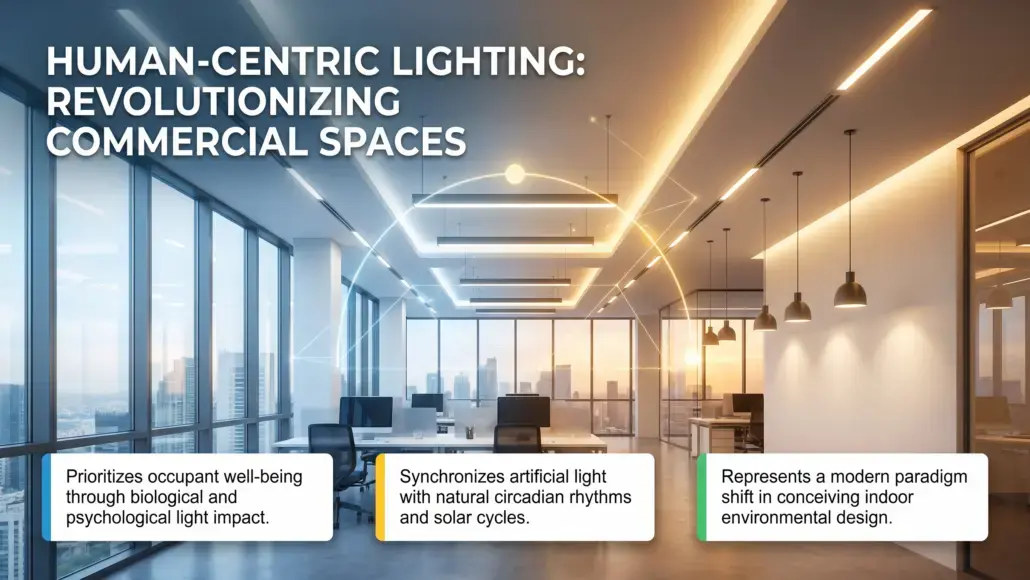


The application of human-centric lighting design within commercial construction reflects a profound shift in the way indoor environments are conceived and executed. This approach moves beyond the simple provision of illumination for task performance, focusing instead on the biological and psychological impact of light on the people who inhabit the building. By synchronizing artificial light with the natural cycles of the sun, architects and engineers can create spaces that support the circadian rhythms of occupants, leading to improved health, comfort, and productivity. As the link between the built environment and human well being becomes more clearly understood, the demand for sophisticated lighting solutions that prioritize the end user experience is growing rapidly. For developers, the implementation of human-centric lighting design is a strategic investment in the long term value of the asset, attracting tenants who value a high quality workplace that fosters employee retention and performance.
The technical foundation of this design philosophy relies on the ability to precisely control both the intensity and the spectral composition of light throughout the day. Unlike traditional static lighting that remains constant regardless of the hour, human centric systems transition from warm, low intensity light in the early morning to cool, high intensity light during the middle of the day, before returning to a warmer hue in the evening. This dynamic response mimics the natural progression of daylight, providing the necessary signals to the human brain to maintain a healthy sleep wake cycle. The integration of advanced LED technology and networked controls makes this level of complexity achievable in even the largest commercial developments. By embedding these principles into the core of the building’s design, the construction industry is delivering environments that are more supportive of the biological needs of their inhabitants.
Circadian Rhythm Alignment in Workplace Environments
The most significant benefit of human-centric lighting design is its ability to align the indoor environment with the natural circadian rhythms of occupants. These internal biological clocks regulate a wide range of physiological processes, including sleep patterns, hormone production, and core body temperature. Research indicates that exposure to the correct spectrum of light at the right time of day is essential for maintaining these rhythms, particularly in environments where people spend long hours indoors. By providing a boost of blue enriched light in the morning, the system helps to suppress melatonin production and increase alertness, supporting the transition into the workday. Conversely, as the afternoon progresses, the transition to warmer, red enriched light promotes the natural production of melatonin, preparing the body for rest and recovery in the evening.
In a workplace setting, this alignment has a direct impact on the energy levels and cognitive performance of employees. Studies have shown that workers in environments with circadian tuned lighting report higher levels of concentration, better mood, and a reduction in the symptoms of afternoon fatigue. For employers, these benefits translate into tangible gains in productivity and a decrease in absenteeism related to sleep disorders or stress. The design of these systems requires a deep understanding of the specific spectral power distributions that trigger biological responses, a field often referred to as melanopic lighting design. Engineers must work closely with lighting designers to ensure that the chosen luminaires deliver the necessary levels of Equivalent Melanopic Lux (EML) at the eye level of the occupant. This focus on the biological impact of light represents a new frontier in construction engineering, where the quality of the indoor environment is measured by its effect on human health.
Tunable White Technology and Spectral Power Distribution
The primary technical enabler for human-centric lighting design is tunable white technology, which allows for the adjustment of color temperature and intensity within a single fixture. By combining multiple LED arrays with different color profiles, typically ranging from warm 2700K to cool 6500K, the system can create a virtually infinite range of white light settings. The control of these arrays is managed by sophisticated drivers that can blend the outputs to achieve specific target values for both aesthetic and biological effects. This flexibility is essential for creating environments that can adapt to different tasks and occupant preferences. For example, a space used for focused individual work might benefit from a cooler, more stimulating light setting, while a social lounge or breakout area might be better served by a warmer, more relaxing atmosphere.
The management of spectral power distribution (SPD) is another critical aspect of this technology. SPD refers to the amount of energy present at each wavelength within the visible spectrum, and it determines how colors are rendered and how the light interacts with the human eye. Modern tunable white systems are designed to provide a high color rendering index (CRI) across their entire tuning range, ensuring that skin tones and materials look natural and vibrant. Beyond aesthetics, the ability to fine tune the SPD allows for more precise control over the biological effects of the lighting. Engineers can optimize the output to maximize the stimulation of the eye’s non visual photoreceptors without creating uncomfortable glare or color shifts. The selection of high quality LED components and precision optics is essential for ensuring that the tunable white system performs consistently and reliably over its entire lifespan. By prioritizing these advanced technical solutions, the construction industry can deliver a superior indoor environment that meets the highest standards of human centric design.
Impact on Occupant Productivity and Well Being Metrics
The implementation of human-centric lighting design is increasingly justified by its positive impact on measurable occupant productivity and well being metrics. In the competitive commercial office sector, the ability to demonstrate a clear link between building design and employee performance is a significant advantage for developers and landlords. Metrics such as the WELL Building Standard provide a framework for evaluating the success of lighting strategies in supporting human health. These standards include specific requirements for light intensity, color quality, and the management of glare, all of which must be documented through detailed calculations and onsite measurements. By achieving these performance targets, buildings can secure high end tenants who are willing to pay a premium for a workspace that actively supports their employees’ health.
Beyond the formal certification programs, the qualitative feedback from occupants provides valuable insights into the success of the lighting design. Surveys often indicate that employees feel more comfortable and less prone to eye strain in environments with well designed, human centric lighting. The ability to control their local lighting environment further enhances the sense of agency and satisfaction among workers. This psychological benefit is a critical component of the overall well being of the workforce, contributing to a more positive and collaborative office culture. For building owners, the long term benefits of improved employee retention and performance can far outweigh the initial costs of the advanced lighting infrastructure. The integration of health and productivity into the core of the building’s value proposition is a fundamental shift that is reshaping the future of commercial construction. By focusing on the human impact of design decisions, the industry can create buildings that are truly successful in both an economic and a social sense.
Design Methodologies for Glare Reduction and Visual Comfort
Maintaining a high level of visual comfort is a central challenge in human-centric lighting design, particularly when utilizing high intensity, blue enriched light for circadian stimulation. Glare, defined as excessive brightness in the field of vision that causes discomfort or reduces visibility, can quickly negate the benefits of a human centric strategy if not properly managed. Engineers must employ a variety of design methodologies to minimize glare, including the use of recessed fixtures, specialized diffusers, and precise optical shielding. The Unified Glare Rating (UGR) is a key metric used to evaluate the potential for discomfort in a given lighting layout, with lower values indicating a more comfortable environment. Designers must carefully position luminaires relative to the primary sightlines of occupants to ensure that the light source itself is not directly visible.
The use of indirect lighting, where light is reflected off the ceiling or walls before reaching the workspace, is another effective strategy for improving visual comfort. This approach creates a more uniform and shadow free environment, reducing the contrast between different surfaces and making it easier for the eye to adapt. However, indirect lighting requires higher levels of overall power to achieve the necessary illumination on the task surface, creating a conflict with energy efficiency goals. The solution often involves a combination of direct and indirect components, where each part is independently controlled to optimize the balance between comfort and performance. Beyond the physical layout of the fixtures, the selection of surface finishes and materials also plays a significant role in the management of glare. Matte finishes and non reflective materials can help to soften the distribution of light and reduce the risk of distracting reflections. By adopting a comprehensive approach to visual comfort, construction professionals can ensure that their human centric strategies are effective and well received by the people who use the space.
Balancing Biological Needs with Energy Performance Targets
A major challenge for engineers in the field of human-centric lighting design is the need to balance the biological needs of occupants with the building’s energy performance targets. Providing the high levels of vertical illumination required for circadian stimulation often consumes more power than traditional task oriented lighting. This increase in energy use can make it difficult to meet the strict lighting power density (LPD) limits set by modern energy codes. To overcome this challenge, designers must utilize the most efficient LED technology and implement advanced control strategies that target light only where and when it is needed. For instance, the use of task ambient lighting schemes allow for high illumination levels on the workspace while maintaining a lower overall intensity in the surrounding environment.
The integration of daylight is another essential component of this balancing act. Natural light provides the most effective spectral power distribution for circadian stimulation, and its use can significantly reduce the demand on the artificial lighting system. Human centric controls can be programmed to complement the available daylight, providing only the necessary supplemental light to achieve the biological and visual targets. This intelligent integration ensures that the building performs efficiently while still providing a high quality indoor environment. In addition, the use of occupancy sensors and automated dimming profiles ensures that energy is not wasted in unoccupied areas or during periods when lower light levels are sufficient. By adopting a holistic and data driven approach to design, the construction industry can deliver projects that are both biologically supportive and operationally efficient. The ongoing evolution of these systems will continue to drive further improvements in performance, creating a more sustainable and healthy future for the built environment. Through this commitment to excellence, the industry can ensure that human centric design remains a central pillar of modern commercial construction.