


















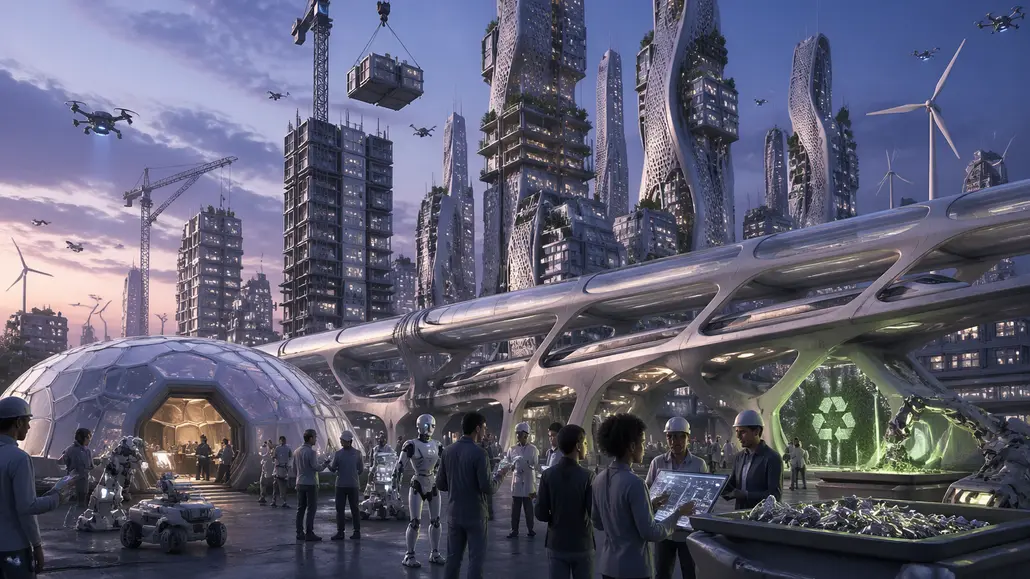


The trajectory of the built environment is currently being reshaped by a convergence of technological innovation, environmental urgency, and an evolving aesthetic sensibility. As we look toward the mid-21st century, the future aluminium architecture construction landscape appears more dynamic and promising than ever before. For decades, aluminium has been valued for its lightness and versatility, but its future role transcends these basic characteristics. We are entering an era where aluminium will serve as a foundational element for “intelligent” buildings, modular urban systems, and ultra-sustainable infrastructure. This transformation is driven by a fundamental shift in how we perceive materials not just as static components, but as active participants in the performance and longevity of our cities.
The evolution of future aluminium architecture construction is inextricably linked to the rise of computational design and advanced manufacturing. Architects are now able to conceive of forms that were previously impossible to engineer or build, utilizing algorithms that mimic the efficiency of biological systems. Aluminium, with its exceptional ductility and the precision offered by modern extrusion and 3D printing technologies, is the ideal medium for realizing these visionary designs. From the fluid, organic facades of futuristic transport hubs to the ultra-efficient structural frames of high-density housing, aluminium is providing the material basis for a new generation of iconic architecture that is as functional as it is breathtaking.
Smart Materials and the Integration of Responsive Systems
One of the most exciting trends in the future aluminium architecture construction is the development of “smart” building skins. These are facades that can respond in real-time to changes in the environment, optimizing light, heat, and air quality for the occupants within. Future aluminium systems will feature integrated sensors and micro-actuators that allow louvers and panels to adjust their position based on the sun’s angle or the wind’s direction. This “active” approach to building performance significantly reduces the reliance on mechanical systems, leading to a new era of ultra-low-energy architecture. In this context, aluminium’s role as a conductor of both heat and electricity becomes a strategic advantage, allowing for the seamless integration of telecommunications and energy-harvesting technologies directly into the building’s envelope.
Furthermore, the research into “self-healing” aluminium alloys and anti-microbial surface treatments is poised to revolutionize the maintenance and health profiles of next generation buildings. By altering the surface of the metal at the molecular level, scientists are creating finishes that can repel water, prevent the growth of bacteria, and even repair minor scratches automatically. These innovations are particularly relevant for public infrastructure, such as hospitals, airports, and schools, where hygiene and durability are paramount. As we move toward more resilient urban environments, the ability of future aluminium architecture construction to maintain its performance and appearance with minimal human intervention will be a key driver of its widespread adoption in the smart cities of tomorrow.
Modularity and the Rapid Evolution of Urban Spaces
The future of architecture is not just about permanence; it is also about adaptability. As urban populations continue to shift and grow, the need for flexible building systems that can be rapidly deployed, reconfigured, or relocated is becoming essential. Future aluminium architecture construction is at the forefront of this modular revolution. Because of its lightweight nature and dimensional stability, aluminium is the perfect material for high-quality prefabricated units that can be manufactured in a controlled factory setting and then assembled on-site in a fraction of the time required for traditional construction. This approach is not only more efficient but also significantly reduces the waste and disruption associated with conventional building methods.
In the future, we may see entire neighborhoods constructed using a “plug-and-play” system of aluminium modules, allowing cities to evolve in response to the changing needs of their inhabitants. This modularity also supports the growing trend of “micro-living” and the development of portable infrastructure for disaster relief and remote environments. By treating the city as a dynamic and adaptable system rather than a fixed set of assets, future aluminium architecture construction is enabling a more responsive and resilient urban future. The ease with which these modules can be disassembled and their materials returned to the circular economy also ensures that this rapid evolution does not come at the expense of our environmental responsibilities, making aluminium the ultimate material for an agile and sustainable world.
Sustainable Infrastructure and the Net-Zero Challenge
As the global community works toward achieving net-zero carbon emissions, the role of future aluminium architecture construction in creating sustainable infrastructure cannot be overstated. The metal’s infinite recyclability is its most powerful environmental asset, allowing for a closed-loop system where the building materials of the past are constantly reborn into the structures of the future. In the coming decades, we can expect to see a total transformation of the aluminium industry, with the move toward carbon-free smelting and the widespread use of renewable energy in the fabrication process. This “green aluminium” will have a near-zero embodied carbon footprint, making it the material of choice for the world’s most ambitious sustainable infrastructure projects.
Beyond the material itself, the applications of aluminium in the energy transition are vast. Aluminium will provide the structural support for massive solar arrays, the lightweight components for high-speed rail, and the durable frames for the next generation of wind turbines. In the built environment, the integration of thin-film photovoltaics directly into aluminium roofing and facade systems will turn our buildings into active power plants, contributing to a decentralized and resilient energy grid. This synergy between future aluminium architecture construction and renewable energy technology is a cornerstone of the smart city vision, where every surface of the urban landscape is utilized to support the health and prosperity of the planet.
Extreme Environments and the Outer Limits of Construction
As we push the boundaries of human habitation, from the depths of the oceans to the surface of other planets, the future aluminium architecture construction will face its ultimate tests. Aluminium’s performance in extreme temperatures and its ability to withstand high pressure and radiation make it an essential material for the exploration and colonization of extreme environments. In the near future, we may see aluminium-based structures used for underwater research stations and habitats, providing the strength and corrosion resistance needed to survive in the world’s oceans. These projects will serve as a testing ground for the even more demanding requirements of space construction.
In the realm of space architecture, aluminium has been a trusted material for decades, used in everything from the International Space Station to lunar landers. As we look toward permanent settlements on the Moon and Mars, the future aluminium architecture construction will involve the development of ultra-lightweight, inflatable, and 3D-printed habitats that can protect humans from the harsh conditions of the vacuum. The lessons learned in these extreme environments will, in turn, filter back to terrestrial architecture, driving innovations in insulation, material efficiency, and structural resilience that will benefit all of humanity. The future of aluminium is, therefore, not just about the buildings we see every day, but about the very limits of our reach as a species, providing the material foundation for our journey into the unknown.
Conclusion: A Vision of Innovation and Responsibility
The future aluminium architecture construction is a vision of harmony between human ingenuity, technological progress, and environmental responsibility. By embracing the unique properties of this remarkable metal, the building industry is moving toward a more intelligent, adaptable, and sustainable future. From the fluid forms of the next iconic landmark to the invisible sensors of a smart facade, aluminium is the catalyst for a new era of architectural expression and performance. As we continue to innovate and push the boundaries of what is possible, our commitment to sustainability and the circular economy will ensure that this progress benefits not just ourselves, but the generations that will inherit the cities we build today. The future of aluminium is the future of the built environment itself light, resilient, and infinitely full of potential.