







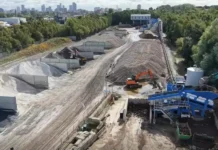











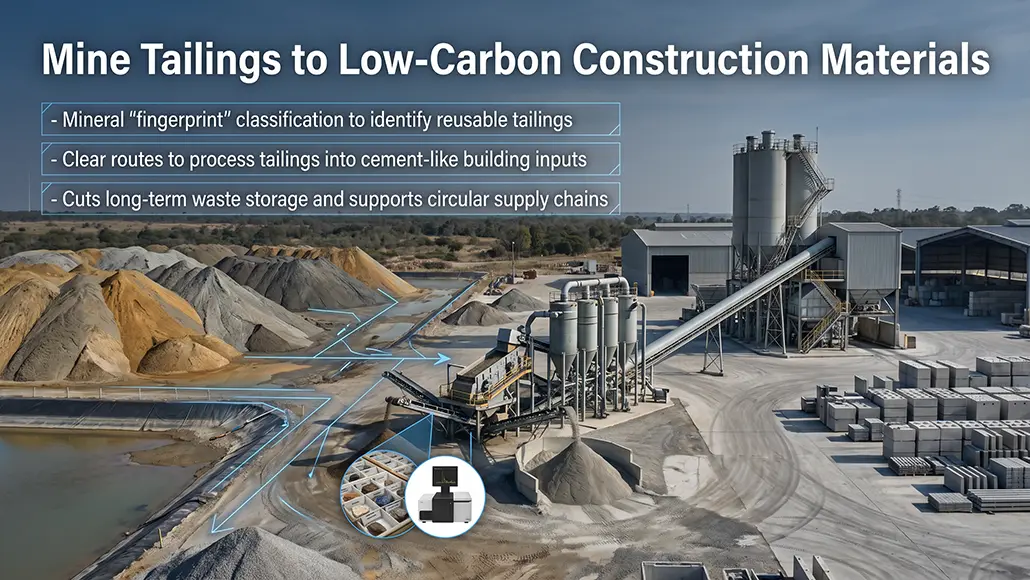


A newly developed framework is positioning mine tailings as a viable input for construction materials, offering a pathway to reduce industrial waste while supporting lower-carbon building practices. Researchers have introduced a structured method to transform mining by-products typically stored with limited long-term utility into usable resources for cement and related applications. The approach directly addresses the scale of mining waste, which remains the world’s largest industrial waste stream and continues to pose environmental risks such as water contamination and ecosystem degradation.
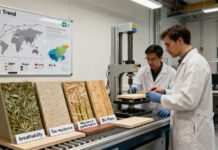
At the centre of the research is a mineral-based classification system designed to evaluate and repurpose tailings based on their composition. Developed by Dr Ceren Ince from the School of Energy, Geoscience, Infrastructure and Society, the framework provides mine operators with a consistent method to determine how waste materials can be reused. By linking mineral characteristics to suitable treatment pathways, the system enables practical integration of mining by-products into construction supply chains, advancing mining waste reuse across sectors.
Dr Ince said: “Mining produces enormous volumes of waste, but much of that material still contains useful components.
“Our framework provides a structured method to unlock that potential consistently and reliably.
“Rather than being tailored to a specific site or mineral, the system offers a general method for categorising tailings and linking them to sustainable treatment approaches.”
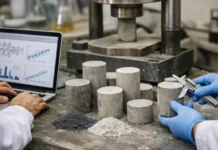
The framework is supported by a large-scale review of more than 5,000 studies examining mine tailings and mineral waste, capturing the diversity of materials generated globally. Using mineral composition as a “fingerprint,” the methodology assesses how tailings behave during processing and whether they can be converted into cement-like substances.
Dr Ince said: “We use a material’s mineral composition, its fingerprint, as the starting point for decision making.
“The fingerprint tells us how the tailings are likely to behave when processed and whether they can be transformed into a cement-like material.
“We are not complicating things; this will give waste managers a framework to repurpose their tailings.”
The research comes amid increasing pressure on both mining and construction industries to reduce environmental impact. Cement production alone contributes around eight percent of global carbon emissions, while demand for critical minerals continues to rise as countries accelerate towards net zero targets. Within this context, mining waste reuse presents an opportunity to shift from disposal-focused practices to circular resource systems.
Dr Ince said: “This creates an opportunity to rethink how we see mine waste. Instead of something that needs to be stored indefinitely, it can become part of a circular system where materials are reused and given a second life.”
Dr Ince added: “Mining will continue to expand. The question is how we manage the materials that come with it.
“This framework is one step towards a more sustainable approach, where waste becomes part of a wider resource system.”
Ongoing research is currently being conducted across Scotland to further refine the framework and develop tailored strategies for complex critical mineral tailings. The work is supported by funding from the Royal Society of Edinburgh through a Research Collaboration Grant (Ref: RSE 6037) and additional backing from the Heriot-Watt University Small Project Grants Scheme.