




























Key Takeaways:
Leveraging construction equipment telematics allows organizations to move beyond traditional maintenance schedules and embrace predictive maintenance construction, which identifies potential mechanical failures before they lead to costly downtime. This shift ensures that every piece of connected construction machinery operates at peak performance, extending the lifespan of the asset and significantly reducing the total cost of ownership over time.
- Comprehensive fleet management systems provide real-time visibility into machine location, fuel consumption, and operator behavior, enabling managers to identify inefficiencies such as excessive idling or unauthorized equipment use. By centralizing this equipment monitoring data, companies can make informed decisions that improve jobsite logistics, enhance fuel efficiency, and ensure that the right tools are always in the right place at the right time.
Telematics Transforming Construction Equipment Management
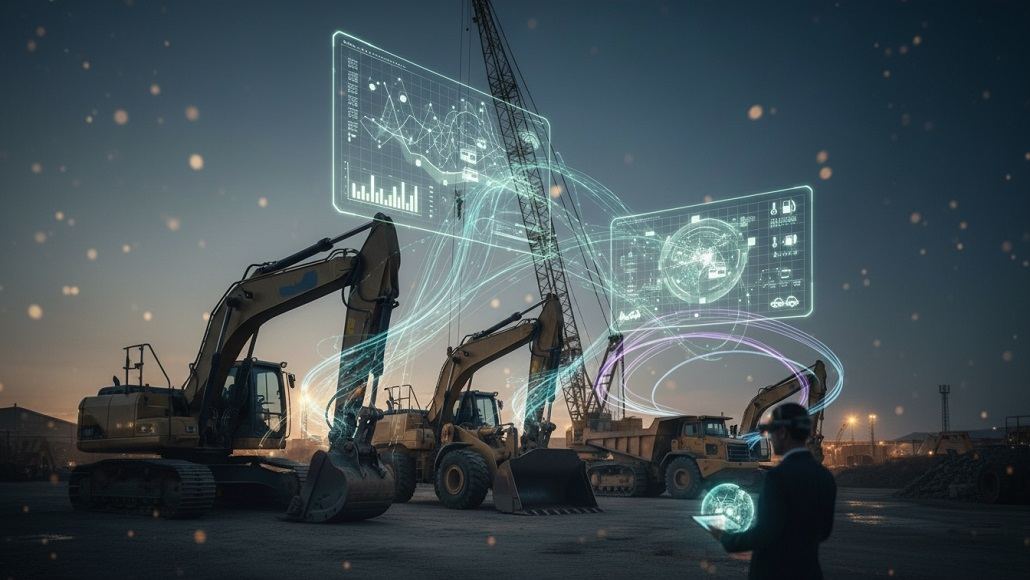
In the high-stakes world of heavy industry, the ability to maintain visibility over a sprawling fleet of machinery is the difference between a profitable project and a logistical nightmare. For years, fleet managers relied on manual logbooks, hour-meter readings, and the occasional phone call from an operator to track their assets. However, the rise of construction equipment telematics has ushered in a new era of transparency and control. This technology, which combines telecommunications and informatics, allows for the remote transmission of data from machinery to a centralized dashboard, providing a “living” view of the entire fleet’s health and activity.
The Power of Real-Time Equipment Monitoring
The foundation of modern fleet management systems lies in their ability to capture and transmit a wealth of data points in real-time. From engine temperature and hydraulic pressure to GPS location and fuel levels, every critical metric is available at the touch of a button. This equipment monitoring capability is transformative for project supervisors who must manage equipment across multiple, often remote, jobsites. Knowing exactly where a machine is and whether it is actively working, idling, or switched off allows for a much higher level of logistical precision.
One of the most immediate benefits is the reduction of “dead time” or unnecessary idling. It is estimated that a significant portion of fuel consumption in construction is wasted on machines that are left running while not in use. By using construction equipment telematics to identify machines with high idle times, managers can implement better site protocols or adjust the fleet size to match actual demand. This not only saves on fuel costs but also slows the accumulation of service hours, preserving the machine’s value and delaying expensive maintenance intervals.
Advancing Toward Predictive Maintenance Construction
Perhaps the most significant impact of telematics is the shift it enables in maintenance philosophy. Traditional maintenance is either reactive fixing something after it breaks or preventative fixing things on a fixed schedule regardless of their actual condition. Neither is optimal. Reactive maintenance is incredibly expensive due to emergency repairs and lost productivity, while preventative maintenance can lead to unnecessary costs by replacing parts that still have remaining service life.
Predictive maintenance construction solves this dilemma by using the data from connected construction machinery to detect the early warning signs of failure. For instance, a subtle but consistent increase in engine temperature or a slight drop in oil pressure might not be enough to trigger a warning light on the dashboard, but a telematics system can flag these trends over time. This allows the maintenance team to schedule a repair during a planned downtime, such as a weekend or between project phases, preventing a catastrophic failure in the middle of a critical operation.
Connected Construction Machinery and Jobsite Security
Security is another area where construction equipment telematics provides a massive return on investment. Heavy machinery is a prime target for theft, and the cost of losing a large excavator or loader goes far beyond the price of the machine itself it includes the disruption to the project schedule. Modern fleet management systems include geofencing capabilities, which allow managers to draw a virtual perimeter around a jobsite. If a machine moves outside that perimeter without authorization, an alert is immediately sent to the owner, and in many cases, the machine can be remotely disabled or tracked by law enforcement in real-time.
Optimizing Operator Performance and Safety
Data isn’t just about the machines; it’s also about the people operating them. Telematics systems can track operator behaviors such as harsh braking, rapid acceleration, or operating outside of safe parameters. While this is often viewed through the lens of performance, its primary benefit is safety and longevity. By identifying operators who may need additional training, companies can reduce the risk of accidents and decrease the wear and tear on their connected construction machinery.
This data-driven approach fosters a culture of accountability. When operators know that their performance is being monitored and that efficiency is being tracked, they are more likely to adhere to best practices. Furthermore, in the event of an incident, the telematics data provides an objective “black box” record of what happened, which is invaluable for insurance purposes and internal safety audits.
The Integration of Big Data in Fleet Management Systems
As we look to the future, the value of construction equipment telematics will only increase as it integrates with other digital tools like Enterprise Resource Planning (ERP) software and Building Information Modeling (BIM). When the data from the machines is seamlessly shared with the project’s financial and planning systems, the result is a truly “smart” jobsite. Cost-to-complete projections become more accurate, and procurement cycles for fuel and parts can be fully automated based on actual consumption patterns.
The volume of data being generated is also paving the way for machine learning algorithms that can optimize entire fleets. Imagine a system that can analyze the historical performance of various machine models across different soil types and weather conditions to recommend the perfect fleet mix for a new project. This level of insight is no longer science fiction; it is the natural progression of a world where every asset is a node in a connected network.
Conclusion: The Competitive Edge of Data
In an industry where margins are often razor-thin, the competitive advantage belongs to those who can harness the power of information. Construction equipment telematics is the key that unlocks this potential, transforming a fleet of heavy metal into a coordinated, intelligent system. By embracing predictive maintenance construction and sophisticated equipment monitoring, companies can ensure their projects are completed on time, under budget, and with the highest degree of safety. The machines are talking it’s time we started listening.
