























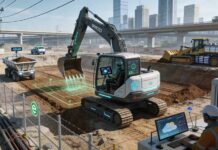
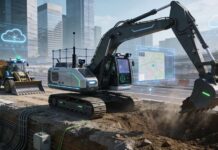
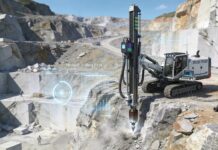
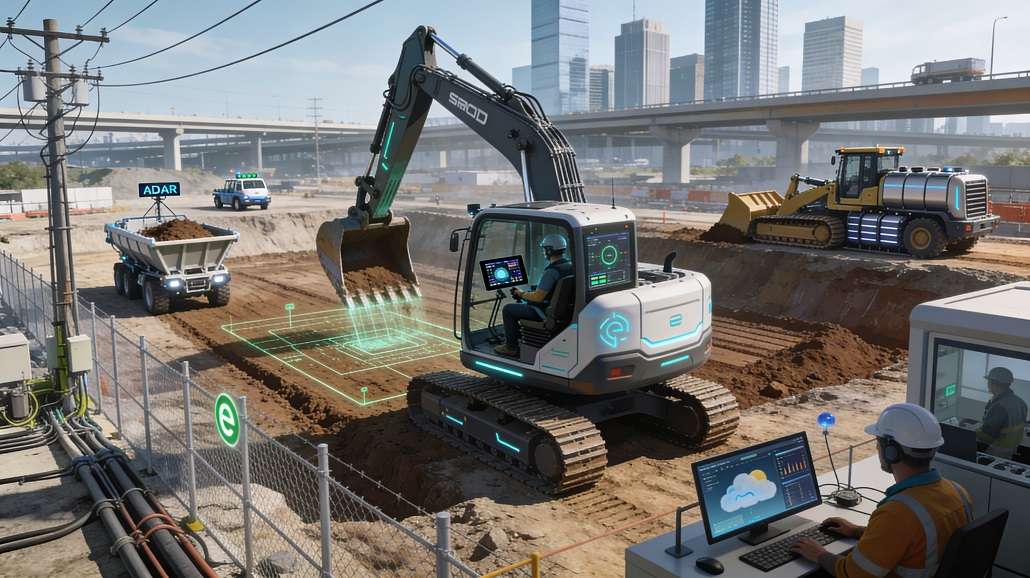

The global mining industry is currently in the midst of a technological revolution that is fundamentally altering how minerals are extracted and processed. At the heart of this change is the deployment of construction automation systems in Mining, a suite of technologies that brings the precision and speed of industrial automation to the rugged environment of the mine site. By integrating artificial intelligence, high-speed connectivity, and remote-controlled equipment, companies are transforming their operations from manual, labor-intensive processes into streamlined, data-driven ecosystems. This shift is not merely about replacing human labor; it is about creating smart mining operations that are more resilient, more productive, and significantly safer than traditional methods. As the demand for critical minerals grows, these automated systems are providing the key to unlocking previously inaccessible resources.
The adoption of automation in mining is driven by several converging factors. First, the decreasing grade of ore bodies means that companies must move more material than ever before to maintain production levels, necessitating higher levels of efficiency. Second, the increasing depth and complexity of modern mines pose significant safety risks to human workers, making the transition to remote-controlled equipment a moral and operational imperative. Finally, the rise of the “Internet of Things” (IoT) has provided the infrastructure needed to connect every machine and sensor on the site, creating a level of operational transparency that was once impossible. In this new era, the mining site is treated as a high-precision manufacturing floor where every movement is optimized for maximum output.
The Architecture of Smart Mining Operations
A smart mining operation is built on a foundation of ubiquitous connectivity and real-time data integration. Every piece of equipment, from the massive primary crusher to the smallest light tower, is equipped with sensors that feed information into a centralized “nerve center.” This center uses mining data analytics to build a comprehensive, 3D digital twin of the entire operation. This digital model allows managers to visualize the flow of material through the mine, identify bottlenecks in real-time, and run “what-if” simulations to optimize their production strategies. Construction automation systems in Mining provide the physical execution for these digital insights, ensuring that the theoretical optimizations are translated into tangible results on the ground.
The integration of AI in mining is what allows these systems to become truly “smart.” Machine learning algorithms can analyze vast amounts of geological and operational data to identify patterns that are invisible to the human eye. For instance, AI can predict exactly where a geological fault is likely to be encountered, allowing the mining plan to be adjusted before a single ton of rock is moved. Similarly, AI can optimize the “fragmentation” of the rock during blasting, ensuring that the material is the perfect size for the downstream processing equipment. This level of data-driven optimization is the defining characteristic of smart mining operations, moving the industry away from “gut feel” decision-making toward a culture of empirical precision.
Remote Controlled Equipment and the Safety Paradigm
One of the most immediate benefits of construction automation is the removal of personnel from high-risk environments. Remote controlled equipment allows operators to control machinery from the safety of a climate-controlled center, which can be located hundreds or even thousands of kilometers from the actual mine site. This is particularly valuable in deep underground mines, where heat, seismic activity, and hazardous gases pose constant threats to worker health. An operator sitting in a Perth office can control a loader in the Pilbara with the same precision as if they were in the cab, thanks to high-definition cameras and low-latency communication networks.
This shift does not eliminate the need for human expertise but rather reorients it. The operator becomes a high-level supervisor, managing multiple machines simultaneously and focusing on strategic tasks while the construction automation systems in Mining handle the repetitive, manual work. Furthermore, the use of remote-controlled equipment improves the ergonomics of the workplace, reducing the long-term physical toll associated with operating heavy machinery. By making the mining industry a safer and more comfortable place to work, companies can attract a more diverse workforce and improve their overall operational resilience. The safety paradigm of mining has been forever changed by the ability to operate “beyond the line of sight.”
Mining Data Analytics and Predictive Decision Making
The true power of industrial automation lies in its ability to turn raw data into actionable intelligence. Mining data analytics platforms are now capable of processing millions of data points every second, providing a “live” heartbeat of the entire operation. This allows for predictive decision-making, where problems are identified and solved before they impact production. For example, by monitoring the vibration patterns of a conveyor belt, the system can detect a failing bearing days before it actually breaks, allowing for a planned repair during a natural shift change. This transition from reactive to predictive maintenance is essential for maintaining the uptime of expensive mining assets.
Furthermore, mining data analytics can be used to optimize the “energy footprint” of the site. By analyzing the fuel consumption and power usage of the entire fleet, the system can suggest more efficient haulage routes or adjust the timing of high-load tasks to take advantage of off-peak energy prices. In an industry where energy costs represent a significant portion of the total operating budget, this level of optimization can save millions of dollars a year. The “smart” in smart mining operations refers to this ability to leverage information to do more with less, ensuring that the mining process is as economically and environmentally sustainable as possible.
Industrial Automation and the Integration of AI in Mining
The integration of AI in mining is moving the industry toward a state of “autonomous cognition,” where machines can learn from their environment and make complex decisions without human input. This is most evident in the development of autonomous haulage systems (AHS), where fleets of massive trucks navigate the mine site, interact with other equipment, and react to obstacles with human-like intelligence. These systems use a combination of LiDAR, radar, and satellite navigation to maintain sub-centimeter accuracy, ensuring that the haulage cycle is as efficient and safe as possible. Construction automation systems in Mining are the physical manifestation of this intelligence, turning the mine into a perfectly synchronized mechanical ballet.
AI is also being used to improve the accuracy of ore body modeling. By combining historical drilling data with real-time feedback from the mining equipment, AI can create a dynamic map of the mineral deposit that evolves as the mine progresses. This allows the mining plan to be refined on the fly, ensuring that the highest-grade ore is extracted first and that the waste material is minimized. This level of geological precision is vital for the long-term viability of modern mines, as it allows companies to maximize the recovery of minerals from increasingly complex and lower-grade deposits. The synergy between physical automation and artificial intelligence is the engine that will drive the mining industry for the next century.
Challenges and Infrastructure for Smart Operations
Despite the clear benefits, the transition to smart mining operations is not without its challenges. The primary obstacle is the need for a robust and secure digital infrastructure. An automated mine generates terabytes of data every day, requiring high-speed fiber-optic backbones and private 5G networks to ensure that the information flows without interruption. Furthermore, as the mine becomes more dependent on digital technology, the risk of cyberattacks increases, necessitating sophisticated cybersecurity measures to protect the site’s operational data and intellectual property. The deployment of construction automation systems in Mining is as much an IT project as it is an engineering one.
Another significant challenge is the cultural shift required by the workforce. Automation changes the nature of work, requiring new skills in areas like data analysis, software engineering, and remote systems management. Companies must invest heavily in retraining and upskilling programs to ensure that their employees can thrive in an automated environment. This transition must be managed with care, ensuring that the benefits of automation are shared with the workers and the local communities. By proactively addressing these social and technical challenges, the mining industry can ensure that the move toward smart operations is a success for everyone involved.
The Future of Construction Automation in Global Mining
Looking ahead, the role of construction automation systems in Mining will only continue to expand. We are seeing the development of “swarm” robotics for mining, where groups of smaller, specialized machines work together to excavate and transport material. This approach offers greater flexibility and resilience than traditional, large-scale equipment, as the failure of one unit does not stop the entire operation. We are also likely to see the rise of “deep-sea” and “space-based” mining, where full automation is a prerequisite for survival in extreme environments. The technologies being developed for terrestrial mines today are providing the foundation for these future frontiers.
The future of mining is one where the boundary between the physical and the digital is completely blurred. In this world, the mine site is a self-optimizing system that can react to changes in geology, energy prices, and market demand with perfect agility. Construction automation and smart operations are the tools that will allow us to extract the minerals needed for the green energy transition in a way that is safe, efficient, and sustainable. The journey toward fully autonomous mining has only just begun, and its potential to reshape our relationship with the earth’s resources is truly profound. The era of the “intelligent mine” is here, and it is being powered by the relentless innovation of construction automation.
