





















Key Takeaways:
- The transition to sustainable construction machinery is driven by a combination of technological advancement and strict environmental mandates, with electric construction machinery emerging as a primary solution for reducing urban carbon footprints. These machines not only eliminate tailpipe emissions but also significantly reduce noise pollution, allowing for more flexible operating hours in densely populated residential areas without the typical disruption caused by diesel-powered units.
- Implementing green construction technology on sustainable jobsites involves more than just swapping fuel sources; it requires a comprehensive approach to machine efficiency and material management. By utilizing low emission construction equipment that optimizes power usage and reduces idle time, contractors can significantly lower their operational costs while contributing to global climate goals, ensuring that the infrastructure of the future is built with minimal environmental impact.
The construction industry is at a critical juncture in its history. As one of the largest contributors to global carbon emissions, the sector is under intense pressure from governments, environmental organizations, and the public to decarbonize its operations. While much of the focus has traditionally been on the “embodied carbon” of materials like steel and concrete, there is a growing realization that the process of building itself must become cleaner. This has led to the rapid rise of sustainable construction machinery, a new generation of equipment designed to deliver the raw power needed for heavy civil works while drastically reducing or even eliminating the environmental footprint of the jobsite.
The Drivers of the Green Revolution in Heavy Equipment
The shift toward low emission construction equipment is being fueled by a “perfect storm” of factors. First and foremost is the regulatory landscape. Cities around the world, from Oslo to Tokyo, are implementing “Clean Air Zones” that prohibit or heavily tax the use of high-emission diesel engines. These local mandates are being bolstered by international climate agreements that demand a significant reduction in greenhouse gases by 2030 and 2050. For contractors, the choice is becoming clear: adapt to sustainable construction machinery or risk being shut out of the most lucrative urban infrastructure projects.
However, regulation is not the only driver. There is also a powerful economic argument for green construction technology. While the initial purchase price of an electric excavator or a hybrid loader can be higher, the total cost of ownership is often lower. Electric construction machinery has significantly fewer moving parts than internal combustion engines, leading to lower maintenance costs and longer service intervals. Furthermore, as the price of renewable energy continues to fall and the cost of carbon increases, the operational savings from switching to electric or alternative fuels are becoming impossible to ignore.
The Rise of Electric Construction Machinery
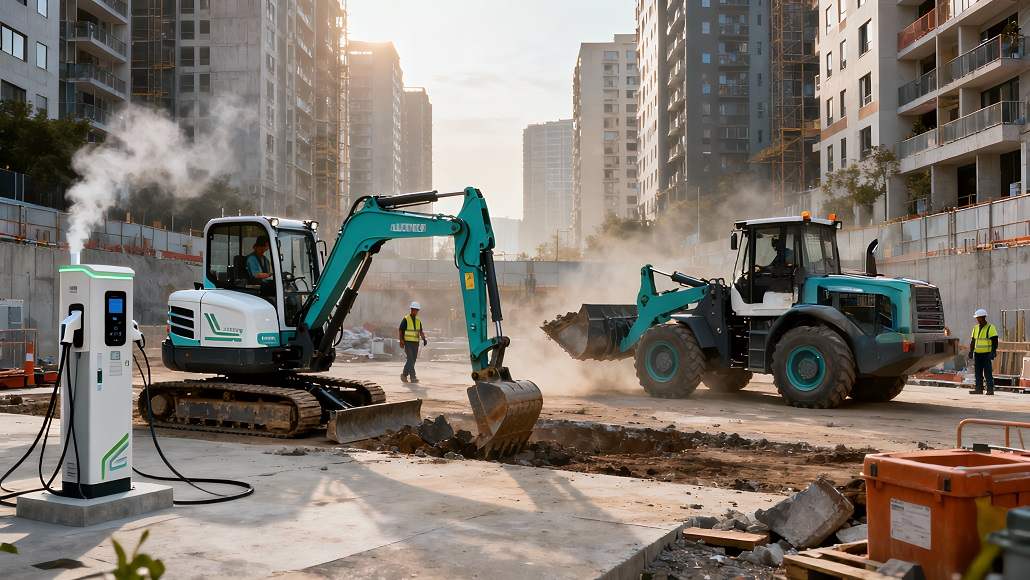
Of all the trends shaping sustainable construction machinery, electrification is arguably the most impactful. Until recently, electric power was limited to small, hand-held tools or light machinery. Today, we are seeing a surge in battery-electric mini excavators, compact loaders, and even mid-sized haul trucks. These machines offer zero tailpipe emissions, making them ideal for indoor demolition, basement excavations, and work in sensitive urban environments where air quality is a major concern.
One of the often-overlooked benefits of electric construction machinery is its impact on noise pollution. Traditional diesel engines are inherently loud, which often leads to strict limits on working hours in residential areas. Electric units operate with a whisper-quiet hum, allowing contractors to extend their working day into the early morning or late evening without violating noise ordinances. This increased flexibility can significantly shorten project timelines, providing a boost to both productivity and profitability while maintaining the harmony of the local community.
Beyond Batteries: Hydrogen and Alternative Fuels
While electrification is perfect for compact equipment, the challenges of battery weight and charging times become more complex as machines get larger. For the heavy-duty sector massive dozers, large-scale excavators, and long-haul trucks sustainable construction machinery is exploring other paths, most notably hydrogen fuel cells and advanced biofuels. Hydrogen offers the benefit of high energy density and fast refueling times, which are essential for 24/7 operations on remote infrastructure sites where charging infrastructure is non-existent.
Biofuels and synthetic fuels also play a vital role in the transition to sustainable jobsites. These “drop-in” solutions allow contractors to reduce their emissions immediately without needing to replace their entire fleet. By running existing low emission construction equipment on Hydrotreated Vegetable Oil (HVO) or other renewable diesels, companies can achieve up to a 90% reduction in net carbon emissions. This pragmatism is a hallmark of the modern green construction technology movement, recognizing that the transition to zero emissions is a marathon, not a sprint.
Designing for Efficiency: The Whole-Machine Approach
True sustainable construction machinery is not just about the engine; it is about the efficiency of the entire system. Manufacturers are increasingly using lightweight materials, high-efficiency hydraulics, and advanced power management software to ensure that every joule of energy is used effectively. For example, regenerative braking and lowering systems can capture the energy generated when a machine slows down or lowers a heavy load, storing it in a battery or ultracapacitor for later use.
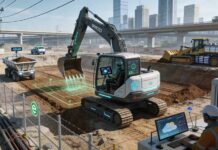
This focus on efficiency extends to the digital realm. Smart machinery that uses GPS and automated controls ensures that tasks are completed in the fewest possible passes. This directly impacts the environmental footprint by reducing fuel consumption and minimizing the disturbance to the local ecosystem. On a sustainable jobsite, the machine is not just a tool for moving dirt; it is a precision instrument that respects the boundaries of the natural environment.
The Human Element of Sustainable Construction
Adopting sustainable construction machinery also has a profound impact on the health and well-being of the workforce. Ground workers and operators are no longer subjected to the constant inhalation of diesel exhaust and the bone-shaking vibrations of traditional engines. This improvement in the working environment leads to higher morale, lower turnover, and a reduced risk of long-term health issues. In this way, green construction technology is as much about people as it is about the planet.
Furthermore, the operation of high-tech, low emission construction equipment requires a new set of skills. The industry is seeing a shift toward a more professionalized workforce, with operators trained in energy management and digital diagnostics. This “humanizing” of the technology ensures that the transition to a sustainable future is one that creates high-quality, high-tech jobs within the construction sector.
The Path Forward: Scaling Sustainable Jobsites
The ultimate goal of the industry is to move from individual green machines to fully sustainable jobsites. This requires a coordinated effort between manufacturers, contractors, and energy providers to create the infrastructure needed for a zero-emission future. Mobile charging hubs, on-site renewable energy generation (such as solar and wind), and sophisticated energy management software will become standard features of the construction projects of tomorrow.
As we look toward the 2030s, the concept of “sustainable construction machinery” will likely lose the “sustainable” prefix, as these technologies become the new baseline for the entire industry. The transition is being led by visionaries who recognize that the long-term viability of the construction sector is inextricably linked to its ability to operate within planetary boundaries. By building with a conscience, the industry is not just shaping the skyline; it is protecting the future of the world beneath it.
Conclusion: A Cleaner Legacy for Construction
The shift toward low emission construction equipment represents one of the most significant changes in the history of civil engineering. By embracing sustainable construction machinery and the myriads of green construction technology solutions available today, the industry is proving that it can be a leader in the fight against climate change. The machines of the future will be defined by their silence, their cleanliness, and their efficiency. For the contractors who lead this charge, the reward will be a more resilient business, a more satisfied workforce, and a cleaner, healthier world for generations to come.
