























Building Products
Building Products
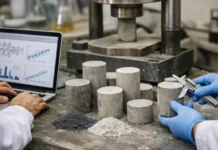
AI Predicts Geopolymer Strength for Low-Carbon Construction
Researchers in Morocco developed a machine-learning framework to predict compressive strength in geopolymers made with fly ash and waste glass. Published in Case Studies in Construction Materials, the study assessed AI-based prediction.
Aymane Elyazidi, Fatiha Berroug, Lahcen Boukhattem and Rachid...
Building Products
Hyundai Engineering Wins Modular Steel Joint Certification
Hyundai Engineering has received technical certification from the Korean Society of Steel Construction for a modular steel joint structural system co-developed with Hyundai Steel (004020). The technology covers joints used to stack and assemble factory-manufactured box-type modules on site....
Building Products
CRH Acquisition to Expand Aggregates in Nordic Markets
CRH has agreed to acquire Swedish construction group NCC Industry’s aggregates operations in Denmark and Finland, expanding the building materials company’s presence across the Nordic markets. The financial terms of the transaction were not disclosed.
The Danish operations include a...
Building Products
Low-Carbon Concrete Solution Launched by Chryso and Ecocem
Chryso and Ecocem have launched a low-carbon concrete solution combining Ecocem's ACT cement technology with Chryso's new EnviroMix 3150 ACT admixture.
The system was unveiled at BATIMAT 2026 and is designed to simplify the production and placement of high-performance concrete...
Building Products
Egurtek 2026 Puts Timber Construction Innovation in Focus
Egurtek 2026 will bring timber construction, architecture and building professionals together at Bilbao Exhibition Centre on 28 and 29 October, with its Technical Sessions focusing on fire safety, heritage restoration, habitability, comfort and pre-industrialised building systems. The 11th edition...
Building Products
Concrete Pumping Systems Improving High-Volume Material Placement
Modern construction projects demand unprecedented speed and precision, particularly when dealing with the logistical complexities of high-volume material placement. The evolution of concrete pumping systems has redefined how large-scale structures are erected, moving away from traditional bucket-and-crane methods toward...
Building Products
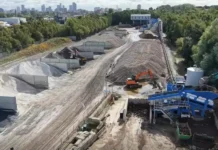
Heidelberg Materials Demonstrates Zero Concrete Waste Process in London
Heidelberg Materials UK has successfully demonstrated a zero concrete waste process at its Greenwich plant in London through the implementation of a new concrete waste recycling system. The facility, located at Victoria Deep Water on the River Thames, utilizes...
Subscribe
- Never miss a story with notifications
- Gain full access to our premium content
- Browse free from any location or device.
Must read