
























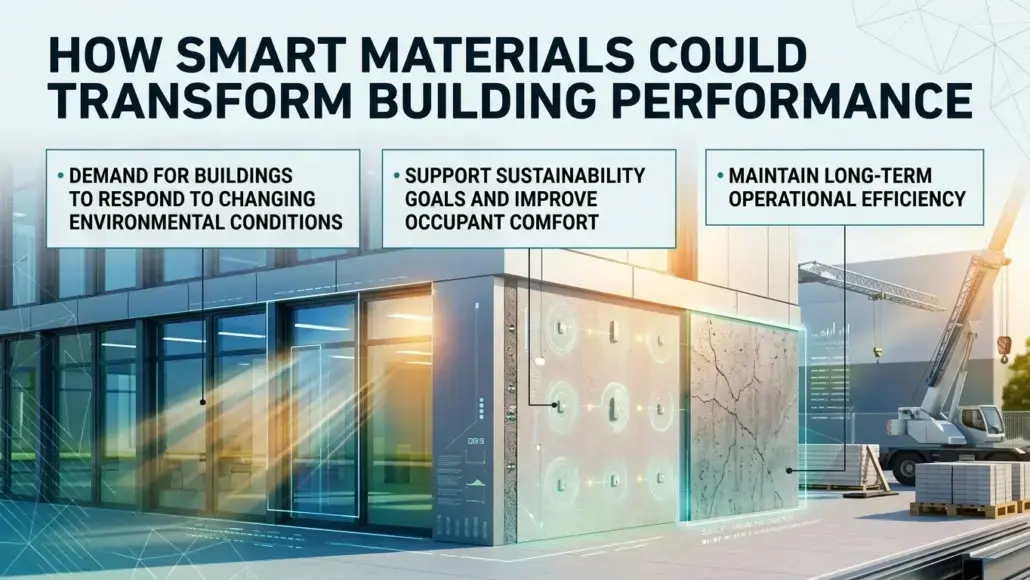


The construction industry is entering an era where buildings are expected to do more than simply provide shelter and structural stability. Modern buildings must respond to changing environmental conditions, support sustainability goals, improve occupant comfort, and maintain long-term operational efficiency. These evolving expectations are creating demand for materials capable of delivering performance beyond traditional construction functions.
This shift is bringing renewed attention to smart materials, a category of advanced materials designed to react, adapt, or respond to external stimuli such as temperature, light, moisture, pressure, or electrical input. While many smart material applications are still emerging, their potential to influence how buildings perform throughout their lifecycle is becoming increasingly significant.
From Static Components to Responsive Systems
Traditional construction materials are largely passive. Once installed, their properties remain fixed regardless of changes in the surrounding environment. Smart materials challenge this convention by introducing adaptability into the built environment.
Rather than serving a single purpose, these materials can alter their behavior in response to external conditions. Some may adjust thermal performance, while others can modify transparency, respond to structural stress, or improve energy efficiency under changing environmental conditions.
As a result, smart materials are helping transform buildings from static structures into responsive systems capable of interacting with their surroundings.
Improving Energy Performance Through Material Innovation
Energy efficiency remains one of the most important priorities in modern construction. Rising energy costs, sustainability targets, and regulatory requirements are driving demand for solutions that reduce operational consumption without compromising occupant comfort.
Smart materials offer new opportunities in this area. Adaptive glazing systems, for example, can adjust light transmission and solar heat gain based on external conditions. Similarly, advanced insulation materials may respond to temperature variations, helping regulate indoor environments more effectively.
By reducing reliance on mechanical systems for heating, cooling, and lighting, these technologies can contribute to improved building efficiency while supporting broader sustainability objectives.
Enhancing Occupant Comfort in Dynamic Environments
Building performance is increasingly measured not only by energy metrics but also by occupant experience. Comfort, productivity, and wellbeing have become important considerations in commercial, institutional, and residential projects.
Smart materials can contribute to these goals by helping buildings maintain more consistent internal conditions. Materials capable of responding to changes in temperature, humidity, or lighting can improve indoor environments while reducing fluctuations that negatively affect occupants.
As workplace design, healthcare facilities, and educational environments place greater emphasis on user experience, adaptive materials may become valuable tools for enhancing building functionality.
Extending Asset Lifespan Through Self-Monitoring and Adaptation
One of the most promising aspects of smart materials is their ability to contribute to long-term asset performance.
Certain material systems can respond to stress, detect changes in structural conditions, or provide early indications of deterioration. Others may possess self-healing characteristics that help address minor damage before it develops into larger maintenance issues.
These capabilities align closely with the construction industry’s growing focus on lifecycle performance and predictive asset management. Instead of relying solely on periodic inspections, future buildings may increasingly incorporate materials capable of providing continuous performance feedback.
Supporting Sustainability Beyond Energy Efficiency
Sustainability discussions in construction often focus on operational energy consumption. However, material performance throughout the building lifecycle is becoming equally important.
The adaptability of smart materials can contribute to sustainability by reducing maintenance requirements, extending service life, and improving resource efficiency. Materials that actively respond to environmental conditions may also reduce the need for additional systems or interventions over time.
This broader view of sustainability is encouraging project teams to evaluate building performance through a lifecycle lens rather than focusing exclusively on construction-stage considerations.
Integration with Intelligent Building Systems
The growth of smart buildings is creating new opportunities for advanced materials. Increasingly, construction projects are integrating sensors, automation systems, and data-driven management platforms to improve operational efficiency.
Smart materials can complement these technologies by acting as active participants within building ecosystems rather than passive construction components.
As building systems become more interconnected, materials that can respond, communicate, or adapt may play a larger role in supporting operational intelligence and performance optimization.
This convergence between material science and building technology represents a significant shift in how construction professionals think about the relationship between physical assets and digital systems.
Challenges to Widespread Adoption
Despite their potential, smart materials remain at an early stage of adoption across much of the construction industry.
Several factors continue to influence uptake. Cost remains an important consideration, particularly when project decisions are heavily influenced by upfront budgets. There is also a need for greater awareness among designers, contractors, and developers regarding the practical applications and long-term benefits of these materials.
In addition, regulatory frameworks and industry standards often require time to adapt to emerging technologies. This can create uncertainty around specification, performance validation, and long-term reliability.
As demonstration projects and real-world performance data continue to grow, these barriers are expected to diminish.
A Shift Toward Performance-Driven Construction
The growing interest in smart materials reflects a broader transformation occurring within the construction industry. Buildings are increasingly evaluated based on how effectively they perform over time rather than simply how efficiently they are constructed.
This shift is encouraging greater emphasis on:
- Adaptability
- Durability
- Operational efficiency
- Occupant wellbeing
- Lifecycle value
Materials capable of actively contributing to these objectives are becoming increasingly attractive to project teams seeking long-term performance advantages.
Conclusion
The future of construction will be shaped not only by advances in design and technology but also by innovations in material science. As expectations around building performance continue to evolve, materials will play a more active role in helping structures adapt to changing environmental, operational, and user demands.
Smart materials represent an important step in this evolution. Their ability to respond, adapt, and contribute to building performance offers new opportunities for improving efficiency, durability, sustainability, and occupant experience.
While widespread adoption will take time, the direction of innovation is clear. The buildings of the future are unlikely to rely solely on smarter systems they will increasingly be built from smarter materials.