
























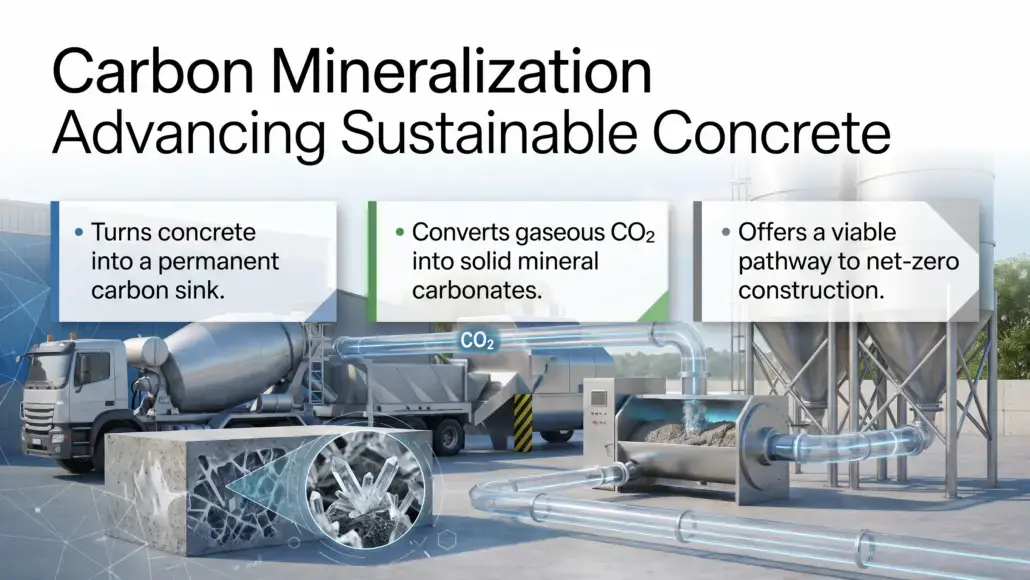


The integration of carbon mineralization into the production of structural concrete represents one of the most significant technological shifts in the modern construction sector. This process involves the permanent conversion of gaseous carbon dioxide into solid mineral carbonates within the concrete matrix, effectively turning a common building material into a carbon sink. As the global industry seeks viable pathways to reach net-zero emissions, the ability to sequester carbon directly during the batching and curing stages offers a powerful solution for reducing the embodied carbon of large-scale infrastructure and commercial developments. Unlike traditional carbon capture methods that require extensive storage infrastructure, this approach utilizes the concrete itself as a repository, ensuring that the captured carbon remains stable for the lifetime of the structure.
The science behind this technology is grounded in the natural carbonation process that occurs in cementitious materials over decades, but accelerated through advanced engineering to occur within minutes or hours. By introducing captured CO2 into the concrete mix, producers can trigger a chemical reaction that not only sequesters the gas but also improves the mechanical properties of the final product. This dual benefit of environmental mitigation and performance enhancement is driving rapid adoption among forward-thinking contractors and developers. The technical precision required to implement carbon mineralization at scale involves a sophisticated understanding of cement chemistry, gas-liquid interactions, and the logistics of carbon sourcing. The following analysis explores the mechanisms and implications of this advanced material science.
Chemical Processes of Carbon Sequestration in Concrete
The fundamental mechanism of carbon mineralization involves the reaction between carbon dioxide and the calcium-bearing minerals in cement. When CO2 is injected into the concrete mix, it reacts with calcium hydroxide to form calcium carbonate crystals. These crystals fill the microscopic voids within the cement paste, creating a denser and more homogenous structure. This mineralization process occurs rapidly during the initial stages of hydration, allowing for the permanent storage of carbon without compromising the workability of the fresh concrete. The efficiency of this reaction is influenced by several factors, including the concentration of CO2, the moisture content of the mix, and the specific surface area of the cement particles.
Advanced mineralization systems utilize specialized injection equipment to deliver a precise dose of CO2 at the optimal moment during the batching cycle. This ensures that the gas is fully absorbed and reacted before the concrete is discharged into delivery trucks. The development of these systems has required extensive collaboration between industrial chemists and mechanical engineers to create hardware that can withstand the abrasive environment of a concrete plant. Additionally, researchers are exploring the use of alternative cementitious materials that have a higher affinity for carbonation, potentially increasing the total amount of carbon that can be sequestered per cubic meter of concrete. This ongoing research is essential for maximizing the environmental impact of the technology across different regions and material types.
Beyond the initial injection, the mineralization process continues as the concrete cures and matures. The presence of mineralized carbon can alter the microstructure of the cement hydrated products, leading to changes in the pore size distribution and the overall permeability of the material. This refined microstructure is particularly beneficial for structures exposed to harsh environmental conditions, as it limits the ingress of water and corrosive agents. The chemical stability of the mineralized carbonates ensures that the sequestered carbon will not be released back into the atmosphere, even if the building is eventually demolished and the concrete is recycled as aggregate. This permanent sequestration is a key advantage of carbon mineralization over other forms of carbon offset.
Performance Metrics of Mineralized Structural Elements
The adoption of carbon mineralization in the construction sector is supported by a growing body of empirical data demonstrating its impact on structural performance. One of the most notable benefits is the increase in early-age compressive strength. The formation of calcium carbonate crystals acts as a reinforcing agent within the cement matrix, allowing mineralized concrete to reach its design strength faster than traditional mixes. This acceleration of strength development can lead to significant operational efficiencies on the job site, such as faster removal of formwork and shorter construction schedules. For project managers, these time savings translate directly into reduced labor costs and improved capital turnover.
In addition to strength gains, mineralized concrete often exhibits improved durability characteristics. The reduction in porosity and permeability achieved through the mineralization process enhances the resistance of the concrete to chloride penetration and sulfate attack. This is of particular importance for infrastructure projects such as bridges and marine structures, where long-term durability is a critical design requirement. The use of carbon mineralization can therefore extend the service life of these assets, reducing the need for costly maintenance and repairs. Engineering firms are increasingly incorporating these durability benefits into their lifecycle cost models, providing a compelling case for the selection of mineralized concrete over conventional alternatives.
Testing protocols for mineralized concrete follow established international standards, ensuring that the material meets the same rigorous safety requirements as traditional products. This includes comprehensive evaluations of workability, air content, and long-term creep and shrinkage. The consistency of mineralized concrete is maintained through the use of automated control systems that adjust the CO2 dosage based on the specific characteristics of each batch. This level of precision is essential for maintaining the trust of structural engineers and building officials who are responsible for the safety and integrity of the built environment. As the technology matures, it is expected that carbon mineralization will become a standard feature in high-performance concrete specifications.
Lifecycle Assessment of Mineralized Construction Projects
A comprehensive understanding of the environmental impact of carbon mineralization requires a detailed lifecycle assessment that considers all stages of the construction process. This assessment begins with the sourcing of the captured carbon dioxide, which can be obtained from industrial exhaust streams or directly from the atmosphere. The energy required for carbon capture and transport must be weighed against the volume of carbon sequestered within the concrete. In many cases, the net environmental benefit is substantial, particularly when the CO2 is sourced from nearby facilities. The integration of mineralization technology into local supply chains is therefore a key factor in optimizing its sustainability profile.
The lifecycle assessment also accounts for the potential reduction in cement content that can be achieved through the use of carbon mineralization. Because the mineralization process increases the strength of the concrete, engineers can often specify a lower cement factor while still meeting the required performance criteria. Since cement production is the primary source of embodied carbon in concrete, even a small reduction in cement content can lead to a significant decrease in the overall carbon footprint of a project. This synergistic effect makes carbon mineralization a highly efficient tool for decarbonizing the built environment. Additionally, the ability to provide transparent and verifiable data on carbon sequestration is becoming increasingly important for projects seeking green building certifications such as LEED or BREEAM.
The end-of-life stage of mineralized concrete also offers environmental advantages. When a structure is demolished, the crushed concrete can be used as recycled aggregate in new construction projects. The mineralized carbonates within the aggregate remain stable, ensuring that the sequestered carbon is not released. In some cases, the recycling process itself can be used to sequester even more carbon through further carbonation of the exposed cement paste. This circular approach to material management is essential for creating a sustainable construction industry that minimizes waste and maximizes resource efficiency. The use of lifecycle assessment tools allows developers to communicate these benefits to stakeholders and demonstrate their commitment to environmental stewardship.
Implementation Challenges in Ready-Mix Operations
Despite the clear benefits, the implementation of carbon mineralization in ready-mix operations involves several logistical and technical challenges. One of the primary hurdles is the integration of CO2 storage and injection equipment into existing concrete plants. Many facilities have limited space and may require significant modifications to accommodate the new hardware. Additionally, the supply of captured CO2 must be reliable and cost-effective to ensure the continuous operation of the mineralization system. This requires the development of partnerships between concrete producers and carbon capture providers, as well as the build-out of transportation infrastructure to deliver the gas to the plants.
Another challenge is the need for specialized training for plant operators and quality control personnel. Working with carbon mineralization technology requires a deep understanding of how CO2 interacts with different cement types and chemical admixtures. Operators must be able to calibrate the injection systems and monitor the mineralization process in real-time to ensure consistent results. This requires a commitment to ongoing professional development and the implementation of resilient quality management systems. The industry must also work to address the misconceptions and skepticism that can surround new technologies, providing clear and evidence-based information to contractors and engineers.
The regulatory environment also plays a role in the adoption of carbon mineralization. While many jurisdictions are supportive of sustainable innovation, existing building codes and standards may not yet fully account for the unique properties of mineralized concrete. This can lead to delays in project approvals and the need for additional testing and documentation. The collaboration between industry stakeholders and regulatory bodies is essential for updating these standards and providing a clear path for the widespread use of the technology. By working together to overcome these challenges, the construction sector can accelerate the transition to a more sustainable and resilient future.
Strategic Integration into Net Zero Urban Planning
The strategic integration of carbon mineralization into urban planning is a vital component of the global effort to achieve net-zero emissions. As cities continue to grow and densify, the demand for new infrastructure and housing will remain high. By prioritizing the use of mineralized concrete in public and private projects, urban planners can significantly reduce the environmental impact of this growth. This approach involves incorporating carbon sequestration targets into zoning regulations and procurement policies, encouraging developers to adopt sustainable materials from the earliest stages of project design. The use of digital twins and urban modeling tools can help planners to visualize the impact of these policies and track progress toward decarbonization goals.
In addition to reducing emissions, the use of mineralized concrete can contribute to the resilience of urban infrastructure. The improved durability of the material makes it better suited to withstand the impacts of climate change, such as increased flooding and extreme temperatures. By building more durable structures, cities can reduce the need for frequent repairs and replacements, saving resources and minimizing disruption to residents. The integration of carbon mineralization into the broader circular economy also offers opportunities for creating new industrial synergies, such as using waste CO2 from local energy plants to produce building materials for nearby projects. This localized approach to production and consumption is a key principle of sustainable urban development.
The success of these initiatives will depend on the continued collaboration between government, industry, and academia. Public-private partnerships can provide the funding and expertise needed to scale up carbon mineralization technology and demonstrate its viability in diverse urban contexts. Educational programs can help to raise awareness of the benefits of sustainable construction and empower citizens to advocate for greener building practices. By embracing carbon mineralization as a core component of urban planning, cities can lead the way in creating a built environment that is both functional and environmentally responsible. The ongoing commitment to innovation and sustainability will ensure that our urban centers remain vibrant and livable for generations to come.