























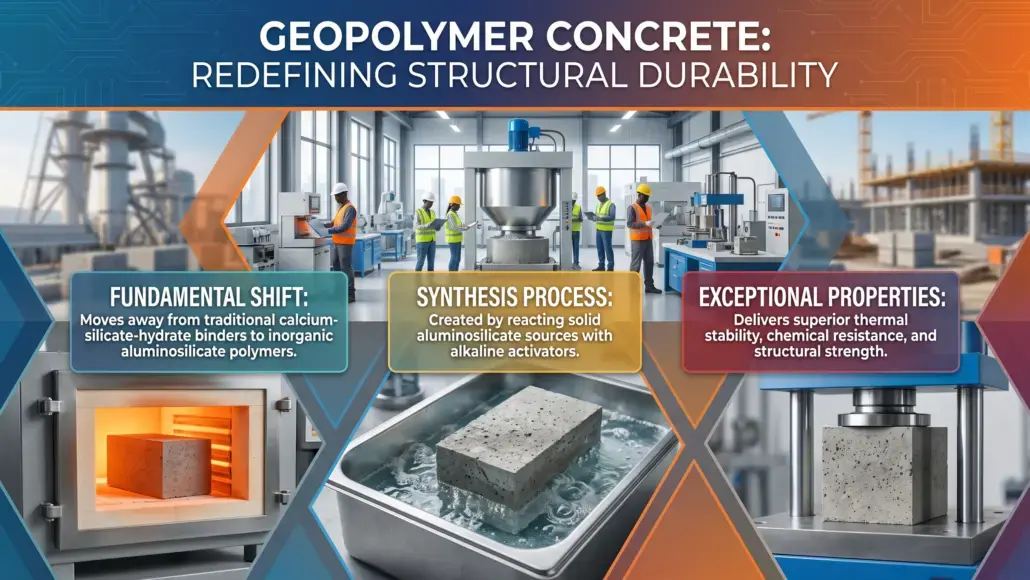


The development of geopolymer concrete represents a fundamental shift in the chemistry of construction materials, moving away from the calcium-silicate-hydrate binder system that has characterized the industry for over a century. Geopolymers are inorganic aluminosilicate polymers synthesized through the reaction of a solid aluminosilicate source with an alkaline activator. This chemical process results in a material that exhibits exceptional thermal stability, chemical resistance, and structural strength. As the commercial construction sector seeks more durable and sustainable alternatives to traditional Portland cement, geopolymer technology has emerged as a high-performance solution particularly suited for infrastructure projects in harsh environments. The elimination of Portland cement from the mix design allows for a drastic reduction in the carbon footprint of the concrete while providing superior protection against common forms of degradation such as acid attack and chloride ingress.
This transition to alkali-activated materials involves a deep understanding of the chemical kinetics and rheology of the fresh paste. Unlike conventional concrete, which relies on the hydration of calcium silicates, geopolymer concrete gains its strength through the polycondensation of aluminosilicate units. This process requires precise control over the concentration of the alkaline solution and the curing temperature to ensure optimal results. The resulting material is characterized by a dense, three-dimensional polymeric network that is more stable and less porous than the matrix of traditional concrete. The following analysis explores the technical specifications, durability benefits, and manufacturing considerations of this advanced material.
Chemical Synthesis of Alkali-Activated Binders
The synthesis of geopolymer concrete begins with the selection of a suitable precursor material, which is typically a mineral rich in reactive silica and alumina. Common precursors include industrial by-products such as ground granulated blast-furnace slag and class F fly ash, as well as natural minerals like calcined clay. The choice of precursor has a significant impact on the final properties of the concrete, including its set time, strength development, and long-term durability. To initiate the geopolymerization process, these solid materials are mixed with an alkaline activator, usually a solution of sodium or potassium hydroxide and a soluble silicate. This activator dissolves the aluminosilicate particles, releasing silicon and aluminum ions into the liquid phase.
As the concentration of these ions increases, they begin to form complex oligomers that eventually cross-link to create a rigid polymeric structure. This reaction is highly sensitive to the molar ratios of silicon to aluminum and the alkalinity of the solution. Engineering teams must conduct thorough laboratory testing to optimize these ratios for specific project requirements. One of the key advantages of geopolymer binders is their ability to incorporate a high percentage of recycled materials, contributing to the goals of a circular economy. Additionally, the synthesis process does not require the high-temperature calcination of limestone, which is the primary source of carbon emissions in Portland cement production. This makes geopolymer concrete an inherently low-carbon material.
The curing of geopolymer concrete is another critical factor in its development. While some formulations can gain strength at ambient temperatures, many high-performance mixes require a period of moderate heat curing to accelerate the polycondensation reaction. This is often achieved in a precast facility, where temperature and humidity can be precisely controlled. The use of heat curing leads to rapid strength development, allowing for the faster production of structural elements. However, research into ambient-cured geopolymers is also advancing, with new chemical additives being developed to facilitate the reaction at lower temperatures. This expansion of the technology is essential for its application in cast-in-place construction, where controlled curing environments are more difficult to maintain.
Long-Term Durability in Aggressive Environments
The most significant technical advantage of geopolymer concrete is its exceptional durability in aggressive environments. Traditional Portland cement concrete is susceptible to degradation from acids, sulfates, and chlorides, which can lead to the corrosion of reinforcing steel and the eventual failure of the structure. Geopolymer binders, by contrast, possess a much higher chemical stability due to their aluminosilicate chemistry. Because they contain very little calcium hydroxide, which is the most vulnerable component of Portland cement paste, geopolymers are highly resistant to acid attack. This makes them ideal for use in sewer pipes, industrial flooring, and containment structures for hazardous waste.
In marine environments, the resistance of geopolymer concrete to chloride penetration is a critical performance metric. The dense microstructure and low permeability of the geopolymer matrix limit the diffusion of chloride ions, protecting the embedded reinforcement from corrosion. Studies have shown that geopolymer structures can have a service life significantly longer than those built with conventional concrete, even when exposed to severe salt spray and tidal conditions. This increased longevity translates into lower maintenance costs and a reduced lifecycle environmental impact. Additionally, the low thermal conductivity of geopolymers provides enhanced fire resistance, as the material does not undergo the same dehydration and structural breakdown as Portland cement when exposed to high temperatures.
The resistance to sulfate attack is also a key benefit, particularly in regions with sulfate-rich soils or groundwater. Traditional concrete can suffer from expansive reactions that cause cracking and spalling when exposed to sulfates, but geopolymer concrete remains stable. This durability is attributed to the lack of reactive aluminates and calcium-rich phases that typically drive sulfate-induced expansion. As the global infrastructure continues to age, the need for more resilient materials is becoming increasingly urgent. The adoption of geopolymer technology offers a proactive approach to building infrastructure that can withstand the challenges of a changing environment and the demands of modern industry.
Sourcing Industrial By-products for Sustainable Slag
The economic and environmental viability of geopolymer concrete is closely tied to the availability of high-quality industrial by-products. Sourcing these materials, such as blast-furnace slag and fly ash, requires a resilient supply chain and strategic partnerships with the power and steel industries. As traditional sources of fly ash become more scarce due to the retirement of coal-fired power plants, the industry is exploring alternative precursors. This includes the use of landfilled fly ash, which can be beneficiated to meet the necessary quality standards for geopolymer synthesis. The ability to utilize these waste materials not only reduces the cost of the concrete but also provides a solution for the management of industrial residues.
In addition to traditional by-products, researchers are investigating the use of other waste streams, such as recycled glass, mine tailings, and agricultural ashes. These materials can be processed to serve as effective aluminosilicate sources, further expanding the potential for sustainable concrete production. The variability of these precursors necessitates a high degree of technical expertise in the batching and quality control process. Each new material source must be thoroughly characterized to determine its reactivity and its impact on the fresh and hardened properties of the concrete. This data-driven approach is essential for maintaining the consistency and reliability of geopolymer products.
The logistical challenges of sourcing and transporting these materials must also be addressed. Since the precursors and activators are often produced in different locations, the coordination of the supply chain is vital for minimizing the total carbon footprint of the project. The development of regional hubs for the collection and processing of industrial by-products can help to improve the efficiency of the material flow. Additionally, the use of locally sourced minerals, such as calcined clay, can reduce the reliance on long-distance transportation and support local economies. By creating a more resilient and diverse supply chain, the geopolymer industry can ensure a steady supply of materials for the growing demand for sustainable construction.
Engineering Standards and Comparative Strength Testing
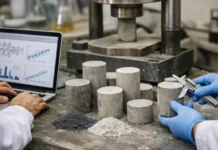
For geopolymer concrete to achieve widespread adoption, it must be supported by rigorous engineering standards and comprehensive testing protocols. While traditional concrete standards are based on decades of experience with Portland cement, the unique chemistry of geopolymers requires a different set of evaluation criteria. Organizations such as ASTM and RILEM are actively working to develop performance-based standards that can be applied to alkali-activated materials. These standards focus on key metrics such as compressive strength, flexural strength, and durability indicators, providing a consistent framework for engineers and building officials to assess the quality of the material.
Comparative strength testing has demonstrated that geopolymer concrete can match or exceed the performance of conventional concrete across a wide range of applications. In many cases, geopolymer mixes exhibit higher early-age strength and a lower rate of strength loss over time. This high performance is achieved through the optimization of the binder chemistry and the use of advanced admixtures. However, the testing process must also account for the differences in the set time and workability of geopolymer concrete, which can be affected by the concentration of the alkaline activator and the ambient conditions. Precise measurement of the rheological properties is essential for ensuring that the concrete can be placed and finished using standard construction techniques.
The role of structural modeling is also evolving to incorporate the specific behavior of geopolymer elements. Engineers must account for the different modulus of elasticity and the creep and shrinkage characteristics of the material when designing structural components. The availability of high-quality data from laboratory and field tests is crucial for developing accurate models that can predict the long-term performance of geopolymer structures. By providing a solid foundation of technical evidence, the industry can build the confidence needed for the selection of geopolymer concrete in large-scale infrastructure and commercial projects. The ongoing commitment to scientific rigor and standardized testing will ensure that these materials are used safely and effectively.
Commercial Adoption Barriers and Market Readiness
Despite the technical advantages, several barriers to the commercial adoption of geopolymer concrete remain. One of the primary challenges is the perceived risk associated with using a relatively new material in critical structural applications. Engineering firms and developers are often hesitant to move away from established products like Portland cement, which has a well-documented history of performance. To overcome this skepticism, the industry must showcase successful case studies and demonstrate the long-term reliability of geopolymer structures. Public sector leadership, through the specification of geopolymer concrete in government projects, can play a significant role in de-risking the technology and building market confidence.
The cost of the alkaline activators is another factor that can influence the market readiness of geopolymer concrete. While the cost of the precursor materials is often low, the chemical activators can be more expensive than traditional cement. However, as production volumes increase and the supply chain matures, the cost of these chemicals is expected to decrease. Additionally, the long-term savings in maintenance and the potential for reduced insurance premiums can offset the initial material costs. The development of more efficient and less expensive activator systems is a key area of research that will help to improve the cost-competitiveness of geopolymer technology.
The availability of specialized equipment and trained personnel is also essential for the successful implementation of geopolymer concrete. Ready-mix plants and precast facilities must be equipped to handle the concentrated alkaline solutions and maintain the precise temperature controls needed for curing. This requires investment in facility upgrades and the implementation of rigorous safety protocols for the handling of chemical activators. Training programs for operators and quality control staff are vital for ensuring that the unique characteristics of geopolymer concrete are well understood. By addressing these practical challenges, the industry can move toward a more sustainable and durable built environment, where geopolymer concrete plays a central role in the construction of resilient infrastructure.