
























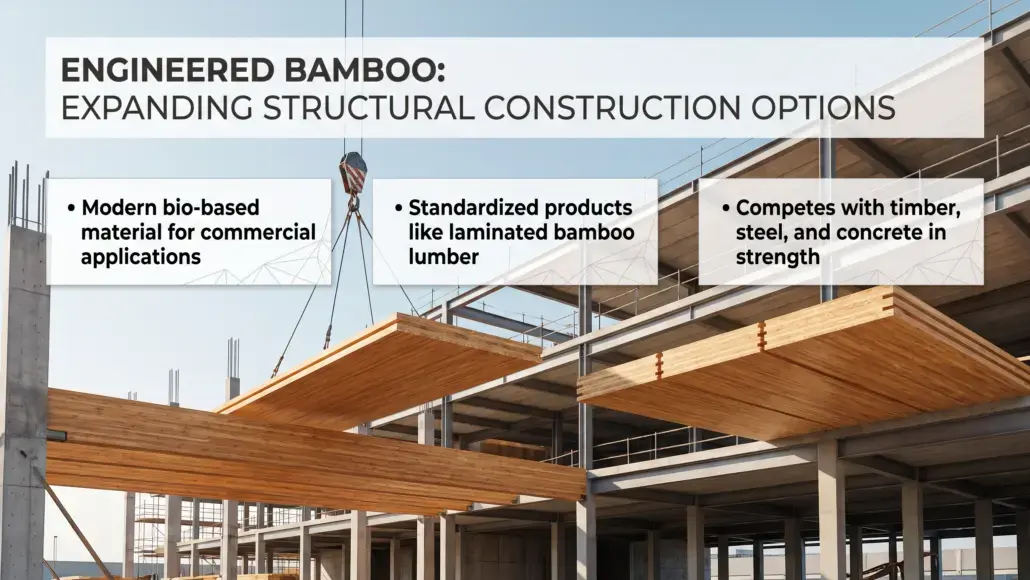


The introduction of engineered bamboo into the commercial construction sector represents a significant advancement in the use of bio-based materials for structural applications. While raw bamboo has been used for centuries as a traditional building material, the modern engineering of bamboo fibers into standardized products like laminated bamboo lumber and cross-laminated bamboo has created a material that can compete with timber, steel, and concrete in terms of strength and reliability. As the industry seeks rapidly renewable alternatives to traditional wood products, engineered bamboo offers a high-performance solution that can be manufactured to precise specifications. Its high tensile and compressive strength, combined with its exceptional growth rate, makes it a compelling option for developers looking to reduce the environmental impact of their projects while maintaining the highest standards of structural integrity.
The manufacturing process for engineered bamboo involves a sophisticated series of steps, including the deconstruction of bamboo culms into strips, the removal of sugars and starches to prevent biological decay, and the bonding of the strips with high-performance adhesives. This process results in a material that is homogenous and predictable, overcoming the natural variability and limitations of raw bamboo. The high fiber density of bamboo gives the resulting products a strength-to-weight ratio that is superior to many softwoods used in mass timber construction. This allows for the design of lighter and more efficient structural systems, which can lead to significant cost savings on foundations and logistics. The following analysis explores the mechanical properties, environmental benefits, and market readiness of this emerging structural material.
Mechanical Properties of Laminated Bamboo Lumber
Laminated bamboo lumber is a primary form of engineered bamboo used in structural applications, consisting of layers of bamboo strips bonded together under high pressure. The mechanical properties of this material are highly impressive, with a modulus of elasticity and a compressive strength that often exceed those of high-quality structural timber. This performance is a result of the unique cellular structure of the bamboo plant, which is composed of dense longitudinal fibers. When these fibers are oriented and bonded correctly, the resulting laminated product exhibits exceptional dimensional stability and resistance to warping and splitting. Engineers can use this predictability to design load-bearing beams, columns, and floor panels that meet the rigorous demands of multi-story commercial buildings.
The fatigue resistance and impact strength of engineered bamboo are also noteworthy, making it suitable for structures exposed to dynamic loads or extreme weather conditions. The natural flexibility of bamboo fibers, combined with the rigidity of the adhesive matrix, creates a material that is both tough and resilient. Additionally, the surface hardness of laminated bamboo is significantly higher than that of most hardwoods, providing excellent resistance to wear and abrasion in high-traffic areas. These properties make it an ideal choice for both structural elements and high-performance flooring or decking. The development of advanced testing methodologies has allowed for the creation of detailed design values and engineering properties for a wide range of engineered bamboo products.
To ensure the long-term performance of the material, manufacturers are focusing on the development of durable adhesive systems and effective treatments against moisture and pests. Modern structural adhesives, such as phenol-resorcinol formaldehyde or isocyanates, provide strong and moisture-resistant bonds that can withstand the loads and environmental stresses encountered in structural applications. Additionally, the thermal properties of engineered bamboo contribute to the energy efficiency of the building, providing natural insulation and helping to regulate indoor temperatures. The integration of these properties into the overall building design allows for the creation of structures that are not only strong but also comfortable and sustainable.
Environmental Impact of Rapidly Renewable Resources
One of the most compelling arguments for the use of engineered bamboo is its exceptional sustainability profile. Bamboo is one of the fastest-growing plants on earth, with some species reaching maturity in as little as three to five years. This rapid growth rate allows for a much more frequent harvesting cycle than traditional timber, which can take decades to mature. This high yield per acre makes bamboo an extremely efficient use of land for the production of building materials. Additionally, the growth of bamboo involves the sequestration of significant amounts of carbon dioxide, which is then stored within the material for the life of the building. As the industry prioritizes the reduction of embodied carbon, this carbon-sequestration potential is a major advantage.
The cultivation of bamboo also offers broader environmental benefits, such as soil stabilization and the prevention of erosion. Bamboo has an extensive root system that remains intact after harvesting, allowing the plant to regrow without the need for replanting. This perennial growth cycle minimizes soil disturbance and helps to maintain the health of the local ecosystem. Additionally, bamboo can often be grown on marginal lands that are not suitable for traditional agriculture, providing an economic use for otherwise unproductive land. The management of bamboo forests according to sustainable forestry standards ensures that the environmental benefits of the resource are maximized and that the local communities are supported.
The manufacturing of engineered bamboo also has a relatively low energy intensity compared to the production of steel or concrete. While the processing steps involve energy for drying and pressing, the overall carbon footprint is often significantly lower than that of conventional structural materials. Additionally, the use of bio-based adhesives and the potential for recycling the material at the end of its life contribute to a more circular economy. Lifecycle assessments of engineered bamboo products consistently show that they have a low environmental impact and can contribute to the achievement of green building certifications. This commitment to sustainability is a key driver for the growing interest in bamboo as a primary building material for the future.
Standardization and Building Code Compliance
For engineered bamboo to achieve widespread adoption in the commercial construction sector, it must be supported by rigorous standards and compliance with building codes. Historically, the lack of standardized testing and design values has been a barrier to the use of bamboo in structural applications. However, significant progress is being made in this area, with organizations such as ISO and ASTM developing new standards specifically for engineered bamboo. These standards cover key properties such as strength, durability, and fire performance, providing a consistent framework for engineers and building officials to evaluate the material. The development of these standards is essential for building trust in the reliability of bamboo structures.
Compliance with building codes is another critical factor for the market success of engineered bamboo. In many jurisdictions, the code-approved use of bamboo is currently limited to non-structural applications or small-scale residential projects. To expand its use into larger commercial structures, the industry must provide the technical evidence needed to update building codes and standards. This involves conducting large-scale testing of structural systems, such as shear walls and floor diaphragms, to demonstrate their performance under various loading conditions. The collaboration between researchers, manufacturers, and code-writing organizations is vital for providing a clear path for the approval of bamboo in a wider range of construction types.
The fire performance of engineered bamboo is also a major focus of research and testing. While raw bamboo is combustible, the high density of engineered products and the use of fire-retardant treatments can significantly improve their resistance to fire. Testing has shown that large-section engineered bamboo elements exhibit a charring behavior similar to that of mass timber, which protects the structural core during a fire event. By providing data on the charring rates and the performance of fire-rated systems, the industry can demonstrate that bamboo can be used safely in multi-story buildings. This commitment to safety and standardization is a fundamental requirement for the long-term growth of the engineered bamboo market.
Hybrid Steel-Bamboo Systems for Commercial Use
The integration of engineered bamboo into hybrid structural systems is an effective way to utilize the strengths of multiple materials and create more efficient building solutions. Hybrid steel-bamboo systems combine the high strength and predictability of steel with the low-carbon and aesthetic benefits of bamboo. In these systems, steel can be used for the primary lateral load-resisting elements, such as cores or braced frames, while engineered bamboo is used for the gravity-bearing beams and floor panels. This approach allows for the creation of large-span, open floor plates that are both sustainable and architecturally striking. The contrast between the industrial look of steel and the natural warmth of bamboo is also a popular design choice in modern commercial buildings.
The engineering of connections in hybrid systems is a critical aspect of their design. These connections must be able to transfer loads effectively between the two materials while accounting for their different mechanical properties and thermal expansion rates. Engineers often use specialized steel plates and fasteners to create high-capacity connections that provide the necessary strength and ductility. The use of prefabricated bamboo elements with integrated steel fittings can further improve the efficiency of the assembly process on the job site. By optimizing the design of these hybrid systems, the industry can achieve a higher degree of material efficiency and reduce the overall carbon footprint of the project.
In addition to steel, engineered bamboo can also be combined with concrete or timber to create hybrid systems. Concrete-bamboo composites, for example, can use bamboo as a lightweight and sustainable alternative to traditional formwork or as a reinforcing element in certain applications. Timber-bamboo hybrids can use bamboo to enhance the strength and stiffness of wood elements, allowing for longer spans and smaller sections. The versatility of engineered bamboo makes it an ideal material for these types of innovative building solutions. As the construction industry continues to move toward more sustainable and integrated design approaches, the use of hybrid systems is expected to become more common.
Global Supply Chain Stability for Mass Production
The scalability of engineered bamboo depends on the development of a stable and resilient global supply chain. Most of the world’s bamboo resources are located in tropical and subtropical regions, particularly in Asia and Latin America. Creating a reliable supply of raw material for mass production requires significant investment in forest management and primary processing infrastructure in these regions. This includes the development of efficient harvesting techniques and the establishment of local processing hubs where the bamboo can be deconstructed and treated. The coordination of the supply chain from the forest to the final manufacturing facility is vital for ensuring the consistency and quality of the product.
In addition to raw material sourcing, the development of international logistics and distribution networks is also essential. Most engineered bamboo products are currently manufactured in a few key locations and exported to markets around the world. As the demand for these materials grows, there is a need for more localized manufacturing capacity to reduce lead times and transportation costs. This expansion of the manufacturing base will require significant capital investment and the transfer of technical expertise to new regions. The establishment of regional manufacturing hubs can also help to reduce the environmental impact of transportation and support local economies.
The transparency and traceability of the supply chain are also becoming increasingly important for developers and architects who are committed to ethical and sustainable sourcing. Many bamboo producers are seeking certification from organizations such as the Forest Stewardship Council, which provide third-party verification that the bamboo comes from responsibly managed forests. These certification programs also provide assurance that the rights of workers and local communities are respected. By building a transparent and sustainable supply chain, the engineered bamboo industry can ensure that it remains a viable and attractive option for the global construction market. The ongoing commitment to innovation and collaboration will be essential for overcoming the logistical challenges and ensuring the long-term success of the industry.