






















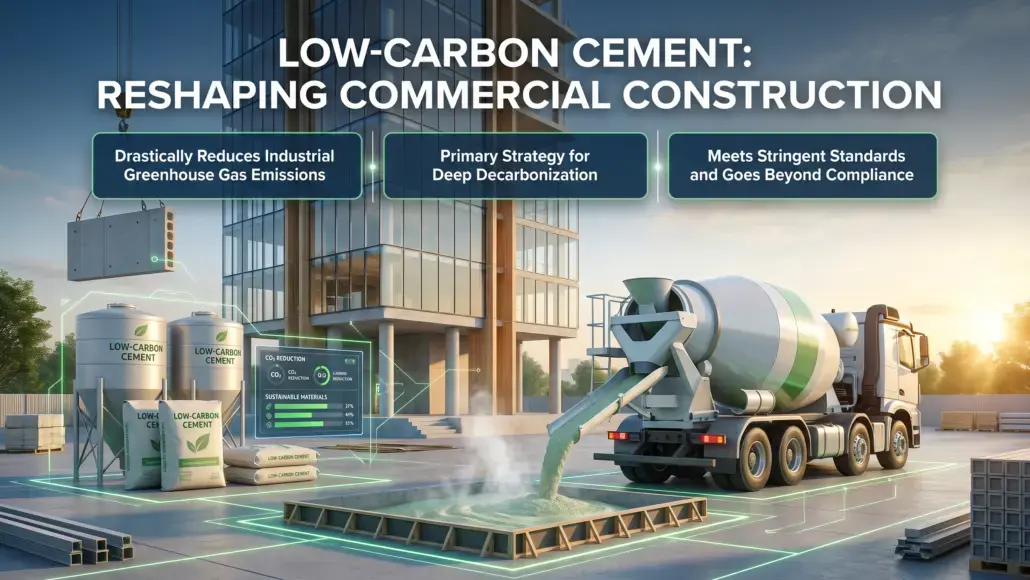


The global construction sector faces an unprecedented requirement to reduce its environmental footprint, with the production of traditional Portland cement accounting for a significant portion of industrial greenhouse gas emissions. As developers and engineering firms seek to meet stringent environmental standards, the adoption of low-carbon cement has emerged as a primary strategy for achieving deep decarbonization within the built environment. This shift is not merely a response to regulatory pressure but represents a fundamental change in how structural materials are sourced, manufactured, and utilized in high-density urban developments. The transition toward these advanced binders involves a multi-faceted approach, combining the reduction of clinker content, the integration of industrial by-products, and the implementation of carbon capture technologies at the point of manufacture.
Engineering specifications are evolving to accommodate these new formulations, ensuring that structural integrity remains uncompromised while achieving substantial reductions in embodied energy. The move toward low-carbon cement is facilitated by a growing body of technical data and successful case studies that demonstrate the material’s viability in large-scale commercial applications. This transition is characterized by a high degree of technical precision, as researchers and manufacturers work to optimize the chemical balance of binders to provide the necessary compressive strength and durability required for modern infrastructure. The following analysis examines the technical and economic factors driving this industrial shift.
Decarbonizing the Clinker Production Process
At the heart of cement manufacturing lies the production of clinker, a carbon-intensive process that involves the thermal decomposition of limestone in high-temperature kilns. Reducing the environmental impact of this stage is critical for the success of low-carbon cement initiatives. Manufacturers are increasingly adopting alternative fuels to power their kilns, moving away from coal and petcoke toward biomass and waste-derived fuels. This change in energy source provides an immediate reduction in the operational carbon footprint of the facility. However, the chemical reaction itself, known as calcination, remains the largest source of emissions. To address this, industry leaders are investing in carbon capture and storage technologies that can sequester carbon dioxide directly from the kiln exhaust.
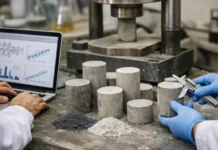
These technological advancements are complemented by improvements in kiln efficiency and the use of digitalization to optimize thermal performance. Real-time monitoring systems allow for precise control over the heating process, reducing energy waste and ensuring a more consistent product. The integration of low-carbon cement into the supply chain also involves the development of new clinker chemistries that require lower firing temperatures. By altering the mineralogical composition of the clinker, producers can reduce the total energy input required for synthesis. This approach requires careful coordination with testing laboratories to verify that the resulting cement meets established performance criteria for set time and early-age strength development.
The commercial viability of these process improvements depends on the scalability of the technology and the availability of capital for facility retrofits. As the cost of carbon emissions continues to rise in many jurisdictions, the financial incentive for upgrading legacy plants becomes more compelling. Project managers in the commercial construction sector are increasingly factoring these upstream improvements into their procurement decisions, seeking out suppliers who can provide transparent data on the carbon intensity of their production lines. This demand for data is driving a broader trend toward environmental product declarations, which provide a standardized method for reporting the lifecycle impact of building materials.
Alternative Binders and Supplementary Cementitious Materials
One of the most effective methods for producing low-carbon cement is the partial replacement of Portland cement clinker with supplementary cementitious materials. These materials, which include ground granulated blast-furnace slag, fly ash, and silica fume, are often by-products of other industrial processes. By utilizing these materials, the construction industry can significantly reduce the volume of clinker required for a given volume of concrete, thereby lowering the overall carbon intensity. The use of calcined clays is also gaining traction as a sustainable alternative, particularly in regions where traditional industrial by-products are in short supply. Calcined clay provides excellent reactivity and contributes to the long-term durability of the concrete matrix.
The technical challenge in using these alternative binders lies in managing the variability of their chemical composition. Unlike Portland cement, which is produced under highly controlled conditions, the properties of slag and fly ash can vary depending on their source. Engineering teams must conduct rigorous testing to determine the optimal blend for specific structural requirements. The integration of low-carbon cement into ready-mix operations requires specialized batching equipment and precise moisture control to ensure consistency. Despite these complexities, the benefits of improved durability and reduced permeability often outweigh the initial technical hurdles. In many cases, concrete made with high levels of supplementary materials exhibits superior resistance to chemical attack and thermal cracking, making it ideal for large-scale infrastructure projects.
Research into ternary and quaternary blends is further expanding the possibilities for binder optimization. By combining multiple supplementary materials, chemists can create synergistic effects that enhance both the fresh and hardened properties of the concrete. For example, the combination of calcined clay and limestone powder has been shown to produce high-performance concrete with very low clinker factors. This type of innovation is essential for meeting the ambitious decarbonization targets set by international building codes. The widespread adoption of these materials also necessitates an update to regional standards, which historically have been based on prescriptive requirements rather than performance-based criteria.
Economic Implications for Commercial Developers
The transition to low-carbon cement presents a complex economic environment for commercial developers. Initially, the cost of specialized binders and the need for more rigorous testing can lead to higher material prices. However, these costs are often offset by the long-term benefits of enhanced durability and the potential for reduced insurance premiums. Additionally, many financial institutions are now offering preferential lending rates for projects that demonstrate a commitment to sustainability. This green financing can provide a significant advantage in the competitive commercial real estate market, allowing developers to achieve better returns on investment despite the higher upfront costs of sustainable materials.
Market dynamics are also influenced by the growing demand from corporate tenants for low-carbon office space. As large organizations commit to their own net-zero goals, they are increasingly seeking out buildings that align with their environmental values. This demand creates a premium for sustainable construction, encouraging developers to prioritize low-carbon cement in their project specifications. The ability to market a building as a leader in sustainability can also lead to faster leasing cycles and higher occupancy rates. In this context, the use of low-carbon materials becomes a strategic asset rather than just a technical requirement.
The supply chain for these materials is also maturing, with more manufacturers offering certified low-carbon options. This increased availability is helping to stabilize prices and reduce the logistical challenges associated with sourcing alternative binders. As production volumes increase, the industry can expect to see further economies of scale, making low-carbon cement more accessible for a wider range of projects. Developers who engage early with their suppliers and design teams can identify opportunities for cost savings, such as optimizing mix designs to reduce the total volume of cement required. The integration of low-carbon cement into the broader construction economy is therefore a process of continuous refinement and strategic partnership.
Regulatory Frameworks and Industry Standards
The adoption of low-carbon cement is heavily influenced by the regulatory environment. Governments around the world are introducing stricter building codes and carbon pricing mechanisms that penalize the use of high-carbon materials. These regulations are designed to accelerate the transition to a circular economy and reduce the industrial sector’s contribution to climate change. For the construction industry, this means that compliance with environmental standards is no longer optional. The development of national and international standards for low-carbon binders is crucial for providing a level playing field and ensuring that all materials used in structural applications are safe and reliable.
Building codes are increasingly moving away from prescriptive requirements that dictate specific material compositions toward performance-based standards. This shift allows engineers more flexibility to use innovative low-carbon cement formulations, provided they can demonstrate that the material meets the necessary strength and durability criteria. This regulatory evolution is supported by advancements in testing methodologies, which allow for more accurate predictions of long-term performance. The role of third-party certification bodies is also expanding, as they provide the independent verification needed to build trust in new materials.
In addition to building codes, public procurement policies are playing a significant role in driving market demand. Many government agencies now require the use of low-carbon materials in public infrastructure projects, such as bridges, highways, and municipal buildings. By using their purchasing power to support sustainable innovation, these agencies are helping to create a stable market for low-carbon cement. This public sector leadership is essential for de-risking new technologies and encouraging private sector investment. The alignment of regulatory frameworks with climate goals is a powerful driver for change, ensuring that the construction industry remains on track to meet its decarbonization targets.
Future Scalability of Low-Carbon Solutions
Looking ahead, the scalability of low-carbon cement solutions will depend on continued investment in research and development. The industry must find ways to produce high-performance binders at scale while minimizing the use of finite resources. This involves exploring new sources of supplementary materials, such as recycled glass and volcanic ash, as well as developing entirely new chemistries that do not rely on traditional clinker. The use of artificial intelligence and machine learning in material science is also expected to accelerate the discovery of new low-carbon formulations. These digital tools can analyze vast amounts of data to identify optimal material combinations and predict their behavior in various environmental conditions.
The global nature of the construction industry means that these solutions must be adaptable to different regional contexts. While some areas may have an abundance of industrial by-products, others may need to rely on locally available minerals or recycled materials. The development of modular production facilities that can be easily deployed in different locations could help to address these regional variations. Additionally, the integration of low-carbon cement into precast and modular construction processes offers significant potential for reducing waste and improving efficiency. By manufacturing structural elements in a controlled environment, producers can optimize the use of low-carbon materials and ensure the highest levels of quality control.
The success of these initiatives will also require a focus on education and training within the construction workforce. Architects, engineers, and contractors must be equipped with the knowledge and skills needed to work with new materials and technologies. This includes understanding the unique handling characteristics of low-carbon cement and the importance of precise batching and curing. As the industry continues to evolve, the collaboration between academia, government, and the private sector will be vital for overcoming technical barriers and ensuring that low-carbon cement becomes the standard for commercial construction. The ongoing commitment to innovation and sustainability will ensure that the built environment can continue to grow while minimizing its impact on the planet.