





















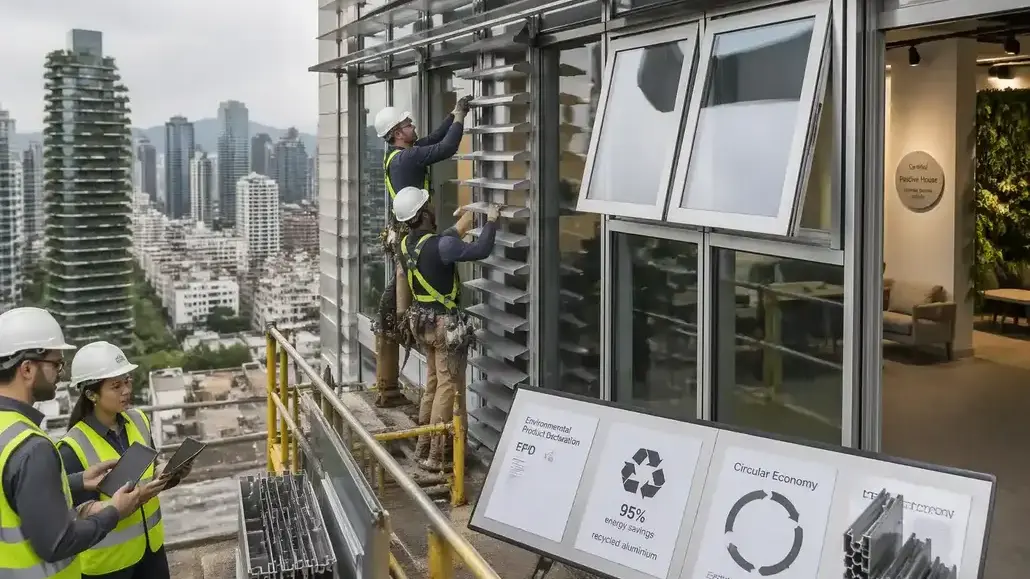


The global imperative to reduce carbon emissions and mitigate the effects of climate change has placed the construction industry under unprecedented pressure to innovate. As buildings are responsible for a significant portion of global energy consumption, the development of energy efficient aluminium building materials has become a cornerstone of the sustainable architecture movement. For decades, the primary focus of energy efficiency was on insulation within walls and roofs, but modern building science has revealed that the “envelope” the skin that separates the interior and exterior environments is where the most significant energy gains can be realized. Aluminium, with its unique combination of strength, lightweight nature, and infinite recyclability, has emerged as the ideal medium for creating high-performance building skins that drastically reduce energy loss and enhance occupant comfort.
The transition toward energy efficient construction is not merely a matter of environmental responsibility; it is also driven by increasingly stringent building codes and the economic reality of rising energy costs. In this context, the role of aluminium in modern fenestration systems windows, doors, and curtain walls is critical. While aluminium is a natural conductor of heat, the industry has developed sophisticated thermal performance materials that break the conductivity path within the frame. These “thermal breaks,” often made from reinforced polyamide or other insulating materials, allow aluminium systems to achieve thermal insulation values that rival or exceed those of traditional timber or vinyl, while providing the superior structural strength and durability required for large-scale architectural projects.
The Science of Thermal Breaks and Insulation
The core technology behind energy efficient aluminium building materials is the thermal break. By inserting a low-conductivity material between the interior and exterior sections of an aluminium profile, manufacturers can prevent the transfer of heat through the frame. This ensures that the interior surface of the window or wall remains warm in the winter and cool in the summer, significantly reducing the demand on the building’s HVAC system. The precision of aluminium extrusion allows for the creation of complex, multi-chambered profiles that can host multiple layers of insulation and high-performance seals, creating an airtight barrier against the elements. This level of engineering is essential for achieving the rigorous standards required for Passive House certification and other high-level energy ratings.
Furthermore, the integration of advanced glazing systems within aluminium frames is a major factor in the overall energy efficiency of a structure. Modern aluminium systems are designed to support heavy, triple-glazed units filled with inert gases like argon or krypton and coated with low-emissivity (low-E) films. These coatings reflect infrared radiation, keeping heat inside during the winter and outside during the summer, while still allowing natural light to flood the interior spaces. The strength of aluminium is what makes these heavy, high-performance glazing units possible, as it can support the weight of the glass with minimal frame width, maximizing the view and the intake of natural light. This synergy between aluminium insulation and glazing technology is a hallmark of contemporary green buildings.
Managing Solar Gain and Natural Ventilation
Energy efficiency is not just about keeping heat in; it is also about managing solar gain and utilizing natural resources to regulate the interior climate. Energy efficient aluminium building materials are widely used in the manufacture of dynamic shading systems, such as louvers, brise-soleil, and external blinds. These systems can be designed to block high-angle summer sun, preventing overheating and reducing the need for air conditioning, while allowing low-angle winter sun to penetrate and provide passive solar heating. The lightweight and durable nature of aluminium makes it the perfect material for these exterior systems, which must withstand constant exposure to wind, rain, and UV radiation while maintaining their functionality and aesthetic appeal.
Moreover, aluminium systems facilitate effective natural ventilation strategies, which are a vital component of sustainable architecture. Automated aluminium windows and vents can be programmed to open during the night to purge heat from the building’s thermal mass, reducing the cooling load for the following day. The precision and reliability of aluminium hardware ensure that these systems can operate seamlessly for decades, providing a low-energy alternative to mechanical cooling. By integrating these passive strategies into the building’s design, architects can create urban environments that are not only more energy-efficient but also healthier and more comfortable for the people who live and work in them.
The Role of Recyclability in Lifecycle Energy Efficiency
When evaluating the impact of energy efficient aluminium building materials, it is essential to consider the entire lifecycle of the material, not just its operational performance. Aluminium is one of the most sustainable materials in the world due to its infinite recyclability. As noted previously, recycling aluminium requires only 5% of the energy needed for primary production, a fact that significantly lowers the “embodied energy” of the building. In the context of green buildings, the use of materials that can be efficiently returned to the production loop at the end of their life is a key requirement for achieving high sustainability scores. By choosing aluminium, developers are making a long-term commitment to a circular economy, where the materials used today become the resources of tomorrow.
This “cradle-to-cradle” approach is essential for reducing the total carbon footprint of the construction sector. As we move toward net-zero buildings, the energy used to create the materials themselves becomes a larger portion of the building’s total environmental impact. Therefore, the use of recycled aluminium with a low-carbon footprint is a strategic priority for the industry. Many leading manufacturers are now providing Environmental Product Declarations (EPDs) that verify the recycled content and energy intensity of their products, allowing architects to make data-driven choices that support their energy efficient construction goals. This transparency is driving a market-wide shift toward more responsible sourcing and production, ensuring that aluminium remains at the forefront of the green building revolution.
Adaptability to Urban Environments and Climate Resilience
The versatility of energy efficient aluminium building materials also makes them uniquely suited to the challenges of modern urban environments. In high-density cities, buildings are often subject to “microclimates” created by surrounding structures, leading to varying levels of sun, wind, and pollution. Aluminium systems can be tailored to meet these specific conditions, providing optimized thermal and acoustic performance for every part of the building. For example, in high-noise areas, aluminium frames can host specialized acoustic glazing and seals to create a quiet interior sanctuary, while in high-wind zones, the material’s strength ensures the integrity of the building envelope. This adaptability is a core strength of sustainable architecture, allowing for the creation of high-performing buildings in even the most challenging urban contexts.
As the climate continues to change, the resilience of our building materials is also becoming a critical factor in energy efficiency. Extreme weather events, such as heatwaves and severe storms, place immense stress on the building envelope. Aluminium’s resistance to corrosion, rot, and UV degradation ensures that its energy-saving properties remain intact throughout its entire service life, even in the harshest conditions. Unlike other materials that may warp, crack, or lose their insulating value over time, aluminium provides a consistent and reliable barrier against energy loss. This longevity is a key part of the value proposition for energy efficient aluminium building materials, providing a durable and high-performing solution that stands the test of time.
Conclusion: Building a Greener Future with Aluminium
The integration of energy efficient aluminium building materials into the mainstream of the construction industry is a testament to the power of material science and engineering to solve our most pressing environmental challenges. By prioritizing thermal performance, recyclability, and durability, the industry is creating buildings that are not only more efficient but also more resilient and beautiful. As we continue to refine our building techniques and move toward a net-zero world, the role of aluminium will only become more prominent. It is the material that allows us to bridge the gap between our architectural ambitions and our environmental responsibilities, providing the foundation for a more sustainable and energy-efficient built environment for generations to come.