



























The construction industry has long been viewed as a sector traditional in its roots and hesitant to change, yet we are currently witnessing a shift that can only be described as a digital renaissance. The emergence of smart construction technologies is not merely an incremental improvement over old methods; it represents a comprehensive overhaul of how we conceive, plan, and execute building projects. As someone who has navigated the complexities of project sites for over fifteen years, the transition from manual blueprints and siloed communication to interconnected, data-driven ecosystems is nothing short of revolutionary. This evolution is driven by the necessity for greater precision, the demand for safer working environments, and a global push toward sustainability that old-fashioned techniques simply cannot satisfy.
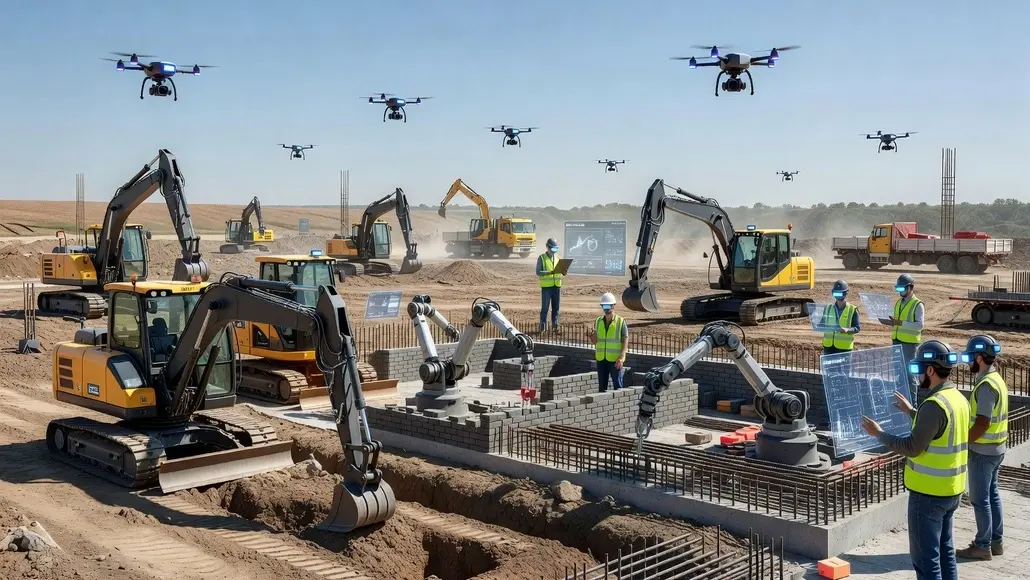
At the heart of this transformation is the concept of the connected job site. In years past, a construction site was a collection of independent actors working toward a common goal but often hindered by a lack of real-time visibility. Today, the integration of the Internet of Things (IoT) has turned the physical site into a living, breathing network of information. Sensors embedded in equipment, wearable technology on workers, and even drones patrolling the airspace provide a continuous stream of data that informs every decision. This connectivity ensures that when a delay occurs on one front, the entire project management team is alerted instantly, allowing for rapid recalibration rather than the days of confusion that used to follow a logistical hiccup.
The Role of Autonomous Machinery and Robotics
The physical labor associated with construction is being augmented by a new generation of autonomous machinery and specialized robotics. While the idea of a fully robotic site remains in the future, the current application of semi-autonomous equipment is already yielding massive dividends in productivity. We are seeing excavators and dozers equipped with high-precision GPS and machine control systems that allow them to perform grading and trenching with accuracy measured in millimeters. This reduces the need for constant manual surveying and minimizes the risk of over-excavation, which saves both time and expensive fuel.
Precision Robotics in Masonry and Fabrication
Beyond heavy machinery, specialized robots are taking over repetitive and high-strain tasks that have traditionally led to chronic injuries for human workers. Robotic bricklayers and rebar-tying machines are now common sights on advanced projects. These machines do not replace the skilled mason but rather serve as a force multiplier, allowing the craftsman to focus on complex detailing and quality control while the machine handles the grueling repetition. This synergy between human expertise and mechanical precision is a hallmark of the modern smart site, ensuring that the structural integrity of our buildings is higher than ever before while protecting the long-term health of the workforce.
Aerial Intelligence and Site Monitoring
The use of drones has moved from a novelty to a critical utility. In the past, site inspections were time-consuming and often dangerous affairs involving scaffolding or cranes. Now, high-resolution cameras and LiDAR sensors mounted on drones can map an entire site in a fraction of the time, creating detailed 3D models that can be compared against the original Building Information Modeling (BIM) files. This allows project managers to identify deviations from the plan early, preventing costly rework. Furthermore, drones provide an unparalleled perspective on safety, identifying potential hazards or breaches in protocol that might go unnoticed from the ground level.
Data Analytics and Predictive Project Management
The true power of smart construction technologies lies not just in the hardware but in the intelligence derived from the data these tools collect. We are moving away from reactive management where we solve problems after they occur toward a predictive model. By using advanced analytics and machine learning algorithms, we can now forecast potential bottlenecks weeks in advance. Whether it is predicting weather-related delays or identifying a trend in equipment failure, the ability to anticipate challenges has become a cornerstone of successful project delivery in this decade.
Digital Twins and Real-Time Simulation
One of the most profound developments in our field is the adoption of digital twins. A digital twin is a virtual replica of a physical asset, updated in real time with data from the job site. This allows us to run simulations to see how changes in one variable will affect the entire project timeline or budget. For instance, if a material shipment is delayed, we can use the digital twin to simulate different work-around scenarios, identifying the path of least resistance. This level of foresight was unimaginable a decade ago and has significantly reduced the financial risks associated with large-scale infrastructure projects.
Enhancing Safety Through Wearable Technology
Safety has always been the primary concern on any site, but smart construction technologies have provided us with tools that proactively protect lives. Smart helmets and vests equipped with biometric sensors can monitor a worker’s heart rate and body temperature, alerting site supervisors if someone is showing signs of heat exhaustion or overexertion. Additionally, proximity sensors on heavy equipment can alert both the operator and nearby workers if someone enters a blind spot. These innovations have led to a measurable decrease in on-site accidents, proving that the digital transformation is as much about people as it is about profit.
Integration of BIM and Augmented Reality
Building Information Modeling has evolved from a 3D design tool into a multidimensional framework that governs the entire lifecycle of a project. When BIM is paired with Augmented Reality (AR), the results are transformative. Engineers and site supervisors can now use AR headsets to overlay digital blueprints directly onto the physical site. This “X-ray vision” allows them to see where pipes, conduits, and structural elements are supposed to go before a single hole is drilled. The reduction in errors and the increase in installation speed provided by this technology have set a new standard for precision in the industry.
Streamlining Supply Chain and Logistics
Logistics on a construction site is often a chaotic puzzle of moving parts. Smart technologies have streamlined this by introducing real-time tracking of materials. From the moment a pallet of tiles leaves the factory to the moment it is installed, its location and condition are monitored. This prevents the loss of materials and ensures that the site is never cluttered with items that are not yet needed, following a “just-in-time” delivery model that maximizes space and reduces waste. This level of logistical control is essential for urban sites where space is at a premium and every delivery must be perfectly timed.
Future Horizons and Scalability
Looking ahead, the scalability of these technologies is the next major challenge. While large-scale commercial and infrastructure projects have been the early adopters, we are now seeing these tools become more accessible for smaller residential builders. The democratization of smart construction tools will be the catalyst for a global improvement in building standards. As sensors become cheaper and software more intuitive, the “smart site” will eventually become the “standard site,” ensuring that every project benefits from the increased safety and efficiency that we are currently pioneering.
The transition to a digital-first construction methodology is not without its hurdles, particularly regarding the upskilling of the workforce and the initial capital investment. However, the long-term benefits reduced environmental impact, enhanced safety, and superior building quality far outweigh the costs. As we continue to refine these smart construction technologies, we are not just building structures; we are building a more resilient and efficient future for the entire global community.