









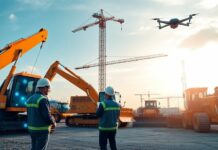













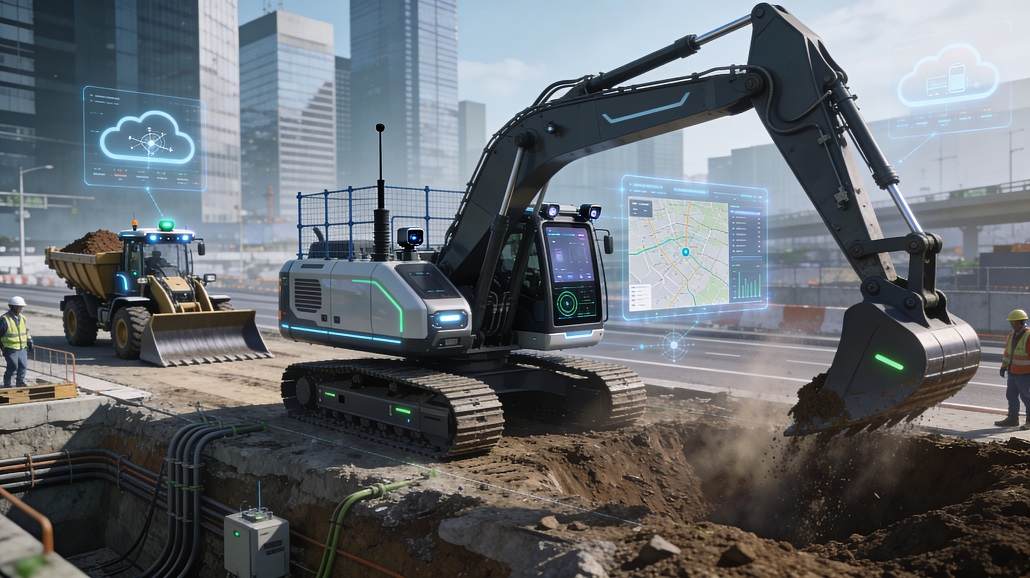


The modern construction industry is defined by its ability to move vast quantities of material with speed, precision, and efficiency. At the heart of this capability is a new generation of advanced earthmoving equipment, which has moved beyond the simple mechanical designs of the past to become sophisticated, tech-integrated platforms. From massive highway expansions to the foundations of futuristic skyscrapers, the success of today’s infrastructure depends on the performance of smart excavators, autonomous loaders, and highly efficient dozers. These machines are being driven by a convergence of advanced hydraulics, satellite-based guidance, and telematics, creating a landscape where productivity is measured by bits of data as much as by tons of soil. This transformation is not only making construction faster but also making it safer and more sustainable for a rapidly growing global population.
The evolution of earthmoving machinery is a direct response to the increasing complexity of modern projects. In an era where urban spaces are densely packed and environmental regulations are stringent, there is no room for the “trial and error” methods of the 20th century. Advanced Earthmoving Equipment trends indicate a shift toward “intelligent excavation,” where every movement of the bucket is planned and executed with mathematical certainty. This level of control allows contractors to work in tighter spaces, avoid underground utilities with absolute confidence, and minimize the over-excavation that leads to wasted material and energy. As the industry looks toward a more automated future, these machines are serving as the essential foundation for the next generation of built environments.
The Rise of Smart Excavators and Machine Control
Perhaps the most visible sign of progress in the sector is the development of smart excavators. These machines are equipped with factory-integrated 2D and 3D grading systems that provide the operator with real-time feedback on the bucket’s position relative to the digital site plan. This eliminates the need for manual grade checking and staking, which have traditionally been some of the most time-consuming and dangerous tasks on a construction site. By following the digital model, the operator can achieve the desired grade in a single pass, significantly reducing the fuel consumption and wear on the machine. This “semi-automation” is a hallmark of Advanced Earthmoving Equipment trends, bridging the gap between human skill and machine precision.
The intelligence of these machines also extends to their “boundary” features. Smart excavators can be programmed with virtual “e-fences” that prevent the boom or bucket from moving outside a predefined safe zone. This is particularly valuable when working near power lines, active roadways, or sensitive structures. If the machine detects that it is approaching a boundary, it will automatically slow down or stop, preventing a potentially catastrophic accident. This level of integrated safety is what allows advanced earthmoving machinery to operate in environments that were previously considered too high-risk, opening up new possibilities for urban redevelopment and infrastructure maintenance.
Advanced Hydraulics and Energy Efficiency in Earthmoving
Beneath the digital interface, the mechanical systems of these machines have also undergone a revolution. The latest generation of advanced earthmoving equipment utilizes high-pressure, electronically controlled hydraulic systems that are far more responsive and efficient than traditional designs. These systems use variable-displacement pumps that only deliver the exact amount of flow required for the task at hand. In older machines, the hydraulic pump would often run at full capacity regardless of the load, with excess energy being dissipated as heat. Today’s smart systems eliminate this waste, leading to fuel savings of up to 25% and a significant reduction in noise and vibration.
Furthermore, the introduction of hybrid hydraulic systems is becoming one of the most significant heavy equipment trends. These systems use accumulators to capture the energy generated when the excavator’s house rotates or when the boom is lowered. This “recovered” energy is then reused to assist the engine during high-load operations, such as digging in heavy clay or lifting a full bucket. This not only lowers the carbon footprint of the machine but also improves its performance, providing a “boost” of power exactly when it is needed most. The refinement of hydraulic systems is what allows modern earthmoving machinery to do more work with less energy, aligning the goals of productivity and sustainability.
Autonomous Construction Equipment and the Future of Loaders
While semi-automation is the current standard, the industry is rapidly moving toward fully autonomous construction equipment. This is most evident in the development of autonomous loaders and haul trucks for large-scale earthmoving operations. These machines use a combination of LiDAR, radar, and high-precision GPS to navigate the site and perform repetitive tasks such as moving material from a stockpile to a crusher without any human intervention. This eliminates the variability of human performance and allows the site to operate 24/7 with perfect consistency. The use of autonomous loaders also removes workers from hazardous environments, such as steep slopes or unstable stockpiles, significantly improving the site’s overall safety profile.
The transition to autonomous construction equipment requires a robust digital infrastructure, including high-speed 5G or Wi-Fi networks that can handle the massive volume of data required for real-time navigation. It also requires a new approach to site management, where human supervisors monitor a fleet of autonomous machines from a central control room. As Advanced Earthmoving Equipment trends continue to favor automation, we will see the rise of “collaborative” sites, where autonomous machines and human-operated equipment work in harmony. This synergy is what will allow the industry to overcome the chronic labor shortages and productivity plateaus that have hampered the sector for decades.
Telematics and the Data-Driven Construction Site
The intelligence of modern earthmoving machinery is not limited to its on-site performance; it also encompasses its ability to communicate with the rest of the world. Telematics systems are now a standard feature on almost all advanced earthmoving equipment, providing a constant stream of data on fuel consumption, idle time, location, and mechanical health. This data is fed into cloud-based platforms that allow fleet managers to monitor their entire operation from a single dashboard. By analyzing this information, managers can identify “bottlenecks” such as a loader waiting too long for a truck and make real-time adjustments to improve the site’s efficiency.
Telematics also facilitates a more proactive approach to maintenance. By monitoring the “health signatures” of critical components, these systems can predict when a part is likely to fail and schedule a repair before a breakdown occurs. This reduces unplanned downtime and ensures that the machine remains productive throughout its lifecycle. The use of telematics is a key component of the current heavy equipment trends, transforming the relationship between the contractor, the equipment dealer, and the manufacturer. In this data-driven ecosystem, everyone has the information they need to ensure that the earthmoving machinery is always performing at its peak, maximizing the return on investment for the project.
Ergonomics and Operator Comfort in Modern Machinery
Despite the rise of automation, the human operator remains a vital part of the construction landscape. Advanced earthmoving equipment is designed with a focus on ergonomics and comfort that would have been unthinkable a generation ago. Modern cabs are pressurized to keep out dust and noise, equipped with advanced climate control systems, and feature fully adjustable, air-suspended seats that reduce the physical toll of long shifts. The controls themselves have evolved from heavy mechanical levers to intuitive joysticks and touchscreens that require minimal effort to operate.
This focus on comfort is not just a luxury; it is a critical factor in productivity and safety. A comfortable operator is more alert, more accurate, and less likely to make mistakes due to fatigue. Furthermore, the inclusion of 360-degree camera systems and “bird’s-eye” views on in-cab displays provides the operator with unparalleled visibility around the machine, reducing the risk of collisions with workers or other equipment. The integration of “smart” features into the operator interface such as automated bucket leveling and return-to-dig allows even less-experienced operators to perform like seasoned pros. By supporting the human element through advanced technology, manufacturers are ensuring that advanced earthmoving machinery remains a powerful and safe tool for the modern world.
Sustainability and the Environmental Impact of Earthmoving
As the global focus on climate change intensifies, the environmental impact of construction is under increasing scrutiny. Advanced Earthmoving Equipment trends are clearly moving toward a “greener” future. This includes the development of fully electric and hydrogen-powered earthmoving machinery, which offers zero tailpipe emissions and significantly lower noise levels. These machines are particularly valuable for urban projects and night work, where noise and air quality regulations are most strict. While the battery technology for the largest machines is still developing, small and mid-sized electric excavators and loaders are already becoming a common sight on sites around the world.
Sustainability also involves the more efficient use of materials. By using high-precision grading systems, contractors can minimize the amount of soil that needs to be moved and the volume of concrete or asphalt required for the final structure. This “precision earthmoving” reduces the overall energy consumption of the project and minimizes the disruption to the local environment. The move toward green construction is not just about the power source of the machine; it is about the intelligent application of technology to do more with less. The advanced earthmoving equipment of tomorrow will be a cornerstone of the circular economy, where resources are conserved and the built environment is created in harmony with the natural world.