


























Close
WORLD OF CONCRETE
Saturday, December 20, 2025
JEC WORLD 2026

UK Homebuilding Starts See A Decline In The First Quarter

Note* - All images used are for editorial and illustrative purposes only and may not originate from the original news provider or associated company.

Subscribe

- Never miss a story with notifications

- Gain full access to our premium content

- Browse free from any location or device.

Media Packs

Expand Your Reach With Our Customized Solutions Empowering Your Campaigns To Maximize Your Reach & Drive Real Results!

– Access the Media Pack Now

– Book a Conference Call

Leave Message for Us to Get Back

Related stories

How To Choose Trailer GPS Units That Actually Work for UK Fleets

You know the drill. A trailer van goes missing...

Improving Construction Efficiency Without Compromising Quality

Achieving construction efficiency requires process-focused improvements that enhance productivity while maintaining or improving quality standards. Through workflow optimization, enhanced coordination mechanisms, quality management practices, and strategic technology integration, construction organizations deliver projects faster and more cost-effectively without sacrificing structural integrity or compliance. Balancing speed with excellence transforms construction management from a trade-off exercise into a synergistic approach where efficiency and quality reinforce one another.

Training Strategies for Operating Advanced Construction Equipment

Modern construction equipment demands operator skills that extend far beyond basic machinery operation. Comprehensive training programs combining classroom instruction, simulator practice, and hands-on field experience prepare operators to safely and efficiently manage increasingly sophisticated equipment. Through structured certification approaches, ongoing skill development, and commitment to continuous learning, construction organizations develop operator competency that enhances project safety, productivity, and equipment longevity.
- Advertisement -
Achema Middleeast

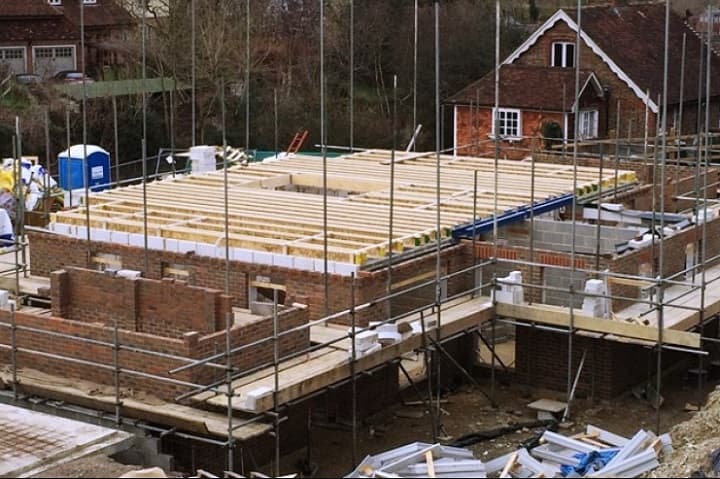
As per the recent analysis done by a data firm, Glenigan, private housing starts in the UK went down 39% in the three months to March 31 as compared to the previous quarter. On the other hand, social housing starts fell by 41%.

Private as well as social housing starts in the said quarter were half as high and saw a dip of 52% respectively year-over-year. The construction review highlighted a dip in residential activity, which went on to contribute towards a wider trend with new construction work seeing a fall across the board in the first quarter of the year. The data shows that the overall number of construction projects started saw a dip of almost half, i.e., -46%, as compared to the previous year.

It is well to be noted that the industrial sector’s performance was poor, weakening 50% across the quarter and being 64% down compared to a year ago. All the non-residential sectors across the UK saw a decline when compared to the previous three months, with offices down by 32%, health dropping by 36%, and civils by 28%. Education happened to be the most promising vertical, increasing a slight 4% as compared to the 2022 levels, however, 5% less than the previous quarter. Allan Wilen, the economic director of the data firm, went on to attribute consistent and external economic pressures such as high energy costs, material inflation, and a broader global shortage of key elements to the bad performance.

He further said that the entire softening in activity across the UK construction sector syncs with the common downward pattern of broader UK economic activity.

High interest rates, a dip in business investment, and the resulting squeeze as far as household incomes are concerned are leading to curbing activity in consumer-related sectors such as hotel and leisure as well as private housebuilding. Wilen further said that it isn’t all doom-gloom scenario pointing at capital investment in the public sector as promised in the recent spring budget.

On a more positive note, the detailed planning nods increased in the preceding quarters as well as the previous year, increasing 41% and 29%, respectively. Apparently, the performance regionally was also dismal, with the Humber and Yorkshire suffering the highest fall, with -57% in quarter one and -65% in the year.

The recent robust output in the north-east halted with a steep fall of 46% in comparison to the previous months

Achema Middleeast

Latest stories

Related stories

How To Choose Trailer GPS Units That Actually Work for UK Fleets

You know the drill. A trailer van goes missing...

Improving Construction Efficiency Without Compromising Quality

Achieving construction efficiency requires process-focused improvements that enhance productivity while maintaining or improving quality standards. Through workflow optimization, enhanced coordination mechanisms, quality management practices, and strategic technology integration, construction organizations deliver projects faster and more cost-effectively without sacrificing structural integrity or compliance. Balancing speed with excellence transforms construction management from a trade-off exercise into a synergistic approach where efficiency and quality reinforce one another.

Training Strategies for Operating Advanced Construction Equipment

Modern construction equipment demands operator skills that extend far beyond basic machinery operation. Comprehensive training programs combining classroom instruction, simulator practice, and hands-on field experience prepare operators to safely and efficiently manage increasingly sophisticated equipment. Through structured certification approaches, ongoing skill development, and commitment to continuous learning, construction organizations develop operator competency that enhances project safety, productivity, and equipment longevity.

Managing Material Costs in a Volatile Construction Market

Construction material price volatility presents significant challenges to project budgeting and risk management. Strategic procurement approaches, supply chain resilience strategies, and contract mechanisms that balance risk effectively enable stakeholders to navigate market fluctuations successfully. Understanding market dynamics, implementing escalation clauses, developing flexible procurement strategies, and maintaining strong supplier relationships help construction professionals maintain project viability despite unpredictable material cost movements.

Subscribe

- Never miss a story with notifications

- Gain full access to our premium content

- Browse free from any location or device.

Media Packs

Expand Your Reach With Our Customized Solutions Empowering Your Campaigns To Maximize Your Reach & Drive Real Results!

– Access the Media Pack Now

– Book a Conference Call

Leave Message for Us to Get Back

Translate »