

























Close
WORLD OF CONCRETE
Thursday, December 18, 2025
JEC WORLD 2026

Canadian construction industry continues to recover while Alberta remains below baseline

Note* - All images used are for editorial and illustrative purposes only and may not originate from the original news provider or associated company.

Subscribe

- Never miss a story with notifications

- Gain full access to our premium content

- Browse free from any location or device.

Media Packs

Expand Your Reach With Our Customized Solutions Empowering Your Campaigns To Maximize Your Reach & Drive Real Results!

– Access the Media Pack Now

– Book a Conference Call

Leave Message for Us to Get Back

Related stories

Human Machine Collaboration on Modern Construction Sites

Modern construction sites increasingly feature integrated teams where workers and machines collaborate as complementary partners, each contributing unique strengths toward shared objectives. This exploration examines collaborative workflows where technology augments human skill and judgment, improving overall productivity while simultaneously reducing physical strain on workers and enabling safer, more controlled construction processes. Advanced robotics, artificial intelligence, and intuitive human-machine interfaces create opportunities for seamless integration between human expertise and mechanical precision, establishing new models for effective teamwork in dynamic construction environments.

Top Benefits of Playground Artificial Turf for Safe Outdoor Play

Kids love to run, jump, and explore. Playgrounds give...
- Advertisement -
Achema Middleeast

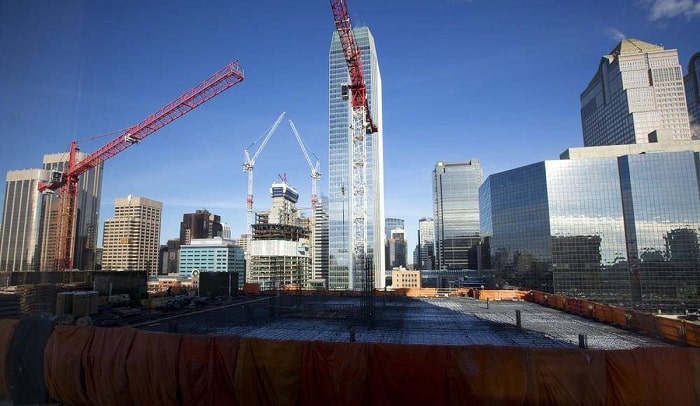
Construction activity during the COVID-19 pandemic continues to recover in Canada after an initial drop in the spring. While Quebec has seen the strongest rebound of all of the included provinces, Alberta continues to experience less activity than before the pandemic.

Procore’s Construction Activity Index tracks weekly changes in worker hours from a baseline beginning the week of March 16 through the week of September 28, 2020. The most recent update includes data from British Columbia, Alberta, Ontario and Quebec.

Overall, worker hours rose 11 percent above the March 16 baseline during the weeks of August 17 and September 14. These are the highest levels of activity tracked by the index.

However, activity in each province has differed (compared to the March 16 baseline):

Ontario has been recovering since the week of May 25, with activity reaching a peak of 25 percent above the baseline the week of September 14.
Quebec saw the sharpest initial decline in activity, with worker hours dropping 97 per cent below the baseline the week of April 5, before recovering through May and June. During the Quebec construction holiday the weeks of July 20 and July 27, activity within Procore briefly dipped again (92 percent and 95 percent below baseline, respectively) and has been strong since then.
In Alberta, activity has hovered around the baseline, rising to a peak of six percent above baseline the week of April 20. But since the week of June 8, activity has been below the baseline for 17 consecutive weeks.
Of all the provinces, British Columbia has been least affected. Its activity has been consistently above the baseline with the exception of a few small drops in April and June. At its highest, activity was 31 percent above the baseline the weeks of June 15 and September 28.

“The pandemic continues to challenge everyone, and the construction industry is no exception,” said Jas Saraw, Vice President, Canada, at Procore. “The latest insights from Procore’s Construction Activity index shows that while construction continues to experience periods of recovery across Canada in the fall, conditions vary from province to province. Construction organizations are learning to adapt and move forward while the industry continues to deal with the pandemic and a new way to work. We hope the index provides useful context for industry leaders navigating this ongoing challenge.”

Achema Middleeast

Latest stories

Related stories

Human Machine Collaboration on Modern Construction Sites

Modern construction sites increasingly feature integrated teams where workers and machines collaborate as complementary partners, each contributing unique strengths toward shared objectives. This exploration examines collaborative workflows where technology augments human skill and judgment, improving overall productivity while simultaneously reducing physical strain on workers and enabling safer, more controlled construction processes. Advanced robotics, artificial intelligence, and intuitive human-machine interfaces create opportunities for seamless integration between human expertise and mechanical precision, establishing new models for effective teamwork in dynamic construction environments.

Top Benefits of Playground Artificial Turf for Safe Outdoor Play

Kids love to run, jump, and explore. Playgrounds give...

RMIT Researchers Turn Coffee Waste into Low-Carbon Concrete

RMIT University, Australia researchers are coming up with a...

Subscribe

- Never miss a story with notifications

- Gain full access to our premium content

- Browse free from any location or device.

Media Packs

Expand Your Reach With Our Customized Solutions Empowering Your Campaigns To Maximize Your Reach & Drive Real Results!

– Access the Media Pack Now

– Book a Conference Call

Leave Message for Us to Get Back

Translate »