


























Close
MCE 2026
Wednesday, January 21, 2026
JEC WORLD 2026

Brick Remains To Be Used In The Testing of Cement In The UK

Note* - All images used are for editorial and illustrative purposes only and may not originate from the original news provider or associated company.

Subscribe

- Never miss a story with notifications

- Gain full access to our premium content

- Browse free from any location or device.

Media Packs

Expand Your Reach With Our Customized Solutions Empowering Your Campaigns To Maximize Your Reach & Drive Real Results!

– Access the Media Pack Now

– Book a Conference Call

Leave Message for Us to Get Back

Related stories

FP McCann Easy-Trim Acquisition Expands Roofing Products

FP McCann has completed the Easy-Trim acquisition, adding roofing...

Titan America Keystone Acquisition Spans Mid-Atlantic Reach

Titan America has signed an agreement to complete the...

Sustainable Construction Machinery for Low Emission Sites

Reducing the carbon footprint of the building sector requires a total reimagining of engine technology and energy consumption, leading to the rise of specialized machinery that balances power with environmental stewardship. By prioritizing low emission operation and energy-efficient designs, contractors are meeting the dual challenge of fulfilling ambitious infrastructure goals while adhering to increasingly stringent global climate regulations.
- Advertisement -
Advancing Prefabrication 2026

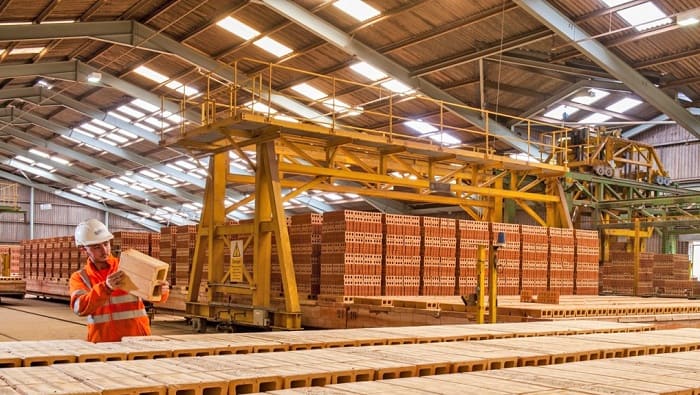
World Construction Today – For study on how reused clay can be used to both recycle waste from other industries, including brickmaking, and generate low-carbon cement, the Mineral Products Association (MPA) has been named lead partner.

The two-year study, which is funded by the government organisation Innovate UK, will employ waste-derived clays to evaluate the potential to cut waste by 1.4 million tonnes and cement’s embodied carbon dioxide by 20% to 40% when compared to market-leading CEM I cements. Clay waste from brick making and overburden from quarry sites are two sources used in this project.

As they strive to reduce carbon emissions and transition to a circular economy, MPA director Diana Casey said that testing the application of waste clay from brick making as a cementitious material is a big step forward for this business.

This will not only reduce carbon emissions and decrease waste, but it also has the potential to open up a completely new market if waste clay is used extensively in the building sector, preserving the UK’s economic worth, securing jobs, and luring investment.

When compared to the manufacturing of cement clinker, employing clay also needs less, or in some circumstances, no heating (for instance, when using scrap brick). In the UK, clay is a naturally abundant material that the MPA believes can provide an option to other industrial by-products, such as fly-ash (a by-product from coal-fired power plants) and ground granulated blast-furnace slag (GGBS), which are already used to reduce embodied carbon within cement.

To heat the clay in order to prepare it to be used in cement and concrete, two different heating techniques, a rotating kiln and the less popular flash heating method are being tested.

Tarmac, Hanson, Imerys, and Forterra, along with research collaborators from the Universities of London and Dundee, are project sponsors. When the study is over, the MPA will disseminate the findings to encourage cement producers all around the UK to adopt this technique.

Achema Middleeast

Latest stories

Related stories

FP McCann Easy-Trim Acquisition Expands Roofing Products

FP McCann has completed the Easy-Trim acquisition, adding roofing...

Titan America Keystone Acquisition Spans Mid-Atlantic Reach

Titan America has signed an agreement to complete the...

Sustainable Construction Machinery for Low Emission Sites

Reducing the carbon footprint of the building sector requires a total reimagining of engine technology and energy consumption, leading to the rise of specialized machinery that balances power with environmental stewardship. By prioritizing low emission operation and energy-efficient designs, contractors are meeting the dual challenge of fulfilling ambitious infrastructure goals while adhering to increasingly stringent global climate regulations.

Digital Construction Sites Powered by Connected Equipment

The concept of a connected jobsite revolves around a unified digital ecosystem where every asset contributes real-time data to a centralized management hub, ensuring seamless coordination across large-scale projects. By integrating sophisticated data analytics and satellite-driven monitoring, the industry is moving toward a more transparent and highly optimized way of delivering complex infrastructure.

Subscribe

- Never miss a story with notifications

- Gain full access to our premium content

- Browse free from any location or device.

Media Packs

Expand Your Reach With Our Customized Solutions Empowering Your Campaigns To Maximize Your Reach & Drive Real Results!

– Access the Media Pack Now

– Book a Conference Call

Leave Message for Us to Get Back

Translate »