

























As the global climate continues to undergo rapid and unpredictable changes, the traditional approaches to urban planning and civil engineering are being fundamentally challenged. The concept of climate resilient infrastructure has moved from the periphery of urban theory to the core of strategic development. Cities, as the primary hubs of human population and economic activity, are uniquely vulnerable to the impacts of rising sea levels, extreme heatwaves, and intensified storm events. To ensure sustainable urban growth, it is no longer sufficient to build for the conditions of the past; we must design for the uncertainties of the future. This evolution in infrastructure development is characterized by a shift from rigid, “gray” engineering toward flexible, adaptive, and nature-based solutions that can absorb shocks and maintain essential services under pressure.
Risk Management and Predictive Design Modeling
The foundation of climate resilient infrastructure lies in the integration of risk management into the design process. Historically, infrastructure was built based on the “return period” of historical weather events, such as the hundred-year flood. However, as climate patterns shift, these historical benchmarks are becoming increasingly unreliable. Modern resilient design utilizes advanced predictive modeling and “stress testing” to evaluate how systems will perform under various climate scenarios. This foresight allows engineers to build in redundancies and safety margins that protect critical assets such as power grids, water treatment plants, and transportation networks from catastrophic failure. By prioritizing resilience, cities can minimize the economic disruption and human suffering that follow extreme events, ensuring that growth is not just rapid but also enduring.
Nature-Based Solutions and Green-Blue Systems
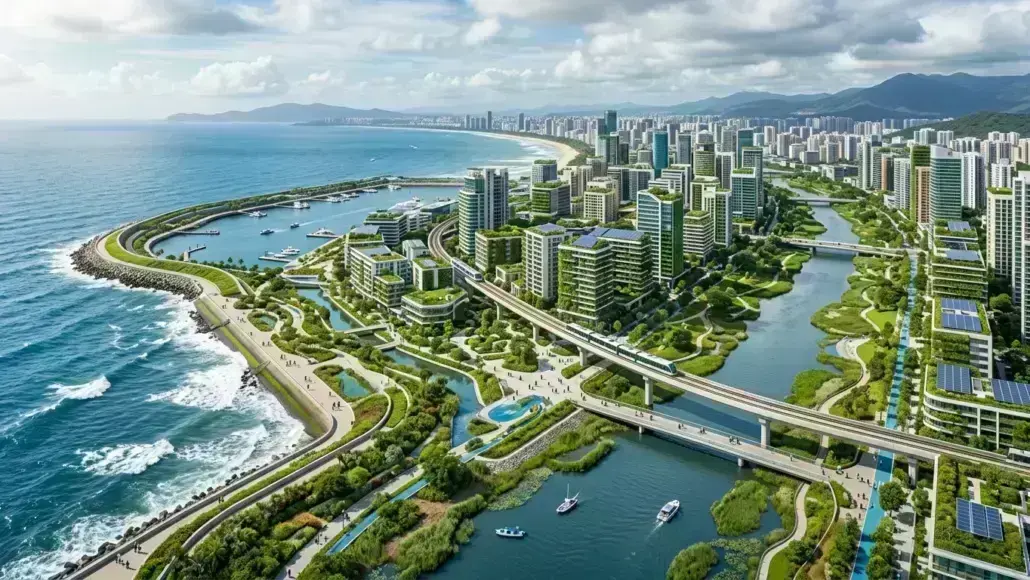
Nature-based solutions (NBS) are a cornerstone of the modern resilient urban landscape. Instead of relying solely on concrete sea walls and massive drainage pipes, climate resilient infrastructure incorporates “green” and “blue” systems that mimic natural processes. For example, restored wetlands and mangrove forests act as natural buffers against storm surges, while “sponge city” designs utilize permeable pavements and bioswales to manage urban runoff and reduce flooding. These solutions offer a multitude of benefits beyond disaster mitigation: they improve urban air quality, mitigate the heat island effect, and provide recreational spaces for citizens. By blending the organic with the engineered, cities can create a more harmonious and resilient environment that supports both human and ecological health.
Energy Sector Resilience and Decentralized Microgrids
The resilience of the energy sector is particularly critical for shaping sustainable urban growth. As heatwaves increase the demand for cooling, and extreme weather threatens transmission lines, the transition to decentralized, “smart” microgrids becomes essential. Climate resilient infrastructure in the energy sector involves the deployment of localized renewable energy sources, battery storage, and intelligent demand-response systems. In the event of a major grid failure, these microgrids can “island” themselves, maintaining power to essential services like hospitals and emergency shelters. This decentralized approach not only enhances security but also supports the decarbonization of the urban environment, aligning resilience with broader climate mitigation goals.
Durable Transportation Networks and Multi-Modal Connectivity
Transportation networks must also be reimagined through the lens of climate resilience. Rising temperatures can cause railway tracks to buckle and asphalt to soften, while flooding can paralyze entire transit systems. Resilient transportation infrastructure involves the use of more durable, heat-resistant materials and the elevation of critical tracks and roadways. Furthermore, a resilient city prioritizes “multi-modal” connectivity, ensuring that citizens have multiple ways to move such as walking, cycling, and robust public transit if one part of the network is compromised. This flexibility is a key driver of urban growth, as it ensures that the city remains functional and productive even during periods of environmental stress.
Economic Value and Inclusive Resilience Strategies
The economic case for climate resilient infrastructure is becoming increasingly clear. While the initial investment in resilient systems may be higher than traditional gray infrastructure, the long-term savings are immense. According to the World Bank, every dollar invested in resilient infrastructure yields an average of four dollars in avoided costs and increased economic benefits. As insurers and credit rating agencies begin to account for climate risk in their assessments, cities that fail to invest in resilience may face higher borrowing costs and declining investment. Conversely, resilient cities are viewed as safe havens for capital and talent, attracting the long-term growth needed to sustain a thriving metropolitan economy.
Adaptive Reuse of Urban Infrastructure Assets
A critical aspect of climate resilient infrastructure is the concept of “adaptive reuse” of existing urban assets. Rather than demolishing old infrastructure that is no longer fit for its original purpose, resilient cities are finding ways to transform these structures into multi-functional climate defenses. For instance, abandoned elevated rail lines or obsolete industrial canals can be converted into “linear parks” that provide essential green space while also serving as high-capacity stormwater retention basins during extreme rain events. This “dual-purpose” infrastructure maximizes the value of every square meter of urban land, providing social amenities in times of calm and critical protection in times of crisis.
The Sponge City Model and Water Management
The “Sponge City” initiative, pioneered in several major Chinese metropolises such as Wuhan and Beijing, provides a detailed blueprint for climate resilient infrastructure at a continental scale. The goal of a sponge city is to ensure that 80% of urban land can absorb, store, and purify up to 70% of rainwater. This is achieved through a combination of permeable pavements, rain gardens, and large-scale underground “deep tunnels” for water storage. By decoupling the urban drainage system from the natural water cycle as little as possible, these cities are significantly reducing the risk of catastrophic flooding while also recharging local groundwater aquifers.
Institutional Agility and Cross-Departmental Governance
Beyond the visible “hard” infrastructure, climate resilient infrastructure also encompasses “soft” systems such as governance, policy, and social networks. Resilience is not just about the strength of the concrete but about the flexibility of the institutions that manage it. Effective resilience requires unprecedented collaboration between departments that have traditionally operated in silos such as transportation, energy, public health, and emergency services. This “integrated urban management” ensures that a failure in one system does not lead to a cascading collapse across the entire city. This institutional agility is what allows a city to bounce back more quickly from a disturbance, a quality known as “recoverability.”
Material Innovation for Heat Island Mitigation
Material innovation is another vital front in the development of climate resilient infrastructure. To combat the urban heat island effect where cities can be up to 10°C hotter than surrounding rural areas engineers are deploying “cool” materials with high solar reflectance (albedo). High-albedo roofing and “cool pavements” reflect a significant portion of the sun’s energy back into space, lowering surface temperatures and reducing the demand for air conditioning. Additionally, the use of “phase-change materials” (PCMs) in building envelopes can help regulate indoor temperatures by absorbing and releasing thermal energy during the transition between solid and liquid states.
Future-Proofing and Smart Resilience Technologies
Looking ahead, the role of real-time data and artificial intelligence in managing climate resilient infrastructure will be transformative. Sensors embedded in bridges, dams, and sewer systems can provide constant feedback on structural health and performance, allowing for “proactive resilience” where potential issues are identified and addressed before they lead to failure. Digital twins of entire cities can simulate the impact of a hurricane or a heatwave, allowing emergency responders to optimize their actions in real-time. This “smart resilience” represents the next frontier of urban development, where the city itself becomes a sensing, reacting, and adaptive organism.
In conclusion, climate resilient infrastructure is the essential framework for the future of urban growth. By embracing adaptive design, nature-based solutions, and social equity, we can build cities that are not just symbols of human ingenuity, but bastions of security and stability. The challenges of climate change are immense, but they also provide a powerful catalyst for innovation and renewal. As we reshape our urban environments to meet these challenges, we are creating a more resilient, sustainable, and vibrant world for all. The growth of our cities must be measured not just by their height or their wealth, but by their ability to protect and sustain the life within them, regardless of the storms that may come.