






















Key Takeaways:
- The development of future ready construction equipment is essential for meeting the demands of global infrastructure growth, focusing on the seamless integration of smart machinery that can communicate across a unified digital jobsite. This interconnectedness allows for unprecedented levels of coordination, ensuring that large-scale projects are completed with a degree of precision and speed that was previously unattainable with legacy systems.
- Sustainability and innovation are the dual pillars of next generation construction equipment, with a significant push toward electrification and hydrogen-powered units that minimize the environmental footprint of heavy industry. By adopting these forward-thinking technologies, the sector can ensure that the infrastructure of tomorrow is built using methods that are as resilient and eco-friendly as the structures themselves, aligning economic growth with global climate goals.
Future Ready Construction Equipment for Infrastructure Growth
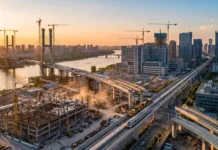
The world is currently in the midst of an infrastructure renaissance. From the massive “megacity” projects in the Middle East and Asia to the critical bridge and grid renewals in North America and Europe, the demand for efficient, high-capacity building has never been greater. However, the methods of the past are no longer sufficient to meet the challenges of the future. The sheer scale, complexity, and environmental requirements of modern projects demand a new class of tools. This has led to the emergence of future ready construction equipment a category of machinery that is as much about data and software as it is about steel and hydraulics.
The Digital Nervous System of Smart Machinery
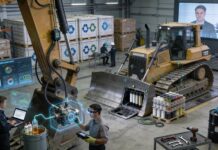
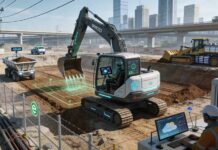
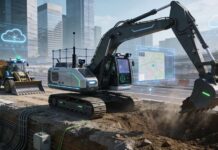
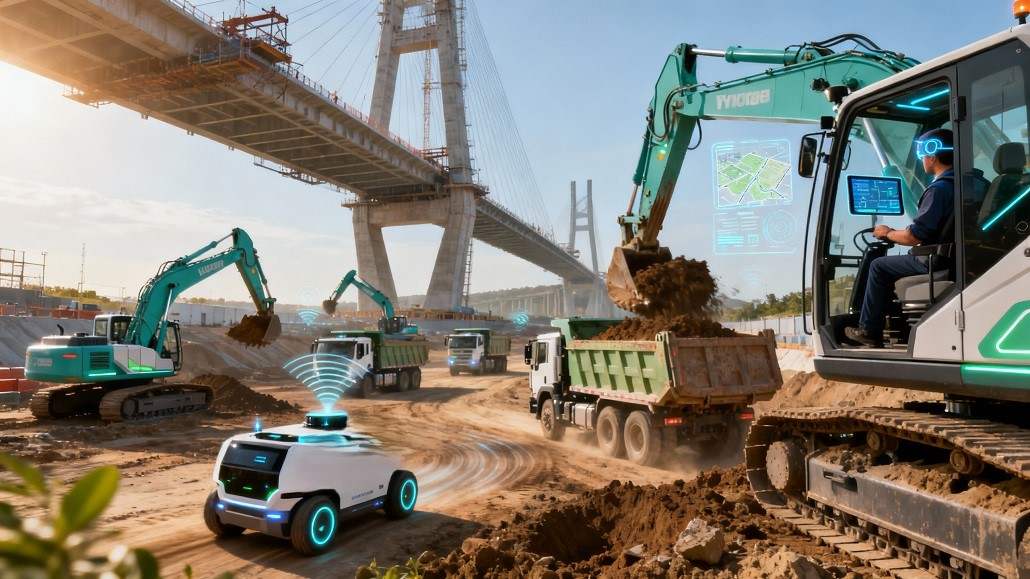
At the core of the future-ready philosophy is the concept of the “connected jobsite.” In this vision, infrastructure construction equipment is no longer a collection of isolated assets; instead, it is a fleet of intelligent nodes in a vast digital network. This shift is driven by the integration of IoT (Internet of Things) sensors and high-speed 5G connectivity. When every machine can communicate its status, position, and progress in real-time, the result is a level of synchronization that resembles a well-orchestrated symphony.
Smart machinery can automatically adjust its operations based on the activity of other assets. For example, a fleet of autonomous haul trucks can optimize their speed and route based on the loading pace of an excavator, eliminating bottlenecks and reducing fuel waste. This level of automation is critical for large-scale infrastructure projects where even a 5% increase in efficiency can result in millions of dollars in savings and months shaved off a project’s timeline. The “intelligence” of this equipment allows for a shift from manual supervision to high-level system management, where humans oversee the strategy while the machines execute the tactics.
Sustainability: The New Benchmark for Next Generation Construction Equipment
One of the most significant drivers of construction industry innovation is the urgent need to decarbonize the building sector. Construction is responsible for a substantial portion of global CO2 emissions, both through the materials used and the energy consumed on-site. Future ready construction equipment is addressing this through a rapid transition to alternative power sources. While electrification is already taking hold in the compact equipment market, the next generation of heavy machinery is exploring hydrogen fuel cells and advanced biofuels to provide the high-torque power required for massive earthmoving tasks.
These sustainable infrastructure construction equipment solutions offer more than just environmental benefits. Electric machines have fewer moving parts than their diesel counterparts, leading to lower maintenance costs and longer lifespans. They also operate with nearly instant torque, providing a level of responsiveness that can actually improve the precision of the work. As governments increasingly include “green” requirements in their infrastructure tenders, companies that invest in these next-generation technologies will find themselves at a significant competitive advantage.
Digital Twins and the Life-Cycle Approach
The role of future ready construction equipment doesn’t end when the physical structure is complete. We are moving toward a “cradle-to-grave” digital approach where the data captured by the machinery during construction becomes part of the asset’s “Digital Twin.” A Digital Twin is a virtual replica of the physical infrastructure that is updated in real-time. Because smart machinery captures the exact location of every pipe, cable, and structural reinforcement as it is installed, the owner of the finished bridge or tunnel has a perfect record of the “as-built” reality.
This integration is a game-changer for long-term infrastructure management. When a repair is needed decades later, maintenance crews don’t have to rely on potentially inaccurate paper drawings; they can consult the digital record created by the infrastructure construction equipment. This foresight reduces the risk of accidental utility strikes and allows for more precise, less invasive repairs. It is a clear example of how today’s construction industry innovation is providing value that lasts for generations.
The Human-Machine Collaboration and Reskilling
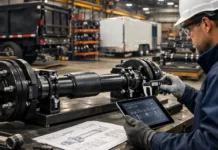
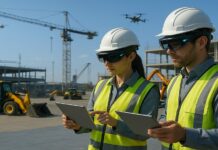
As machinery becomes more complex, the role of the worker is also evolving. The future of the industry is not about machines replacing people, but about a new level of collaboration. Next generation construction equipment is designed with intuitive interfaces, often borrowing from the world of gaming and consumer electronics to make operation more accessible. Augmenting the operator’s vision with AR (Augmented Reality) overlays showing them where to dig or where underground hazards are located directly on their windshield is a prime example of this synergy.
However, this transition requires a commitment to reskilling the workforce. The operators of tomorrow will need to be part-mechanic, part-data analyst, and part-system manager. Companies that embrace future ready construction equipment must also invest in the human capital required to run it. This evolution is making the construction industry more attractive to a younger, tech-savvy generation, helping to solve the persistent labor shortages that have plagued the sector for years.
Conclusion: Building the Foundation of a Modern World
The growth of global infrastructure is the engine of economic development, and future ready construction equipment is the fuel that keeps that engine running. By bridging the gap between heavy iron and high-tech software, the industry is creating a new standard for what is possible. These smart machinery solutions are allowing us to build faster, safer, and more sustainably than ever before. As we look toward the horizon, the machines we use to shape our world will be defined not just by their power, but by their intelligence and their resilience. The future of construction is already here it is connected, it is green, and it is ready to build the world of tomorrow.
