




























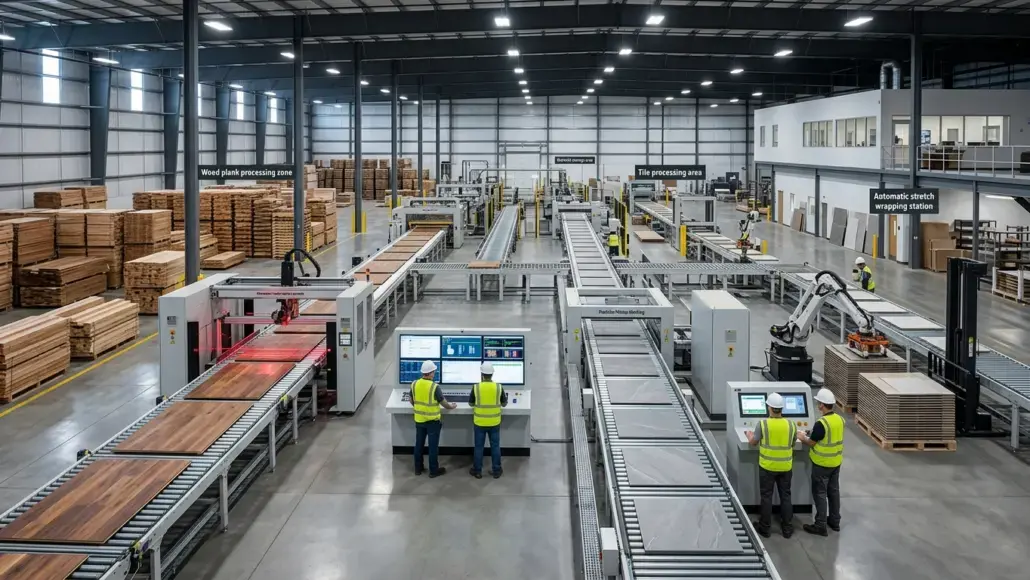


The flooring under our feet is often the product of a globe-spanning industrial ballet. A single luxury vinyl tile might contain limestone from Southeast Asia, resins from the Gulf Coast, and decorative films designed in Italy, all assembled in a high-tech factory in China before being shipped to a warehouse in North America. This intricate network of global flooring supply chains is one of the most complex segments of the construction material sourcing world. In recent years, however, this system has been tested by geopolitical shifts, climate-driven events, and a radical change in how we value environmental transparency. For architects, developers, and contractors, understanding the nuances of the building materials trade is no longer just a logistical necessity it is a strategic imperative for project success and financial stability.
The Complexity of International Material Sourcing
At the heart of global flooring supply chains is the constant search for the optimal balance of quality, cost, and availability. Construction material sourcing for flooring is unique because it draws from almost every sector of the earth’s resources. The industry requires hard commodities like stone and minerals, soft commodities like timber and cork, and complex chemical products like polymers and adhesives. Managing the procurement strategy for such a diverse range of inputs requires a deep understanding of international trade regulations, currency fluctuations, and localized labor conditions. For example, a shift in forestry laws in South America can immediately impact the price of exotic hardwoods in London, while an energy crisis in East Asia can stall the production of porcelain tiles globally. This interconnectedness means that a disruption in one corner of the globe can send ripples through the entire construction supply chain.
Logistics Innovation and the “Last Mile” Challenge
The physical movement of flooring products is a monumental task. Unlike many consumer goods, flooring is heavy, bulky, and often fragile, requiring specialized handling and transport solutions. Logistics innovation in the flooring sector has focused on improving “cube utilization” maximizing the amount of product that can fit into a shipping container and developing moisture-controlled transit environments for sensitive materials like solid wood. Furthermore, the “last mile” of delivery from the regional warehouse to the construction site is often the most difficult part of the journey. In dense urban environments, the coordination of heavy delivery vehicles requires precision timing to meet strict project schedules. Advanced supply chain management software now allows for real-time tracking of shipments, providing contractors with the data they need to manage their labor force effectively and avoid costly downtime on-site.
Procurement Strategy and Risk Mitigation
In an era of uncertainty, the most successful firms are those that have moved away from “just-in-time” delivery toward a more resilient procurement strategy. This involves diversifying global flooring supply chains by sourcing materials from multiple geographic regions to avoid over-reliance on a single country or trade route. We are seeing a resurgence in “near-shoring,” where companies are looking for construction material sourcing opportunities closer to their end markets to reduce transport costs and lead times. For example, some North American manufacturers are increasing their production capacity in Mexico, while European firms are looking to Turkey and Eastern Europe for tile and wood products. This strategic shift not only reduces risk but also lowers the carbon footprint associated with long-distance shipping, aligning the supply chain with modern sustainability goals.
The Push for Transparency and Ethical Sourcing
One of the most powerful trends shaping global flooring supply chains is the demand for radical transparency. Modern consumers and corporations want to know exactly where their materials come from and the conditions under which they were produced. This has led to the widespread adoption of “Chain of Custody” (CoC) certifications, such as the FSC for timber and the “FloorScore” for air quality. Ethical sourcing is no longer an optional “extra” it is a baseline requirement for major projects. Supply chain management now involves rigorous auditing of sub-suppliers to ensure that no illegal logging, child labor, or hazardous chemical practices are involved in the production process. This level of oversight is supported by digital tools like blockchain, which can provide an unalterable record of a material’s journey from the forest or mine to the finished building.
Sustainability as a Supply Chain Driver
The environmental mandate is also fundamentally changing the building materials trade. As the construction industry moves toward “net-zero” buildings, the embodied carbon of materials has become a primary metric of value. Global flooring supply chains are responding by optimizing their transport networks to reduce emissions and by sourcing raw materials with lower environmental impacts. For instance, the use of recycled content such as post-consumer plastic in carpets or reclaimed wood in flooring is becoming a standard part of the procurement strategy. Furthermore, manufacturers are increasingly using life cycle assessments (LCA) to provide architects with the data they need to make low-carbon choices. This focus on sustainability is driving a wave of innovation in material science, as companies race to develop the next generation of eco-friendly and high-performance surfaces.
Logistics Innovation: Digital Twins and AI
The future of supply chain management in the flooring industry lies in the application of artificial intelligence and digital twins. By creating a virtual replica of their global flooring supply chains, companies can run “what-if” scenarios to test their resilience against potential disruptions, such as a port strike or a natural disaster. AI-driven analytics can also help optimize inventory levels, predicting when a project will need a specific material based on the current pace of construction. This level of digital integration allows for a much more responsive and efficient system, reducing waste and ensuring that materials are delivered exactly when and where they are needed. As these technologies become more accessible, they will become the standard for any firm involved in the international building materials trade.
The Impact of Trade Policy and Geopolitics
Geopolitics remains one of the most volatile factors in global flooring supply chains. Tariffs, trade wars, and sanctions can overnight change the economic viability of a specific material or source. For example, anti-dumping duties on ceramic tiles from certain countries have forced many distributors to rapidly reconfigure their procurement strategy. Navigating these complexities requires a high degree of agility and a deep knowledge of the legal landscape of flooring imports exports. Successful firms now employ dedicated trade compliance teams to ensure that they are meeting all regulatory requirements while minimizing the financial impact of trade barriers. This geopolitical awareness is an essential component of modern supply chain management, protecting the business from the sudden shifts in international relations.
Future Horizons: Decoupling and Regional Clusters
As we look toward the next decade, we may see a partial “decoupling” of global flooring supply chains as countries move toward more self-reliant regional clusters. This trend is driven by both the need for resilience and the desire to support local economies. However, the specialized nature of certain materials such as unique Italian marbles or high-tech German resins means that international trade will always remain a core part of the flooring industry. The challenge for the future will be to find a way to maintain the benefits of global exchange while building in the redundancy and transparency that the modern world demands. This will likely involve a hybrid model where the core components of a floor are sourced locally, while the high-value decorative and technological elements continue to be sourced through a more refined and ethical global network.
Conclusion: A Foundation of Global Connection
Ultimately, the story of global flooring supply chains is a story of human connection and industrial ingenuity. It is the story of thousands of people across the world working together to create the surfaces that define our lives. By embracing logistics innovation, ethical sourcing, and resilient procurement planning, the flooring industry is ensuring that it can continue to deliver the beautiful and durable materials that the construction world depends on. As we continue to navigate the complexities of the 21st-century market, the supply chain will remain the vital artery of the built environment, connecting the resources of the earth to the spaces where we live, work, and grow.