





























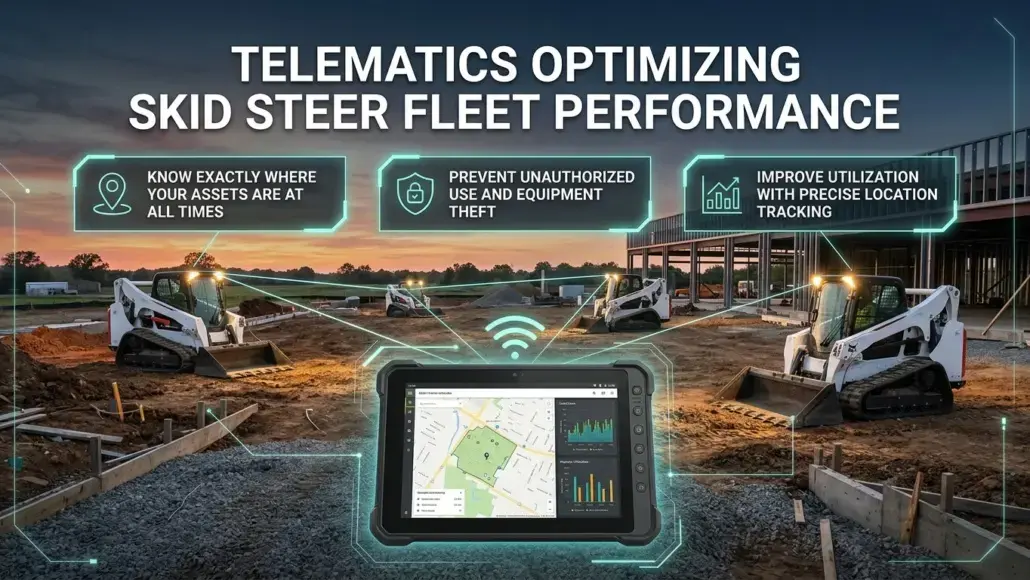


Telematics has transformed the way construction fleets are managed by providing a constant stream of data from every machine on the job site. For skid steer loaders, which are often moved between multiple projects and operated by various personnel, the ability to track the precise location of each asset is a primary benefit. GPS tracking allows fleet managers to ensure that machines are where they are supposed to be and to quickly locate equipment that has been moved without authorization. This capability not only improves logistical planning but also serves as a powerful tool for theft recovery. By setting up virtual boundaries, or geofences, managers can receive immediate alerts if a skid steer leaves a designated area, allowing for a rapid response to potential security breaches.
Beyond simple location tracking, telematics provides deep insights into how each machine is being used. Data on engine hours, idle time, and actual working time allows managers to identify patterns of underutilization or excessive idling. If a skid steer is idling for 40% of its operating day, it is consuming fuel and accumulating engine hours without contributing to production. This information allows for a more efficient distribution of assets across different sites. For instance, a machine that is rarely used at one location can be moved to another site where the demand is higher, potentially reducing the need for additional rentals. This level of oversight ensures that telematics optimizing skid steer fleet performance is a data-driven process that directly impacts the bottom line.
The ability to monitor machine usage in real-time also allows for better coordination of site activities. Site managers can see which machines are currently active and which are available for new tasks, allowing for more dynamic scheduling. This reduce the time operators spend waiting for equipment and ensures that the workflow remains consistent. Integrating telematics data into site management software provides a holistic view of the project’s progress, highlighting areas where equipment bottlenecks might be slowing down the schedule. By using data to optimize the movement and utilization of the skid steer fleet, construction firms can achieve a higher level of operational efficiency and meet their project deadlines with greater consistency.
Predictive Maintenance and Reducing Equipment Downtime
One of the most significant advantages of telematics is the shift from reactive to proactive maintenance. Traditional maintenance schedules are often based on fixed intervals of engine hours or calendar time, which may not reflect the actual condition of the machine. Telematics systems monitor critical engine and hydraulic parameters, providing early warnings of potential issues such as rising temperatures, dropping oil pressure, or failing sensors. By receiving these alerts in real-time, maintenance teams can intervene before a minor fault leads to a catastrophic failure. This predictive approach significantly reduces unscheduled downtime, which is one of the most expensive aspects of equipment management in the construction industry.
Telematics also simplifies the management of routine service tasks. Fleet managers can receive automated notifications when a machine is approaching a service milestone, allowing them to schedule maintenance during planned breaks or between projects. This prevents service intervals from being missed and ensures that the fleet is always in peak condition. Additionally, the ability to remotely diagnose fault codes means that technicians can arrive at the site with the correct parts and tools, reducing the time required for repairs. This efficiency ensures that telematics optimizing skid steer fleet performance is supported by a durable and responsive maintenance strategy that maximizes machine availability.
The long-term data collected by telematics systems also provides insights into the durability and reliability of different machine models. By comparing the maintenance history and repair costs of various skid steers in the fleet, companies can make more informed decisions about future equipment purchases. If a particular model consistently shows higher repair costs or more frequent breakdowns, this data-driven evidence can guide the procurement process toward more reliable brands. This historical perspective ensures that the fleet evolves to include only the most productive and cost-effective assets, contributing to the overall stability and profitability of the construction business.
Fuel Management and Environmental Compliance
Fuel is one of the largest operating expenses for a construction fleet, and telematics provides the tools needed to manage this cost effectively. By tracking fuel consumption across the entire skid steer fleet, managers can identify machines that are using more fuel than expected for their given tasks. This can be an indication of mechanical issues, poor operator technique, or a mismatch between the machine and the attachment. Addressing these issues through targeted maintenance or operator training can lead to significant fuel savings. Telematics also allows for the tracking of fuel levels across the site, ensuring that refueling trucks are dispatched efficiently and that machines do not run out of fuel during critical operations.
Idle time reduction is perhaps the most direct way that telematics impacts fuel efficiency. As previously mentioned, identifying and reducing excessive idling saves fuel and extends the life of the engine and exhaust after-treatment systems. Many telematics platforms provide reports that rank operators and machines based on their idle percentages, creating a baseline for improvement. Implementing “no-idle” policies and using telematics to enforce them can result in thousands of dollars in annual savings for a large fleet. This focus on efficiency ensures that telematics optimizing skid steer fleet performance is also an environmentally responsible strategy, as lower fuel consumption directly translates to reduced carbon emissions.
For projects with strict environmental regulations, telematics can provide the documentation needed to prove compliance. Data on engine emissions, fuel use, and operating hours can be compiled into reports for regulatory agencies or project owners. This is particularly important for government contracts or projects in urban areas where noise and exhaust levels are closely monitored. By using telematics to maintain a clean and efficient fleet, construction companies can improve their reputation and increase their chances of winning future contracts. The ability to demonstrate a commitment to sustainability through hard data is becoming an increasingly important competitive advantage in the modern construction sector.
Enhancing Operator Safety and Performance
Telematics systems can monitor operator behavior, providing data on events such as harsh braking, rapid acceleration, and high-speed travel. While the primary goal is often to protect the machine from unnecessary wear, these insights are also vital for improving site safety. Operators who consistently engage in risky behaviors can be identified and provided with additional training. Conversely, recognizing and rewarding operators who maintain high standards of safety and efficiency encourages a culture of professionalism across the workforce. This data-driven approach to personnel management ensures that telematics optimizing skid steer fleet performance includes a focus on the people who operate the equipment every day.
Seatbelt usage sensors and weight-sensing technology in the cab can also be integrated into the telematics system, providing alerts if a machine is being operated unsafely. For example, if an operator starts the engine without being properly seated or without the seatbelt fastened, an alert can be sent to the site supervisor. These features serve as an additional layer of protection, reducing the likelihood of accidents caused by operator negligence. In the event of an incident, the data logged by the telematics system can provide a clear picture of what happened in the moments leading up to the event, assisting in investigations and helping to prevent similar occurrences in the future.
The integration of telematics with on-board payload systems also helps to prevent overloading, which is a common cause of instability and mechanical strain. Operators can see the weight of the material in the bucket in real-time, and this data can be transmitted to the fleet manager to track total production. Ensuring that every load is within the machine’s rated capacity improves safety and prevents premature wear on the hydraulics and tires. By providing operators with the tools and information they need to work safely and effectively, construction firms can maximize the productivity of their skid steer fleet while maintaining a safe working environment for all personnel.
Data Integration and Future Scalability
The true power of telematics is realized when the data is integrated with other business systems, such as project management, accounting, and ERP software. This allows for a more comprehensive analysis of project costs and profitability. For example, by linking fuel consumption and maintenance data to a specific job code, companies can accurately calculate the equipment cost for a particular project. This precision is essential for accurate bidding and financial reporting. As construction firms become more data-centric, the ability to efficiently share information between the site and the office becomes a critical factor in business success.
Scalability is another important consideration when implementing a telematics solution. A system that works well for a dozen skid steers must also be capable of managing hundreds of assets as the company grows. Choosing a platform that supports a wide range of equipment types and brands ensures that the entire fleet can be monitored through a single interface. Many manufacturers now offer “mixed-fleet” telematics solutions that can ingest data from various sources, providing a unified view of the organization’s assets. This flexibility ensures that telematics optimizing skid steer fleet performance remains a viable strategy as the business expands into new markets and larger projects.
Looking to the future, the role of telematics will continue to expand with the integration of artificial intelligence and machine learning. These technologies can analyze vast amounts of telematics data to identify trends and predict failures with even greater accuracy. For instance, AI could analyze vibration patterns to predict a bearing failure weeks before it happens or optimize haul routes based on real-time traffic and weather conditions. As these advanced capabilities become available, the construction industry will see a further shift toward fully autonomous and data-driven fleet management. By embracing telematics today, construction companies are building the foundation for a more efficient and technologically advanced future.