




























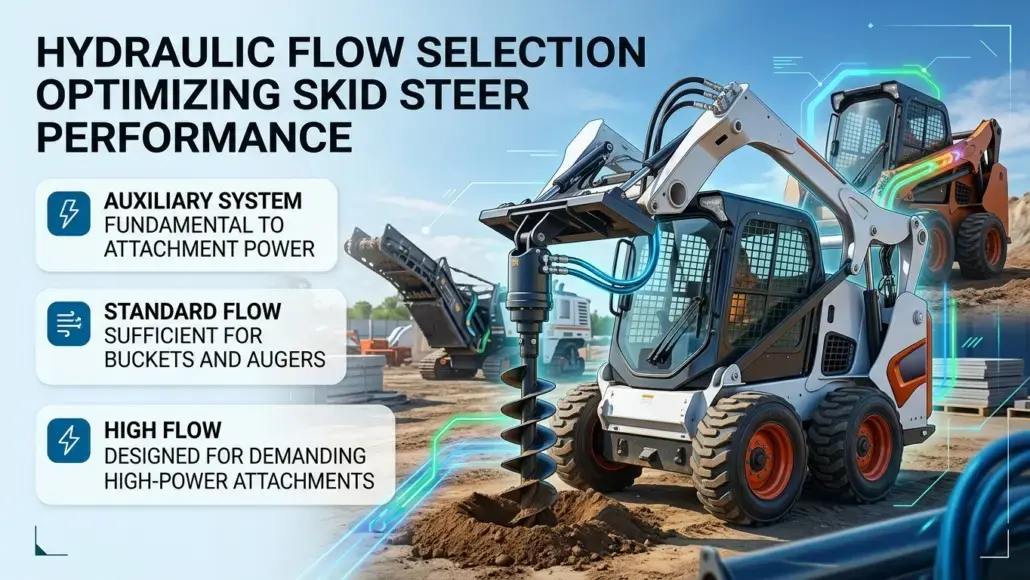


The efficiency of a skid steer loader is often determined by its ability to power a wide range of hydraulic attachments, and the foundation of this capability is the auxiliary hydraulic system. Most skid steers are available with two primary hydraulic options: standard flow and high flow. Standard-flow systems are designed for common attachments such as buckets, grapples, and standard augers. These systems typically operate at lower gallons per minute (GPM), which is sufficient for tasks that do not require intense or continuous hydraulic power. However, as construction tasks become more specialized, the need for high-flow systems has grown. High-flow hydraulics provide the increased GPM and sometimes higher pressure necessary to run demanding attachments like cold planers, rock saws, and heavy-duty mulchers. Selecting the right system is a critical decision that impacts the versatility and productivity of the machine on the job site.
When choosing between these systems, project managers must evaluate the specific attachments they plan to use. Using a high-flow attachment on a standard-flow machine will result in poor performance, as the attachment will not have enough fluid volume to operate at its rated speed or power. Conversely, running a standard-flow attachment on a high-flow machine can lead to overheating and damage if the flow is not properly regulated. Many modern skid steers feature adjustable hydraulic settings that allow the operator to match the machine’s output to the attachment’s requirements. This level of control is essential for ensuring that hydraulic flow selection optimizing skid steer performance is handled with technical precision, preventing both equipment failure and wasted energy.
The impact of hydraulic pressure must also be considered alongside flow rate. While flow (GPM) determines the speed of the attachment, pressure (PSI) determines the torque or the strength of the movement. Some specialized high-performance attachments require both high flow and high pressure to operate effectively. In these cases, a machine with an enhanced high-flow system is necessary. Understanding the relationship between flow and pressure allows for a more informed selection process, ensuring that the machine has the “grunt” needed for tough applications like breaking concrete or milling asphalt. Aligning the machine’s hydraulic profile with the intended workload is a fundamental step in maximizing the return on investment for the equipment.
Attachment Synchronization and Cooling Requirements
The synergy between the skid steer and its attachment is what drives production, but this relationship is also a significant source of heat. High-flow applications generate a substantial amount of thermal energy as the hydraulic oil is forced through the system at high speeds and pressures. If the machine’s cooling system is not designed to handle this heat load, the oil will degrade, and the hydraulic components will experience premature wear. When evaluating a skid steer for high-flow work, it is important to check the capacity of the hydraulic coolers and the airflow around the engine compartment. Machines designed for continuous high-flow use often feature oversized coolers and reversible fans to keep the system within its optimal temperature range.
The use of high-quality hydraulic fluids and filters is another factor in maintaining performance. In high-demand applications, the hydraulic oil is subject to extreme stress, making it vital to use the manufacturer-recommended fluids that offer superior thermal stability and anti-wear properties. Regular fluid analysis can help identify potential issues like contamination or oxidation before they lead to a system failure. Ensuring that the hydraulic system remains clean and cool is a prerequisite for ensuring that hydraulic flow selection optimizing skid steer performance delivers the expected results over the long term. Neglecting these maintenance needs can lead to costly repairs and significant downtime during critical phases of a project.
Additionally, the design of the hydraulic couplers and hoses can affect the efficiency of the flow. Restrictions in the lines, such as tight bends or undersized fittings, can cause a drop in pressure and an increase in heat. Using high-flow couplers that are specifically designed to minimize resistance ensures that the maximum amount of power is delivered to the attachment. Operators should also be trained to inspect hoses for signs of wear or damage, as a burst hose in a high-flow system can be dangerous and causes an immediate halt to production. By focusing on the details of the hydraulic circuit, construction firms can ensure that their skid steers are operating at peak efficiency.
Balancing Power Delivery and Engine Load
Operating high-flow attachments puts a significant load on the skid steer’s engine. Since the hydraulic pump is driven by the engine, a large portion of the available horsepower is diverted to the auxiliary system when a demanding attachment is in use. This can leave less power for the machine’s drivetrain, affecting its ability to push or travel while simultaneously operating the tool. This trade-off requires a machine with a well-balanced power curve and an engine that can provide high torque at lower RPMs. Some manufacturers use advanced electronic control modules to manage the distribution of power between the hydraulics and the drivetrain, ensuring that the machine remains responsive even under heavy loads.
Fuel consumption is also a major consideration when selecting hydraulic flow levels. High-flow systems naturally consume more fuel because they require the engine to run at higher speeds to maintain the necessary pump output. If a task can be completed effectively with a standard-flow system, choosing the lower-flow option will result in lower operating costs. However, if the high-flow system allows the work to be finished much faster, the total fuel used per task may actually be lower. This requires a careful analysis of the production rate versus the hourly fuel cost. By quantifying these variables, site managers can make a data-driven decision that supports the goal of hydraulic flow selection optimizing skid steer performance.
Operator technique also plays a role in managing engine load and hydraulic efficiency. An experienced operator knows how to adjust the ground speed and the feed rate of the attachment to prevent stalling the engine or over-pressuring the hydraulic system. For example, when using a cold planer, the operator must balance the depth of the cut with the travel speed to maintain a consistent load on the machine. Providing operators with real-time feedback through in-cab displays, such as hydraulic pressure gauges and engine load meters, allows them to make these adjustments on the fly. This synergy between man and machine is what ultimately translates technical specifications into site productivity.
Maintenance Schedules for High-Performance Hydraulics
A skid steer used for high-flow applications requires a more rigorous maintenance schedule than one used for light-duty tasks. The increased heat and pressure put more strain on the hydraulic pump, valves, and seals, making regular inspections vital. Checking for leaks around the auxiliary couplers and the main control valve can prevent small issues from becoming major failures. It is also important to inspect the drive belts or couplings that connect the engine to the hydraulic pumps, as these are critical points of power transfer that can wear out over time. Adhering to the manufacturer’s service intervals for hydraulic oil and filter changes is the best way to ensure the longevity of the system.
The attachments themselves also require maintenance to ensure they do not negatively impact the machine’s hydraulics. For instance, a mulcher with dull teeth will require more hydraulic power to achieve the same result, increasing the heat and stress on the skid steer. Keeping tools in good repair ensures that they operate within their design parameters, which in turn protects the host machine. Construction companies that maintain their entire tool inventory to a high standard find that their equipment is more reliable and that they achieve better results from their hydraulic flow selection optimizing skid steer performance strategies.
Training maintenance personnel to understand the complexities of high-flow systems is also beneficial. Modern skid steers often feature diagnostic ports and onboard software that can provide detailed information on hydraulic performance and fault codes. Having technicians who are proficient in using these tools allows for faster troubleshooting and more accurate repairs. This expertise reduces the time the machine is out of service and ensures that repairs are done correctly the first time. By investing in both the equipment and the people who maintain it, firms can maintain a competitive edge in demanding construction environments.
Future Trends in Skid Steer Hydraulic Technology
The construction industry is seeing a shift toward even more intelligent hydraulic systems. Electronic displacement control (EDC) pumps are becoming more common, allowing for more precise control of flow and pressure through the machine’s software. These systems can automatically adjust the pump output based on the specific attachment recognized by the machine, eliminating the need for manual settings. This “plug-and-play” capability reduces the risk of operator error and ensures that every attachment is used at its maximum efficiency. As these technologies become more widespread, the process of hydraulic flow selection optimizing skid steer performance will become increasingly automated and data-driven.
Electric and hybrid skid steers are also entering the market, bringing a different approach to hydraulic power. In these machines, the hydraulic pumps are often driven by electric motors, which can provide instant torque and more precise flow control than a traditional internal combustion engine. This allows for a more efficient use of energy and significantly reduces noise levels on the job site. While still in the early stages of adoption, electric skid steers offer a glimpse into a future where hydraulic performance is no longer limited by the constraints of a diesel engine’s power curve.
The integration of telematics and remote monitoring also continues to evolve. Fleet managers can now receive alerts if a machine’s hydraulic temperature exceeds a certain threshold or if the system pressure drops unexpectedly. This allows for proactive intervention, such as calling the operator to check for a leak or a clogged cooler. Using this data to monitor the performance of different attachments across various sites provides insights into which configurations are the most productive and cost-effective. By staying at the forefront of these technical advancements, construction companies can ensure that their equipment fleet remains a powerful and efficient tool for any task.