

























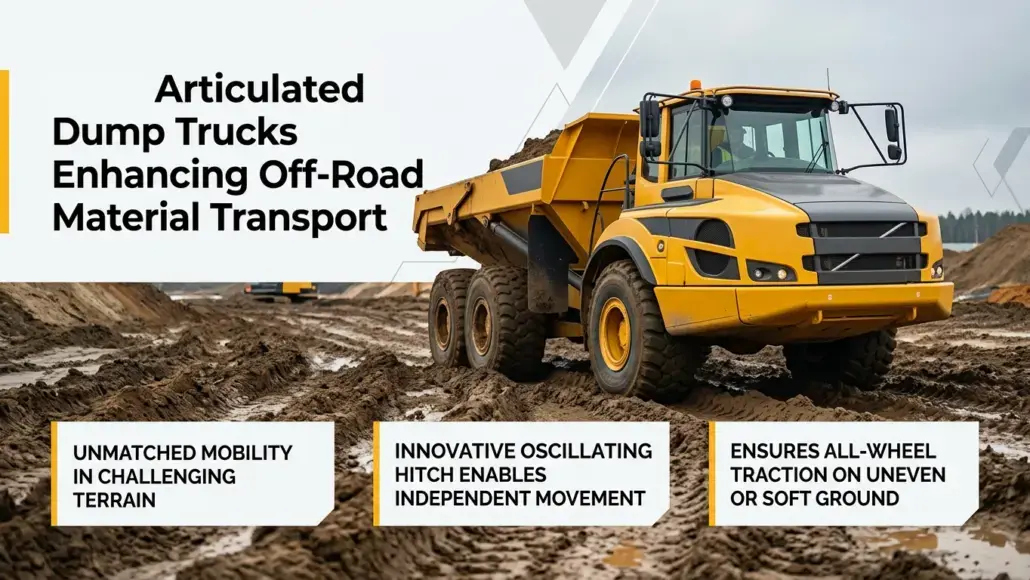


Articulated dump trucks are engineered to provide exceptional mobility in conditions that would immobilize standard rigid-frame trucks. The defining characteristic of these machines is the oscillating hitch, which allows the front and rear sections of the vehicle to move independently. This design ensures that all wheels maintain contact with the ground even when crossing uneven or soft terrain, which is essential for maintaining traction. In heavy construction environments where soil conditions are often unpredictable, the ability to maintain continuous contact with the surface prevents slippage and reduces the risk of the vehicle becoming stuck. The distribution of weight across multiple axles further enhances stability, allowing the truck to carry heavy payloads over steep grades and through deep mud without compromising safety.
The drivetrain systems in modern articulated dump trucks are sophisticated, often featuring automatic traction control and differential locks that respond in real-time to wheel slip. These systems ensure that power is directed to the wheels with the most grip, allowing the vehicle to traverse steep inclines and soft underfoot conditions with minimal operator intervention. By reducing the reliance on manual differential locks, manufacturers have lowered the risk of drivetrain damage caused by improper use. This level of technical sophistication is a primary reason why articulated dump trucks enhancing off-road material transport have become a staple on large-scale infrastructure projects where site access is a major logistical hurdle.
Additionally, the low ground pressure exerted by these trucks is a significant advantage when working on sensitive or uncompacted soils. By spreading the load over a larger surface area, articulated dump trucks minimize the damage to site haul roads, which in turn reduces the need for frequent road maintenance. This capability is particularly valuable in the early stages of a project when permanent roads have not yet been established. The ability to operate effectively in the rain or shortly after a storm allows construction teams to maintain their schedules even in adverse weather conditions, providing a level of reliability that rigid trucks cannot match.
Advanced Steering and Maneuverability on Restricted Sites
The articulated steering system provides these trucks with a remarkably tight turning radius, which is crucial for navigating the often-congested environments of modern construction sites. Unlike rigid-frame trucks that require large areas to turn around, an articulated model can pivot in confined spaces, allowing for more efficient loading and dumping cycles. This maneuverability reduces the time spent on repositioning, which directly translates to more cycles per shift. In urban construction or specialized projects like dam building and tunneling, where space is at a premium, the compact footprint and agile handling of these machines are indispensable assets.
Operator comfort and control are also enhanced by the articulated design. The independent movement of the front cab helps to isolate the operator from the jarring motions of the rear chassis as it traverses rough ground. Modern cabs are equipped with advanced suspension systems and ergonomic controls that reduce operator fatigue, which is a critical factor in maintaining safety and productivity over long shifts. High visibility from the cab, combined with integrated camera systems and proximity sensors, allows operators to maneuver confidently near other equipment and personnel. This focus on ergonomics ensures that articulated dump trucks enhancing off-road material transport are operated at peak efficiency throughout the workday.
Transmission technology has also seen significant improvements, with many manufacturers moving toward fully automatic or continuously variable transmissions. These systems optimize the engine’s power delivery, ensuring that the truck is always in the correct gear for the terrain and load. This not only improves fuel efficiency but also simplifies the operator’s task, allowing them to focus on steering and situational awareness rather than manual gear selection. The integration of retarded braking systems provides additional control on long downhill hauls, reducing wear on the service brakes and increasing the overall safety of the hauling operation.
Payload Management and Loading Efficiency
Maximizing the payload of every haul is essential for the economic viability of earthmoving operations. Articulated dump trucks are available in a wide range of capacities, typically from 25 to 60 tons, allowing project managers to select the machine that best matches their production requirements. Integrating on-board weighing systems provides real-time data to both the truck operator and the loading tool operator, ensuring that each truck is filled to its rated capacity without being overloaded. Overloading is a common cause of mechanical strain and can lead to increased tire wear and drivetrain failure, while underloading results in inefficient use of fuel and labor.
The shape and design of the dump body also contribute to loading efficiency. Wide, low-profile bodies provide a large target for excavators and wheel loaders, reducing the risk of material spillage and speeding up the loading process. In many applications, the use of tailgates or specialized liners can help to retain material during transport or ensure a clean discharge of sticky substances. The high tipping angle of the body allows for rapid unloading, which is vital for maintaining a fast cycle time at the fill site. By streamlining both the loading and dumping phases, articulated dump trucks enhancing off-road material transport help to keep the entire earthmoving fleet moving at a consistent pace.
Telematics and fleet management software have become integral tools for monitoring payload and hauling performance across a site. These systems track metrics such as cycle times, fuel consumption, and idle periods, providing site managers with the insights needed to optimize the haulage route. If a particular section of the haul road is causing significant delays or high fuel use, the data will highlight the issue, allowing for targeted maintenance or a change in the route. This data-driven approach ensures that the articulated dump truck fleet is utilized as effectively as possible, minimizing the cost per ton of material moved.
Maintenance and Long-Term Operational Costs
Maintaining a fleet of articulated dump trucks requires a disciplined approach to preventative service. Given the harsh environments in which these machines operate, components such as the oscillating hitch, suspension bushings, and drivetrain seals are subject to intense stress. Regular lubrication and inspection of these critical areas are essential for preventing catastrophic failures and extending the service life of the machine. Most modern trucks feature centralized lubrication systems and easy-access service points, which reduce the time required for daily maintenance tasks. This focus on serviceability ensures that the machines spend more time on the job and less time in the workshop.
Tire management is another significant factor in the total cost of ownership. The tires on an articulated dump truck are expensive and are often the first component to show signs of wear in rocky or abrasive conditions. Monitoring tire pressure and maintaining haul roads can significantly extend tire life, reducing one of the highest operating expenses associated with these machines. Many manufacturers now offer tire pressure monitoring systems as standard equipment, providing operators with early warnings of potential issues. By proactively managing tire health, construction firms can ensure that articulated dump trucks enhancing off-road material transport remain a cost-effective solution for long-term projects.
The resale value of articulated dump trucks is generally high, as there is a consistent demand for well-maintained machines in the used equipment market. Factors such as the machine’s service history, hours of operation, and overall condition play a major role in determining its value at the end of its initial service life. Companies that invest in regular maintenance and use genuine parts often see a higher return on their investment when it comes time to upgrade their fleet. This long-term financial perspective is an important consideration for any construction firm looking to manage its capital assets effectively.
Safety Protocols and Environmental Considerations
Safety is a paramount concern on any construction site, and articulated dump trucks are equipped with a variety of features designed to protect operators and ground personnel. In addition to the inherent stability provided by the design, these trucks often include rollover protection systems, emergency steering, and advanced braking technology. Many manufacturers have also integrated hill-start assist and descent control systems, which prevent the truck from rolling backward or gaining too much speed on steep gradients. These technical aids provide operators with the confidence to handle the machine in difficult conditions, reducing the likelihood of accidents.
From an environmental standpoint, the latest generation of articulated dump trucks is designed to meet strict emission standards while improving overall fuel economy. High-efficiency engines and advanced exhaust after-treatment systems have significantly reduced the environmental footprint of these machines. Additionally, the ability of articulated trucks to operate on unimproved surfaces reduces the amount of site preparation required, which can minimize the disruption to the local landscape. As environmental regulations continue to evolve, the industry is seeing a move toward hybrid and even fully electric models in certain weight classes, offering a glimpse into the future of off-road material transport.
The integration of site-wide safety and productivity software also contributes to a safer working environment. By tracking the location and movement of all vehicles on a site, managers can identify potential conflict points and adjust traffic patterns accordingly. This level of oversight is particularly important on large, busy sites where multiple types of equipment are operating in close proximity. Ensuring that articulated dump trucks enhancing off-road material transport are part of a coordinated and monitored fleet is essential for maintaining a high standard of site safety. By combining technical excellence with rigorous safety protocols, the construction industry continues to rely on articulated dump trucks as a cornerstone of modern material handling.