























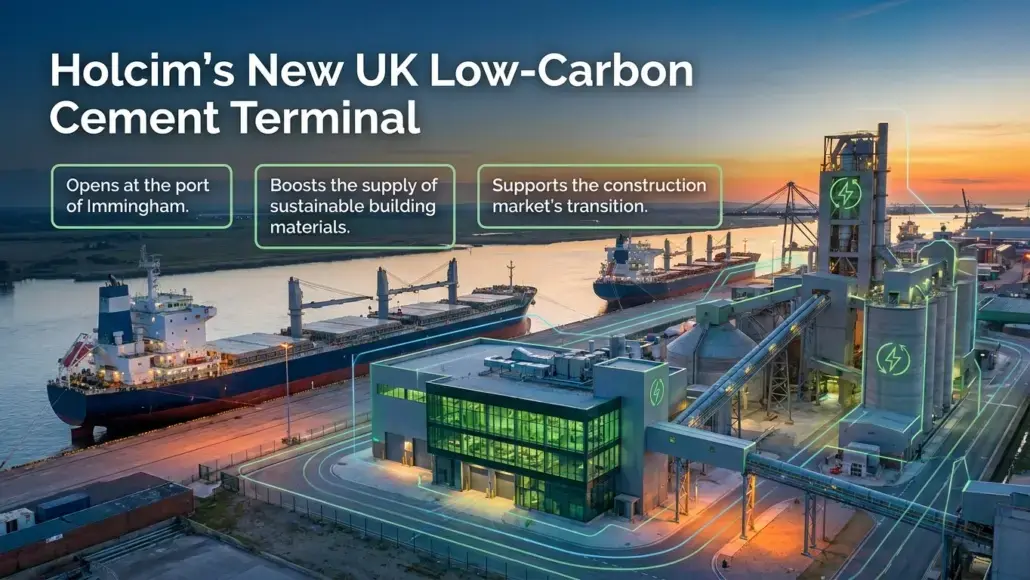


Holcim has officially commenced operations at a newly built low-carbon cement terminal located at the port of Immingham on the northeast coast of England. The facility represents a meaningful investment in the company’s efforts to expand the availability of lower-carbon building materials across the United Kingdom, and it underscores the growing momentum behind decarbonization in the construction sector.
The new low-carbon cement terminal at Immingham has the capacity to handle up to 400,000 metric tons of cement annually. It was developed by Holcim’s UK subsidiary, Aggregate Industries, and is designed to serve as a key distribution hub for blended cements that carry a reduced carbon footprint compared to traditional Portland cement. The terminal will import clinker and supplementary cementitious materials, which are then blended on-site to produce finished cement products. Holcim described the facility as part of its broader strategy to accelerate decarbonization across its global operations and help customers meet their own sustainability targets in the built environment.
According to the company, the Immingham terminal will primarily supply blended cements, which substitute a portion of the carbon-intensive clinker content with alternative materials such as ground granulated blast furnace slag and fly ash. These blended cements can reduce embodied carbon by up to 40% compared to conventional products, Holcim stated. The terminal’s coastal location allows for efficient marine logistics, reducing road transport emissions and enabling cost-effective distribution to construction projects throughout northern England and surrounding regions.
Holcim has positioned the United Kingdom as an important market for its sustainable construction portfolio. The company noted that demand for low-carbon cement and concrete products continues to grow in the UK, driven in part by government procurement policies that increasingly favor materials with lower embodied carbon. The launch of the Immingham facility adds to Holcim’s existing network of cement plants and terminals across the country, strengthening the overall supply chain for sustainable construction materials. The company confirmed the terminal is now fully operational and ready to serve customers, reinforcing its commitment to long-term investment in the UK building materials sector.